"Nasser Al-Yousif: When Milan Celebrated the Memory of Bahraini Art"
Article by Shereen Farid, Al Wahda News
An article by Shereen Farid published by Al Wahda News on 14 November 2026. It takes the Skira monograph, published in Milan, as the occasion for a fresh reading of the artist: the Muharraq of his early paintings, the pearl-diving series shown in Kuwait in 1969, the drawings for Thirst of Palms, the turn to etching after Asilah in 1980, and the work he made after losing his sight in 1992.
The writer argues that the late work should be studied for what it shows about visual memory and the making of an image, not only told as a story of personal courage. She closes with a call to Bahrain's cultural institutions to move beyond collecting and cataloguing towards critical study, and to open their archives to researchers and students.
The pages shown are the article as it appeared online, with the Arabic text and an English translation prepared for this archive.
- Archive no. ARC-PRESS-2026-001
- 11 pages scanned
- Published online
SubjectsAl Wahda Newsالوحدة نيوزShereen Faridشيرين فريدSkiraMilanmonographSpotlight SeriesBin Matar HouseMuharraqpearl divingMohammed Al-FayezThirst of PalmsAli Abdullah KhalifaAsilahetchingprintmakingloss of sightChallenge OneChallenge Twoart archiveBahraini art history2026
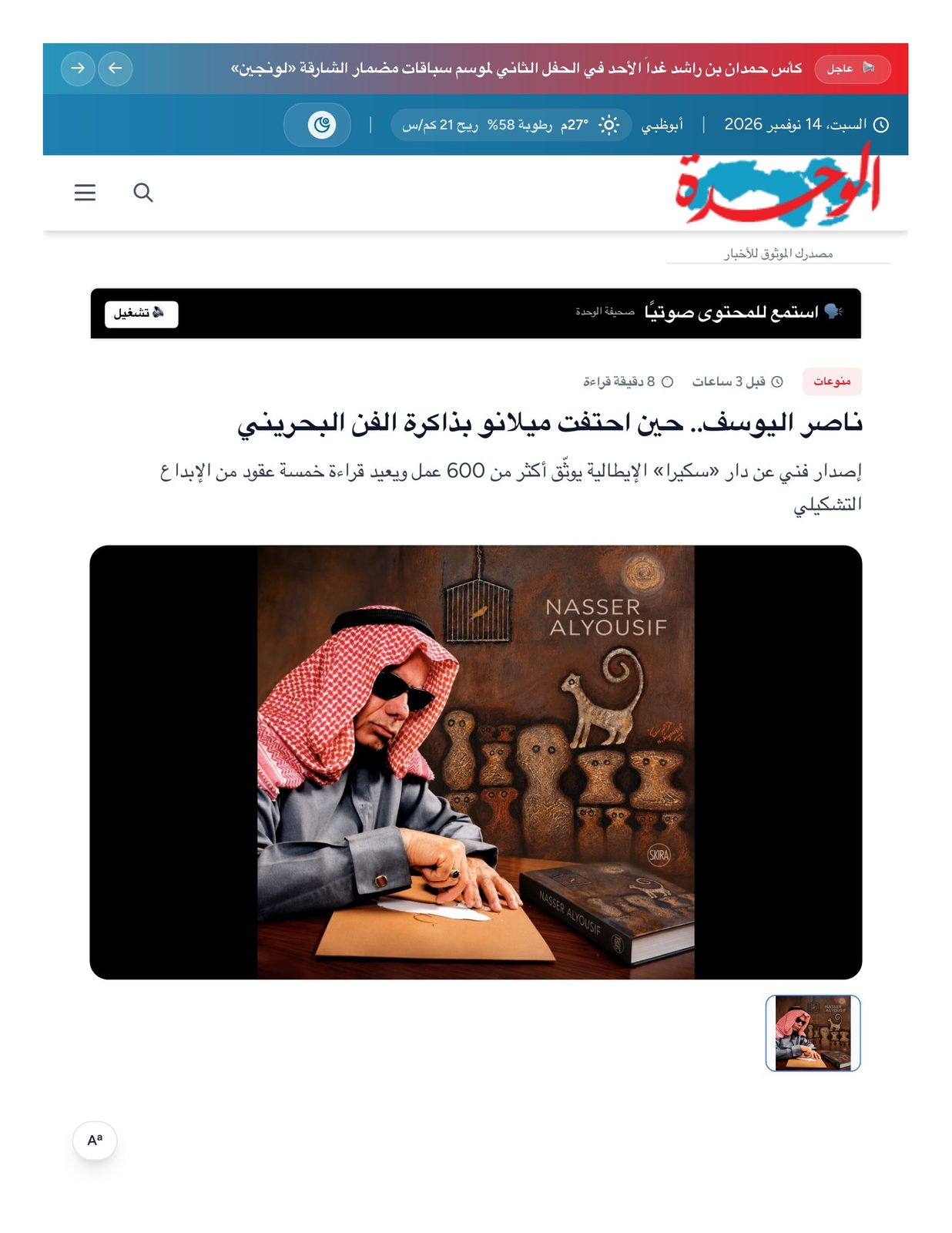
النص الأصلي
ناصر اليوسف.. حين احتفت ميلانو بذاكرة الفن البحريني
إصدار فني عن دار «سكيرا» الإيطالية يوثّق أكثر من 600 عمل ويعيد قراءة خمسة عقود من الإبداع التشكيلي
Translation
Nasser Al-Yousif: when Milan celebrated the memory of Bahraini art
An art book from the Italian publisher Skira documents more than 600 works and re-reads five decades of creative work in the visual arts
النص الأصلي
بقلم : شيرين فريد
لم يكن وصول تجربة الفنان البحريني الرائد ناصر اليوسف إلى دار "سكيرا" الإيطالية في ميلانو مجرد حدث في تاريخ النشر الفني، بل مناسبة تستحق إعادة قراءة أحد الأسماء التي أسهمت في تشكيل الوعي البصري البحريني. فالفنان الذي انشغل بتفاصيل الحياة الشعبية في المحرق، واستعاد وجوه الغواصين والنساء والأسواق والبيوت القديمة، أصبحت تجربته موضوعًا لإصدار فني يتجاوز حدود السيرة الشخصية إلى توثيق مرحلة مهمة من تاريخ التشكيل في البحرين.
واللافت أن هذا الحضور الدولي جاء بعد رحيل الفنان بسنوات، وكأن الأعمال التي ظل ينتجها طوال حياته كانت تنتظر من يجمع شتاتها ويعيد تقديمها في سياق بحثي يتيح للأجيال الجديدة اكتشاف ما أنجزه، بعيدًا عن الاكتفاء بوصفه أحد رواد الفن البحريني.
صدر الكتاب بعنوان "ناصر اليوسف" ضمن سلسلة "بقعة ضوء"، عن دار "سكيرا" الإيطالية المتخصصة في النشر الفني، في مشروع ارتبط بمركز الشيخ إبراهيم بن محمد آل خليفة للثقافة والبحوث. وقد دُشّن في البحرين في الثامن من أكتوبر 2018 ببيت إبراهيم العريض، فيما تشير بعض سجلات النشر الدولية إلى عام 2019. وجاء الإصدار في نحو أربعمئة صفحة، متضمنًا فهرسة لأكثر من 600 عمل فني، ليقدم مادة توثيقية واسعة تتبع تطور تجربة اليوسف على امتداد خمسة عقود.
Translation
By Shereen Farid
The arrival of the pioneering Bahraini artist Nasser Al-Yousif at the Italian publishing house Skira in Milan was not merely an event in the history of art publishing. It was an occasion that calls for a fresh reading of one of the names that helped shape Bahrain's visual awareness. The artist who was absorbed by the details of everyday folk life in Muharraq, and who brought back the faces of the divers, the women, the markets and the old houses, has become the subject of an art book that goes beyond personal biography to document an important chapter in the history of the visual arts in Bahrain.
What is striking is that this international presence came years after the artist's death, as though the works he went on producing throughout his life had been waiting for someone to gather what was scattered and present it again within a framework of research, one that lets new generations discover what he achieved, beyond simply describing him as one of the pioneers of Bahraini art.
The book was published under the title "Nasser Al-Yousif" in the "Spotlight" series by Skira, the Italian house specialising in art publishing, in a project linked to the Shaikh Ebrahim bin Mohammed Al Khalifa Center for Culture and Research. It was launched in Bahrain on 8 October 2018 at the House of Ebrahim Al-Arrayed, while some international publishing records give the year as 2019. The volume runs to some four hundred pages and includes a catalogue of more than 600 works, offering a broad body of documentation that follows the development of Al-Yousif's work across five decades.
النص الأصلي
وقد ارتبط المشروع بالمعرض الاستعادي الذي استضافته عمارة بن مطر بالمحرق خلال الفترة من أكتوبر 2017 إلى يناير 2018، في خطوة جمعت بين عرض الأعمال وإعادة تنظيم الأرشيف الفني. وهي مسألة بالغة الأهمية في تاريخ الفنون؛ لأن المعارض المؤقتة تنتهي بانتهاء مدتها، بينما تمنح الكتب المتخصصة الأعمال فرصة أخرى للبقاء والبحث والمقارنة.
ولعل أكثر ما يستحق التوقف عنده في تجربة ناصر اليوسف أن انتقال أعماله من المحرق إلى صفحات إصدار فني في ميلانو لم يكن مجرد عبور جغرافي، بل انتقالًا من الذاكرة المحلية إلى فضاء التوثيق الفني الدولي. فالكتاب الذي أصدرته دار "سكيرا" الإيطالية، وضم فهرسة لأكثر من 600 عمل، يضع أمام الباحث مادة تسمح بقراءة التحولات التقنية والفكرية لفنان شارك في تأسيس الحداثة التشكيلية البحرينية. غير أن القيمة الحقيقية لهذا الإصدار لا تكمن في عدد الأعمال التي احتواها، وإنما في الأسئلة التي يفتحها حول كيفية كتابة تاريخ الفن في البحرين؛ فمن يملك حق رواية هذه الذاكرة؟ وكيف تتحول التجارب الفردية إلى مراجع معتمدة في تاريخ الفن العربي؟ وهل نكتفي بالاحتفاء بصدور الكتب عن روادنا في الخارج، أم نؤسس داخل البحرين مشروعات بحثية تتولى تحليل هذا الإرث وتقديمه للأجيال الجديدة؟
ولد ناصر اليوسف عام 1940 في حي الحياييك بالمحرق، في بيئة كانت الحياة اليومية فيها وثيقة الصلة بالبحر والأسواق والحرف والعلاقات الاجتماعية. ولم يكن انتماؤه إلى هذه البيئة مجرد خلفية لسيرته، بل أصبح أحد المصادر الأساسية لبناء عالمه الفني. فقد تعامل مع تفاصيل المكان باعتبارها مادة تشكيلية تحمل تاريخ الإنسان البحريني، لا مجرد مشاهد تصلح للرسم.
Translation
The project was tied to the retrospective exhibition hosted by Bin Matar House in Muharraq from October 2017 to January 2018, a step that brought together the showing of the works and the reorganisation of the artistic archive. This matters greatly in the history of the arts, because temporary exhibitions end when their run ends, whereas specialised books give the works another chance to endure, to be studied and to be compared.
Perhaps what most deserves attention in Nasser Al-Yousif's case is that the passage of his works from Muharraq to the pages of an art book in Milan was not simply a geographical crossing but a move from local memory into the sphere of international art documentation. The book published by Skira, with its catalogue of more than 600 works, places before the researcher material that allows a reading of the technical and intellectual shifts of an artist who took part in founding Bahraini modernism in the visual arts. Yet the real value of this publication does not lie in the number of works it contains but in the questions it opens about how the history of art in Bahrain is written. Who has the right to tell this memory? How do individual bodies of work become accepted references in the history of Arab art? And are we content to celebrate the appearance abroad of books about our pioneers, or do we establish, inside Bahrain, research projects that take on the analysis of this legacy and present it to new generations?
Nasser Al-Yousif was born in 1940 in the Al Hayayeek quarter of Muharraq, in an environment where daily life was closely bound to the sea, the markets, the crafts and social ties. Belonging to this environment was not just a backdrop to his life story; it became one of the main sources from which he built his artistic world. He treated the details of the place as visual material that carries the history of the Bahraini people, not as mere scenes fit to be drawn.
النص الأصلي
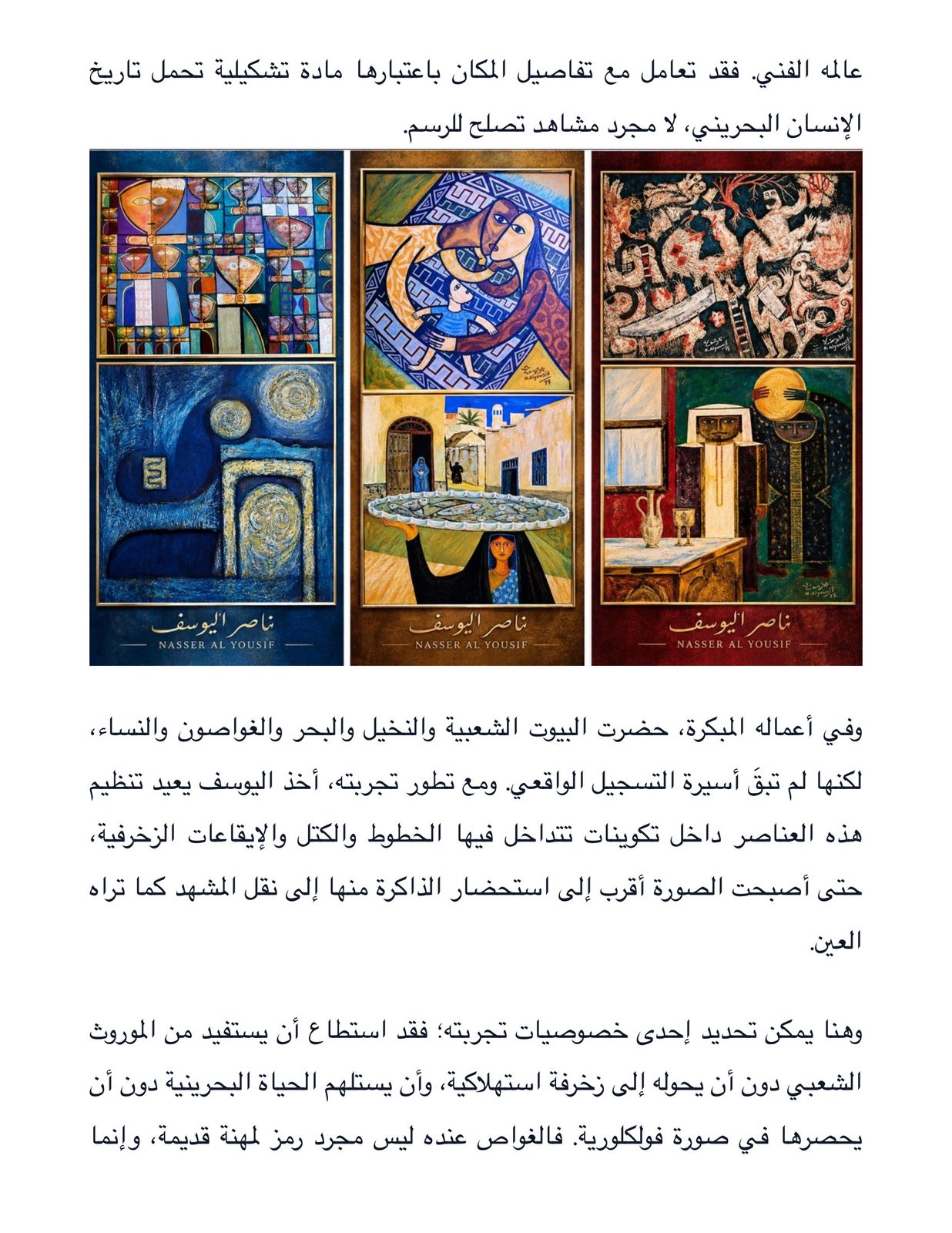
وفي أعماله المبكرة، حضرت البيوت الشعبية والنخيل والبحر والغواصون والنساء، لكنها لم تبقَ أسيرة التسجيل الواقعي. ومع تطور تجربته، أخذ اليوسف يعيد تنظيم هذه العناصر داخل تكوينات تتداخل فيها الخطوط والكتل والإيقاعات الزخرفية، حتى أصبحت الصورة أقرب إلى استحضار الذاكرة منها إلى نقل المشهد كما تراه العين.
وهنا يمكن تحديد إحدى خصوصيات تجربته؛ فقد استطاع أن يستفيد من الموروث الشعبي دون أن يحوله إلى زخرفة استهلاكية، وأن يستلهم الحياة البحرينية دون أن يحصرها في صورة فولكلورية. فالغواص عنده ليس مجرد رمز لمهنة قديمة، وإنما شاهد على علاقة الإنسان بالعمل والمخاطرة والانتظار، والنخلة ليست عنصرًا طبيعيًا فحسب، بل جزء من بنية الحياة الاجتماعية والاقتصادية التي عرفتها البحرين.
Translation
In his early works the traditional houses, the palms, the sea, the divers and the women are all present, but they did not remain captive to realistic record. As his work developed, Al-Yousif began to reorganise these elements within compositions in which lines, masses and decorative rhythms interweave, until the image came closer to a summoning of memory than to a transcription of the scene as the eye sees it.
Here one of the distinguishing features of his work can be identified. He was able to draw on folk heritage without turning it into consumer decoration, and to take inspiration from Bahraini life without confining it to a folkloric picture. For him the diver is not merely the symbol of an old trade but a witness to man's relationship with work, risk and waiting; and the palm is not only a natural element but part of the structure of the social and economic life Bahrain has known.
النص الأصلي
وتكشف أعماله المرتبطة بالغوص عن هذا الوعي، خصوصًا السلسلة التي عرضها في الكويت عام 1969، واستلهم فيها جانبًا من شعر محمد الفايز عن حياة الغواصين. فقد التقت الصورة بالكلمة لتقديم تجربة إنسانية تتجاوز الوصف الخارجي للبحر، وتقترب من مشاعر الذين عاشوا قسوته وانتظروا رزقه.
كما امتدت علاقته بالأدب إلى رسومه لديوان "عطش النخيل" للشاعر البحريني علي عبدالله خليفة، الصادر عام 1970. وهي تجربة تستحق دراسة مستقلة في تاريخ العلاقة بين الشعر والفن التشكيلي في البحرين؛ إذ لم يكن الرسم مجرد إضافة جمالية للنص، وإنما محاولة لترجمة الإحساس الشعري إلى بناء بصري له استقلاله الفني.
ومن المراحل التي تستحق اهتمامًا نقديًا أوسع انتقال اليوسف إلى فن الحفر والطباعة، بعد مشاركته في موسم أصيلة الثقافي بالمغرب عام 1980 واطلاعه على تجارب متقدمة في هذا المجال. وقد ساهم لاحقًا في إدخال تقنيات ومكابس الطباعة الفنية إلى البحرين، ونظم عام 1982 معرضًا متخصصًا في الحفر بمشاركة عدد من الفنانين.
ولم يكن هذا التحول مجرد تغيير للخامة، بل انتقالًا إلى مفهوم مختلف في بناء الصورة. فالحفر يفرض على الفنان التعامل مع السطح من خلال الأثر والفراغ والضغط والتكرار، ويمنح العلاقة بين الأسود والأبيض أهمية إنشائية تتجاوز الاستخدام التقليدي للون.
Translation
His works connected with pearl diving reveal this awareness, especially the series he showed in Kuwait in 1969, in which he drew on part of Mohammed Al-Fayez's poetry about the life of the divers. Image met word to present a human experience that goes beyond the outward description of the sea and comes close to the feelings of those who lived its harshness and waited on its bounty.
His relationship with literature also extended to his drawings for the collection "Thirst of Palms" by the Bahraini poet Ali Abdullah Khalifa, published in 1970. It is an undertaking that deserves a study of its own in the history of the relationship between poetry and the visual arts in Bahrain, for the drawing was not merely an aesthetic addition to the text but an attempt to translate poetic feeling into a visual structure with its own artistic independence.
Among the phases that deserve wider critical attention is Al-Yousif's move into etching and printmaking, after he took part in the Asilah cultural season in Morocco in 1980 and saw advanced work in the field. He later helped bring the techniques and presses of fine-art printmaking to Bahrain, and in 1982 he organised a specialised etching exhibition with the participation of a number of artists.
This shift was not merely a change of material but a move to a different conception of how an image is built. Etching obliges the artist to deal with the surface through trace, void, pressure and repetition, and it gives the relationship between black and white a structural importance that goes beyond the conventional use of colour.
النص الأصلي
وفي عدد من أعماله الطباعية، يمكن ملاحظة قدرته على تحويل الخط إلى عنصر حركي، وعلى توظيف المساحات الداكنة لتثبيت الكتل داخل التكوين، بينما تمنح الفراغات البيضاء الأشكال إيقاعها وتوازنها. وقد اقتربت بعض تكويناته من روح الزخرفة الشعبية، دون أن تفقد ارتباطها بالشخصيات والمشاهد الإنسانية.
وتبرز في هذا السياق أعمال مثل "أمنا النخلة" و"أغنيات شعبية" و"فتاتان من القرية"، بوصفها نماذج يمكن من خلالها دراسة العلاقة بين الرمز الشعبي والاختزال التشكيلي. فهذه الأعمال لا تستعيد مظاهر الحياة القديمة بهدف إثارة الحنين وحده، بل تعيد بناء تلك المظاهر داخل لغة فنية تتعامل مع الذاكرة بوصفها مادة قابلة للتأويل.
أما المرحلة الأكثر استثنائية في مسيرته، فقد بدأت بعد فقدانه البصر بصورة كاملة عام 1992. وعلى خلاف ما قد يُتوقع من توقف الفنان عن الإنتاج، واصل اليوسف العمل، مستعينًا بخبرته الطويلة وبحاسة اللمس والقص وإعداد الأشكال والقوالب الطباعية.
وقد قدم بعد ذلك معارض من بينها "التحدي الأول" عام 1998 و"التحدي الثاني" عام 2003، لتصبح هذه المرحلة واحدة من أكثر محطات تجربته إثارة للأسئلة الفنية والإنسانية.
Translation
In a number of his prints one can observe his ability to turn line into an element of movement, and to use dark areas to anchor the masses within the composition, while the white voids give the forms their rhythm and balance. Some of his compositions came close to the spirit of folk ornament without losing their connection to human figures and scenes.
Works such as "Our Mother the Date Tree", "Folk Songs" and "Two Girls from the Village" stand out in this context as examples through which the relationship between the folk symbol and visual reduction can be studied. These works do not recall the appearances of the old life in order to stir nostalgia alone; they rebuild those appearances within an artistic language that treats memory as material open to interpretation.
The most exceptional phase of his career, however, began after he lost his sight completely in 1992. Contrary to the expectation that the artist would stop producing, Al-Yousif carried on working, relying on his long experience and on the sense of touch, on cutting, and on preparing shapes and printing blocks.
He went on to present exhibitions including "Challenge One" in 1998 and "Challenge Two" in 2003, making this phase one of the stages of his career that most provokes artistic and human questions.
النص الأصلي
ومن منظور نقدي، أرى أن اختزال أعماله الأخيرة في قصة تحدي فقدان البصر يحجب جانبًا مهمًا من قيمتها الفنية. فالمسألة لا تتعلق فقط بقدرة الإنسان على تجاوز ظروفه، وإنما بالتحول الذي طرأ على عملية تكوين الصورة نفسها. لقد أصبحت الذاكرة البصرية والخبرة الحسية وسيلتين لإعادة تنظيم العلاقات بين الخطوط والمساحات، بعدما تعذر الاعتماد على المشاهدة المباشرة.
وهذا التحول يطرح سؤالًا يستحق البحث في علم نفس الفن: إلى أي مدى يستطيع الفنان الاحتفاظ ببنية الصورة في ذاكرته، وإعادة إنتاجها اعتمادًا على خبرة تراكمت عبر سنوات طويلة من الممارسة؟
إن أعمال اليوسف في هذه المرحلة تتيح مدخلًا لدراسة العلاقة بين الإدراك الحسي والذاكرة والإبداع، بعيدًا عن التفسيرات العاطفية التي كثيرًا ما تطغى على تناول تجارب الفنانين الذين واجهوا إعاقات جسدية.
Translation
From a critical standpoint, I believe that reducing his late works to the story of defying the loss of sight obscures an important side of their artistic value. The matter is not only one of a person's ability to overcome his circumstances but of the transformation that came over the very process of forming the image. Visual memory and sensory experience became the means of reorganising the relationships between lines and areas, once reliance on direct sight was no longer possible.
This transformation raises a question worth pursuing in the psychology of art: how far can an artist hold the structure of an image in his memory and reproduce it by drawing on experience built up over long years of practice?
Al-Yousif's works from this phase offer a way into the study of the relationship between sensory perception, memory and creativity, away from the emotional interpretations that so often dominate the treatment of artists who have faced physical disabilities.
النص الأصلي
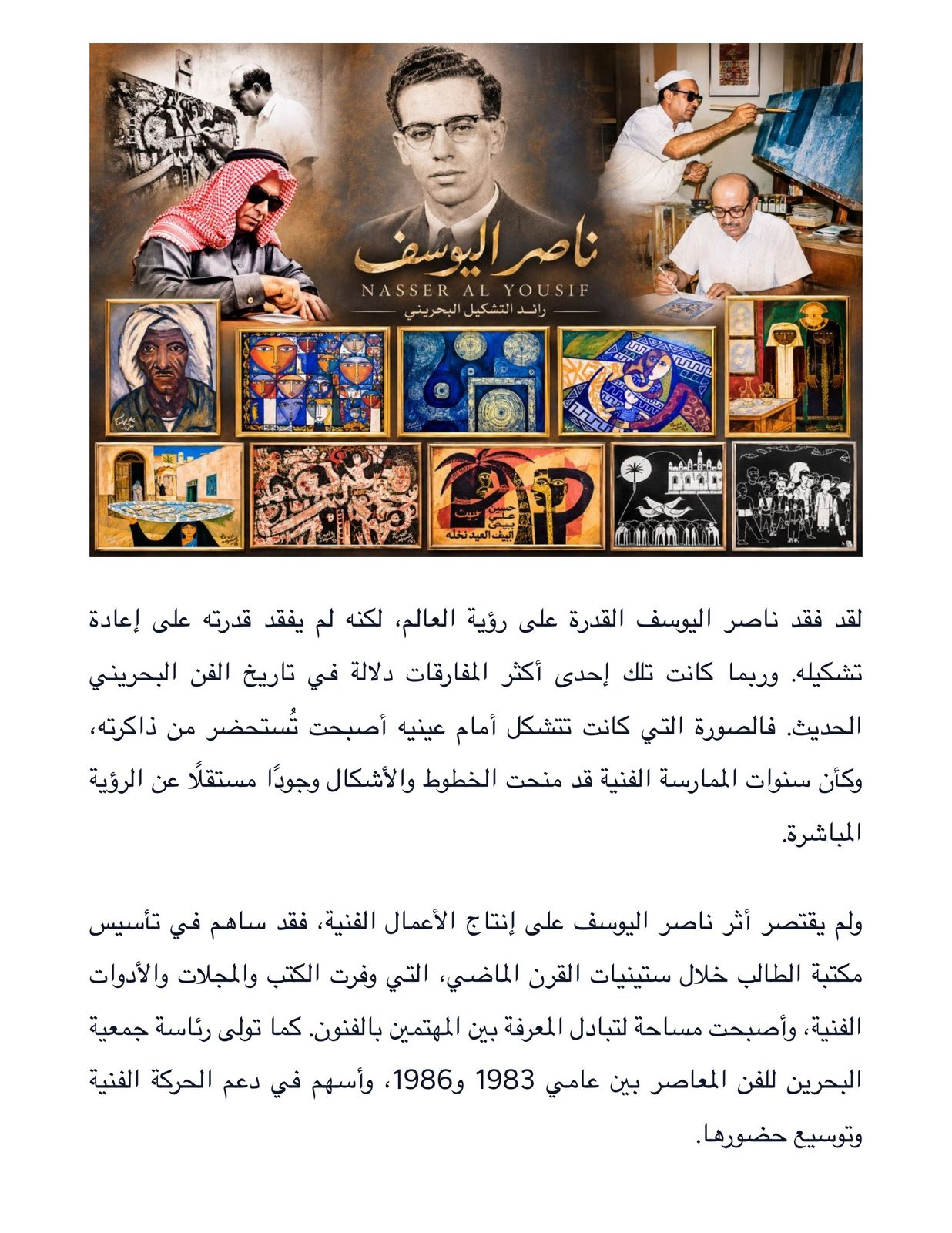
لقد فقد ناصر اليوسف القدرة على رؤية العالم، لكنه لم يفقد قدرته على إعادة تشكيله. وربما كانت تلك إحدى أكثر المفارقات دلالة في تاريخ الفن البحريني الحديث. فالصورة التي كانت تتشكل أمام عينيه أصبحت تُستحضر من ذاكرته، وكأن سنوات الممارسة الفنية قد منحت الخطوط والأشكال وجودًا مستقلًا عن الرؤية المباشرة.
ولم يقتصر أثر ناصر اليوسف على إنتاج الأعمال الفنية، فقد ساهم في تأسيس مكتبة الطالب خلال ستينيات القرن الماضي، التي وفرت الكتب والمجلات والأدوات الفنية، وأصبحت مساحة لتبادل المعرفة بين المهتمين بالفنون. كما تولى رئاسة جمعية البحرين للفن المعاصر بين عامي 1983 و1986، وأسهم في دعم الحركة الفنية وتوسيع حضورها.
Translation
Nasser Al-Yousif lost the ability to see the world, but he did not lose his ability to reshape it. That may be one of the most telling paradoxes in the history of modern Bahraini art. The image that used to take shape before his eyes came to be summoned from his memory, as though the years of artistic practice had given lines and forms an existence independent of direct sight.
Nasser Al-Yousif's influence was not confined to the making of works of art. In the 1960s he helped found Maktabat Al Talib (the Student's Bookshop), which supplied books, magazines and art materials and became a space for the exchange of knowledge among those interested in the arts. He also served as president of the Bahrain Contemporary Art Association from 1983 to 1986, and contributed to supporting the art movement and widening its presence.
النص الأصلي
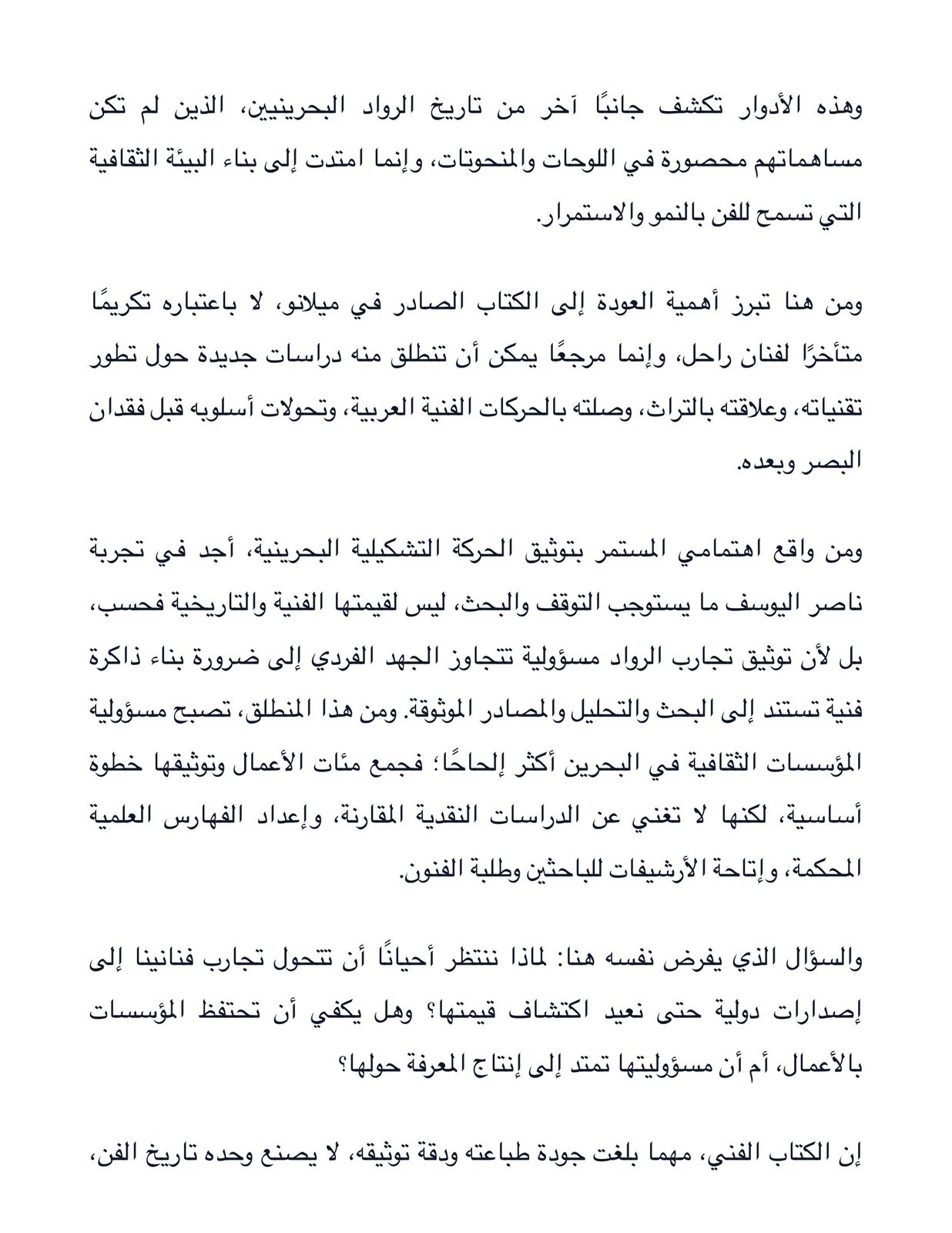
وهذه الأدوار تكشف جانبًا آخر من تاريخ الرواد البحرينيين، الذين لم تكن مساهماتهم محصورة في اللوحات والمنحوتات، وإنما امتدت إلى بناء البيئة الثقافية التي تسمح للفن بالنمو والاستمرار.
ومن هنا تبرز أهمية العودة إلى الكتاب الصادر في ميلانو، لا باعتباره تكريمًا متأخرًا لفنان راحل، وإنما مرجعًا يمكن أن تنطلق منه دراسات جديدة حول تطور تقنياته، وعلاقته بالتراث، وصلته بالحركات الفنية العربية، وتحولات أسلوبه قبل فقدان البصر وبعده.
ومن واقع اهتمامي المستمر بتوثيق الحركة التشكيلية البحرينية، أجد في تجربة ناصر اليوسف ما يستوجب التوقف والبحث، ليس لقيمتها الفنية والتاريخية فحسب، بل لأن توثيق تجارب الرواد مسؤولية تتجاوز الجهد الفردي إلى ضرورة بناء ذاكرة فنية تستند إلى البحث والتحليل والمصادر الموثوقة. ومن هذا المنطلق، تصبح مسؤولية المؤسسات الثقافية في البحرين أكثر إلحاحًا؛ فجمع مئات الأعمال وتوثيقها خطوة أساسية، لكنها لا تغني عن الدراسات النقدية المقارنة، وإعداد الفهارس العلمية المحكمة، وإتاحة الأرشيفات للباحثين وطلبة الفنون.
والسؤال الذي يفرض نفسه هنا: لماذا ننتظر أحيانًا أن تتحول تجارب فنانينا إلى إصدارات دولية حتى نعيد اكتشاف قيمتها؟ وهل يكفي أن تحتفظ المؤسسات بالأعمال، أم أن مسؤوليتها تمتد إلى إنتاج المعرفة حولها؟
إن الكتاب الفني، مهما بلغت جودة طباعته ودقة توثيقه، لا يصنع وحده تاريخ الفن، لكنه يوفر إحدى الأدوات الضرورية لكتابته. وتبقى مهمة الباحث والناقد أن يتجاوز حدود الفهرسة إلى التحليل، وأن يبحث في الظروف الاجتماعية والثقافية والتقنية التي أسهمت في تشكيل التجربة.
Translation
These roles reveal another side of the history of the Bahraini pioneers, whose contributions were not limited to paintings and sculptures but extended to building the cultural environment that allows art to grow and continue.
Hence the importance of returning to the book published in Milan, not as a belated tribute to a departed artist but as a reference from which new studies may set out: on the development of his techniques, his relationship with heritage, his connection to Arab art movements, and the changes in his style before and after the loss of his sight.
From my continuing interest in documenting the Bahraini visual arts movement, I find in Nasser Al-Yousif's work something that demands pause and study, not only for its artistic and historical value but because documenting the work of the pioneers is a responsibility that goes beyond individual effort to the need to build an artistic memory founded on research, analysis and reliable sources. From this standpoint, the responsibility of the cultural institutions in Bahrain becomes more pressing. Gathering and documenting hundreds of works is an essential step, but it is no substitute for comparative critical studies, for the preparation of rigorous scholarly catalogues, and for making the archives available to researchers and art students.
The question that imposes itself here is this: why do we sometimes wait for the work of our artists to become international publications before we rediscover its value? And is it enough for institutions to hold the works, or does their responsibility extend to producing knowledge about them?
The art book, however fine its printing and however exact its documentation, does not on its own make the history of art, but it provides one of the tools needed to write it. It remains the task of the researcher and the critic to go beyond cataloguing to analysis, and to look into the social, cultural and technical circumstances that helped shape the work.
النص الأصلي
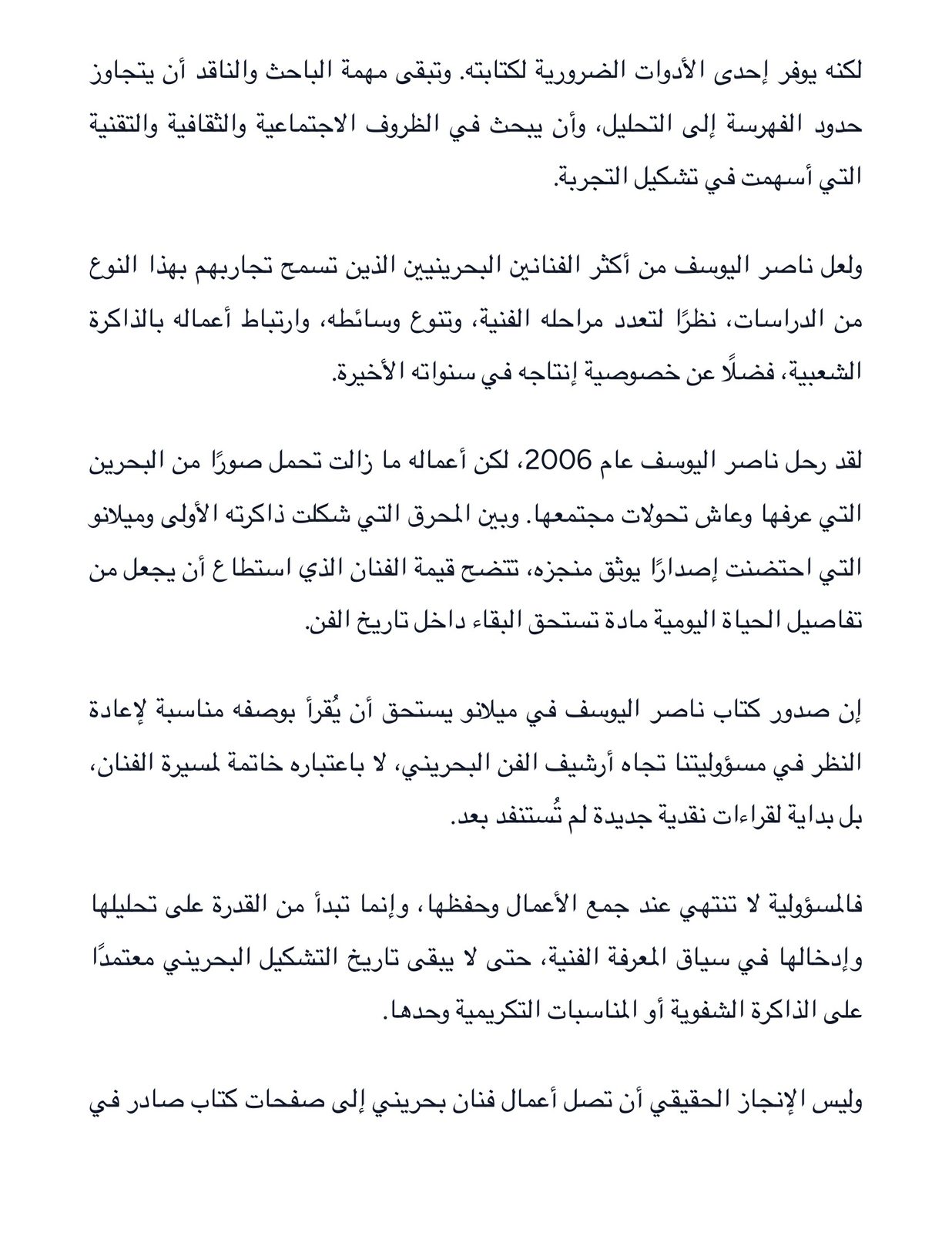
ولعل ناصر اليوسف من أكثر الفنانين البحرينيين الذين تسمح تجاربهم بهذا النوع من الدراسات، نظرًا لتعدد مراحله الفنية، وتنوع وسائطه، وارتباط أعماله بالذاكرة الشعبية، فضلًا عن خصوصية إنتاجه في سنواته الأخيرة.
لقد رحل ناصر اليوسف عام 2006، لكن أعماله ما زالت تحمل صورًا من البحرين التي عرفها وعاش تحولات مجتمعها. وبين المحرق التي شكلت ذاكرته الأولى وميلانو التي احتضنت إصدارًا يوثق منجزه، تتضح قيمة الفنان الذي استطاع أن يجعل من تفاصيل الحياة اليومية مادة تستحق البقاء داخل تاريخ الفن.
إن صدور كتاب ناصر اليوسف في ميلانو يستحق أن يُقرأ بوصفه مناسبة لإعادة النظر في مسؤوليتنا تجاه أرشيف الفن البحريني، لا باعتباره خاتمة لمسيرة الفنان، بل بداية لقراءات نقدية جديدة لم تُستنفد بعد.
فالمسؤولية لا تنتهي عند جمع الأعمال وحفظها، وإنما تبدأ من القدرة على تحليلها وإدخالها في سياق المعرفة الفنية، حتى لا يبقى تاريخ التشكيل البحريني معتمدًا على الذاكرة الشفوية أو المناسبات التكريمية وحدها.
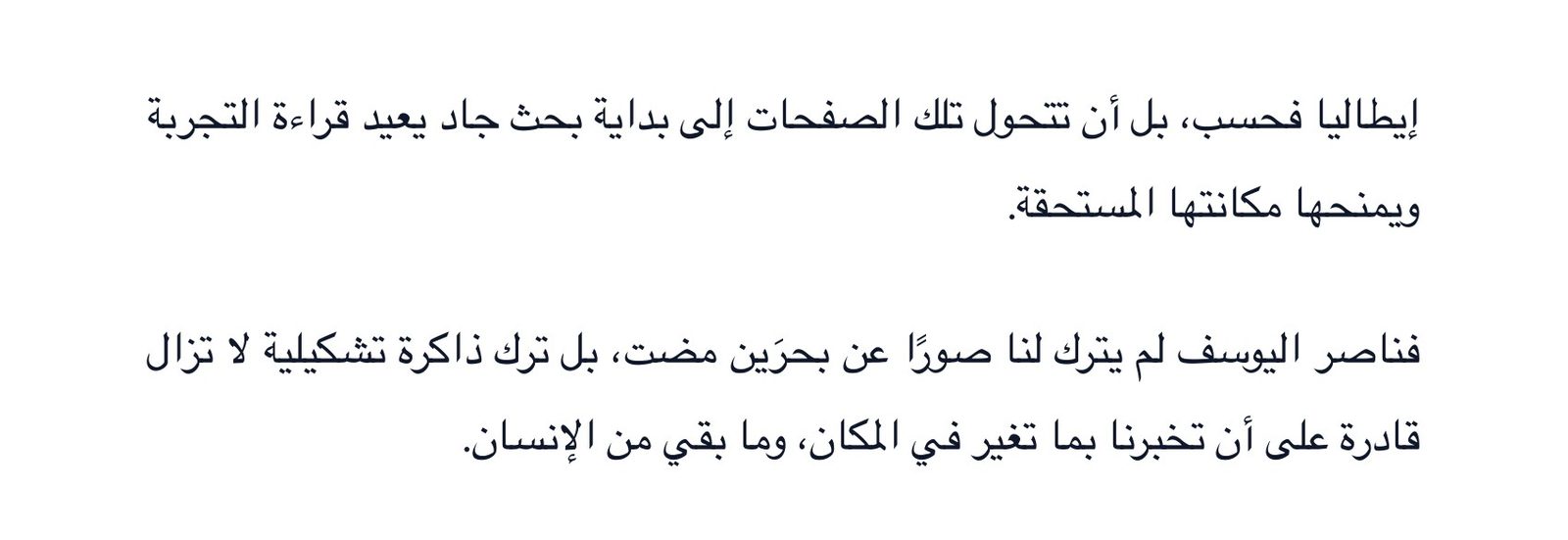
وليس الإنجاز الحقيقي أن تصل أعمال فنان بحريني إلى صفحات كتاب صادر في إيطاليا فحسب، بل أن تتحول تلك الصفحات إلى بداية بحث جاد يعيد قراءة التجربة ويمنحها مكانتها المستحقة.
Translation
Nasser Al-Yousif is perhaps among the Bahraini artists whose work most readily allows this kind of study, given the number of his artistic phases, the variety of his media and the link between his works and folk memory, as well as the particular character of what he produced in his last years.
Nasser Al-Yousif died in 2006, but his works still carry images of the Bahrain he knew and whose social changes he lived through. Between Muharraq, which formed his first memory, and Milan, which embraced a book documenting his achievement, the worth of the artist becomes clear: one who was able to make of the details of daily life material that deserves to remain within the history of art.
The publication of Nasser Al-Yousif's book in Milan deserves to be read as an occasion to reconsider our responsibility towards the archive of Bahraini art, not as the conclusion of the artist's career but as the beginning of new critical readings that have not yet been exhausted.
The responsibility does not end with collecting and preserving the works. It begins with the capacity to analyse them and bring them into the context of art knowledge, so that the history of the visual arts in Bahrain does not go on depending on oral memory or commemorative occasions alone.
The real achievement is not only that the works of a Bahraini artist should reach the pages of a book published in Italy, but that those pages should become the start of serious research that re-reads the work and gives it the standing it deserves.
النص الأصلي
فناصر اليوسف لم يترك لنا صورًا عن بحرَين مضت، بل ترك ذاكرة تشكيلية لا تزال قادرة على أن تخبرنا بما تغير في المكان، وما بقي من الإنسان.
Translation
For Nasser Al-Yousif did not leave us pictures of a Bahrain that has passed. He left a visual memory that can still tell us what has changed in the place, and what has remained of the human being.
Note
The article gives the book as some four hundred pages, launched in October 2018. The monograph as published by Skira runs to 196 pages and carries the date 2019 (ISBN 978-8857238159); see its record in this archive.