"Visual Artist Nasser Al-Yousif: Camera Closure and Insight Emergence"
Comprehensive critical analysis by Jordanian critic Mohammed Al-Amiri
An extensive critical essay by Jordanian critic and visual artist Mohammed Al-Amiri examining Nasser Al-Yousif's artistic journey with a focus on transformation after losing sight. The essay provides a philosophical analysis of blindness and artistic vision, discusses Al-Yousif's deep connection to Bahraini heritage, particularly Muharraq architecture and traditions, and examines technical aspects of his pre- and post-blindness work, including printmaking techniques learned at the Asilah Festival. Addresses the need for comprehensive documentation of Al-Yousif's complete works and archives. Discusses his exhibition "Manifestation of Insight" at Dar Al-Bareh Gallery, collaboration with poet Ali Abdullah Khalifa on "Thirst of Palm Trees," and various printmaking techniques including monotype, zinc, monoprint, linoleum, and collotype. Positions Al-Yousif within the broader context of the Arab artistic movement.
- Archive no. ARC-20250711-002
- 5 pages scanned
SubjectsMohammed Al-AmiriJordanian criticcamera closure metaphorinsight emergencepost-blindness artistryMuharraq architectureBahraini heritage documentationprintmaking techniquesAsilah FestivalManifestation of Insight exhibitionDar Al-Bareh GalleryAli Abdullah Khalifa collaborationThirst of Palm Treesmonotype zinc monoprint linoleum collotypeAbdul Karim Al-BustaIbrahim Busaadtraditional games folkloreclay walls shadowspiano fingers metaphor
النص الأصلي
التشكيلي ناصر اليوسف
انغلاق الكاميرا وانبلاج البصيرة
محمد العامري / ناقد وتشكيلي من الأردن.
حين نتورط بالحديث عن فنان مثل ناصر اليوسف نتورط في الوقت ذاته بإسقاط قلقنا الإنساني عليه تحديدا في لحظة رحيلة ليصبح كل شيء حوله وفيه مثاليا وجميلا وسؤالي هو أين كان هذا الجمال المطرد في لحظة كان فيها ناصر اليوسف يتنفس بعافية أعماله الفنية، أعرف معنى هذا كوننا نحب الحديث عن الموتى بمتعة غريبة أشبه بمن أزاح ستارا كان لا يقوى على إزاحته الا في لحظة رحيل البطل.
Translation
Visual Artist Nasser Al-Yousif: Camera Closure and Insight Emergence
Mohammed Al-Amiri / Critic and Visual Artist from Jordan
When we get involved in talking about an artist like Nasser Al-Yousif, we simultaneously get involved in projecting our human anxiety onto him, specifically at the moment of his departure, so that everything around and within him becomes ideal and beautiful. My question is: where was this steady beauty at a moment when Nasser Al-Yousif was breathing with the vigor of his artistic works? I know the meaning of this as we love talking about the dead with strange pleasure, like someone who removed a curtain that he could only remove at the moment of the hero's departure.
النص الأصلي
اسئلة تشبك في ذاكرتي كوني اشتبكت مع أصدقاء كانوا قد سجلوا مواقف مغايرة في الشخص نفسه في لحظة الموت كما لو أن الموت مادة للتصالح الحي مع الشيء ونقيضه وهي مسألة لها علاقة بالمرجعيات الشعبية في تاريخ الشرق، ولا ضير من ذلك، فأنا لست واديا من هؤلاء، أنا لا أعرف ناصر اليوسف، أنا أعرف عائلة الوانه وقطعه الفنية وأستطيع القول إنني تتبعت أثر إزميله في مطبوعاته وعرفت كنه ما كان يفكر به من هواجس في الأغلب كانت بعيدة عن فكرة إعادة إنتاجه في ملامح أخرى... كان كما أعرف كمن يذهب الى وادٍ تحتي إعشابه على عشبة نادرة لها علاقة بإصراره على الحياة أي كان يعمل بكد ضد فكرة الموت لا اقصد الموت البيولوجي بل ذهب الى منطقة الخلود الطيب فيما أنجز، كان في تسابق مع ذاته لتظهر مرحلة تلت فقدان بصره ليقدم مساحة أمل لنفسه أولا ولما سيخلفه أنموذج في حين رحيله، كان يعرف طبيعة مرضه، وكان متوقعاً في كل لحظة الموت، فكانت الهمة الإبداعية المضاعفة التي انعكست عليه بشكل إيجابي في الانتصار لفكرة الحياة بعد الموت من خلال منجزه الإبداعي.
أعتقد أنه حقق ما أراد حيث نشهد في الحوارات الفنية ما يقال من قول طيب عن هذا الفنان، فوجوده لا يزال متحققا عبر ذلك المنجز الذي لم يدرس بعد حسب رأيي. من هنا أتساءل عن وثائق الفنان اليوسف من مذكرات وتخطيطات وصولا إلى توثيق أعماله في مرسمه ولدى المقتنين، وأتمنى في هذا الموقف أن يتم حصر منجزه من خلال لجنة متخصصة لإصدار كتاب عنه كي يشكل مدونة من مدونات التشكيل البحراني خاصة والتشكيل العربي عامة .
استهلال عاطفي
حين يسقط غالق العين التي تسجل الأحلام والواقع معاً وحين يواجه الكائن حياة جديدة في المكوث في ليل الصورة ، صورة لا خطوط لها سوى أنها تأهبات كانت قد سبقت موت العين، كانت صوراً تموج في ضوء كاميرا العين لتنغلق في جهمة ليل الوحدة .
نعم في الغالب الأعمى وحيد بل وكثير بذاته إلا من كل شيء.
كان قد سجله في لحظة عشق تخصه وتخص ما اقترب وتجاور مع روحه .
إن ما أُخذ من ماء العين مرايا كانت تعكس نقطة الضوء وتخزن في ذاكرة القلب، ذاكرة البصيرة خزان العشق والصور، فناصر اليوسف قد عرف أن ما يمكن أن يقال في الصورة من الممكن أن يقال في ضوء الأصابع فلا حاجة لكاميرا العين التي تعبأت من تعب الدنيا لتنغلق على ذاتها في لحظة اليأس ، يأس المناخ العربي كله وما حالت إليه الحال الجمعية من انحدارات تشبه في حركتها ( المتردية ) التي اصبح لحمها حراماً.
لم أجد في ناصر اليوسف سوى أنموذجا خلاق من هؤلاء الذين دخلوا غرفة الذات ليشكلوا احلاما اكبر من الإبصار ، تلك الأحلام التي تكثفت قطرة قطرة بعيدا عن شمولية المشهد ، صورة مصفاة من شائبات اللغو الثقافي الذي اندرج في جمع المتع الزائفة، كان بعيداً عن ذلك في حياته حتى سقطت ذبالته الأخيرة .
ما بقي من حلم وما تخثر من ذاكرة .
لن أدخل في كلام الإحصاء، وعن يوم ميلاده، أو كيف عاش، وكم ابنا له...
Translation
Questions intertwine in my memory as I clashed with friends who had recorded different positions regarding the same person at the moment of death, as if death were material for the living to reconcile with the thing and its opposite. This is a matter related to popular references in Eastern history, and there's no harm in that. I am not one of those valleys; I don't know Nasser Al-Yousif. I know his family of colors and artistic pieces, and I can say I traced his chisel's mark in his prints and knew the essence of what he was thinking about - concerns that were mostly far from the idea of reproducing him in other features...
He was, as I know, like one who goes to a valley whose grass hides a rare herb related to his insistence on life, meaning he worked hard against the idea of death. I don't mean biological death, but he went to the region of good immortality in what he achieved. He was racing with himself to show a phase that followed his loss of sight, to provide a space of hope for himself first and for what he would leave as a model upon his departure. He knew the nature of his illness and expected death at any moment, so there was doubled creative determination that reflected on him positively in victory for the idea of life after death through his creative achievement.
I believe he achieved what he wanted, as we witness in artistic dialogues, the good things said about this artist. His presence is still realized through that achievement that has not yet been studied, in my opinion. Hence, I wonder about artist Al-Yousif's documents - memoirs, sketches, and documentation of his works in his studio and with collectors. I hope at this juncture that his achievement will be catalogued through a specialized committee to issue a book about him to form one of the chronicles of Bahraini art, specifically, and Arab art generally.
Emotional Introduction
When the shutter of the eye that records dreams and reality together falls, and when the being faces a new life in dwelling in the night of the image - an image with no lines except that they are preparations that preceded the eye's death, images that rippled in the light of the eye's camera to close in the gloom of solitude's night.
Yes, generally the blind person is lonely, indeed very much so, except for everything.
He had recorded it in a moment of love that belongs to him and to what approached and neighbored his soul.
What was taken from the eye's water were mirrors that reflected the point of light and stored in the heart's memory, the memory of insight - the reservoir of love and images. Nasser Al-Yousif knew that what can be said in the image can be said in the light of fingers, so there's no need for the eye's camera that filled up from the world's fatigue to close upon itself in the moment of despair - the despair of the entire Arab climate and what the collective situation has come to in terms of deteriorations resembling in their movement the "fallen" whose meat has become forbidden.
I found in Nasser Al-Yousif only a creative model of those who entered the room of the self to form dreams larger than sight - those dreams that condensed drop by drop away from the comprehensiveness of the scene, an image filtered from the impurities of cultural chatter that was classified in collecting false pleasures. He was far from that in his life until his last wick fell.
What Remained of Dream and What Coagulated from Memory
I won't enter into statistical talk about his birth date or how he lived, and how many sons he had...
Works discussed on this page
النص الأصلي
... أنا أرى إلى عائلة اليوسف هي ما حلم من شكل واقع في الزمان والمكان وما تخيله في اليقظة والحلم والذي أفهمه، إنه كان العاشق الكاظم على الحب بهدوئه لجم وموسيقى أصابعه النحيلة التي تشبه أصابع البيانو، فحين انغلقت عينه على آخر مشهد رآه كان قد انفتح أمامه آلاف المشاهد التي لم يصرح بها في الرسم أو الكلام، مشاهده الخاصة، ومشاهد طفولة كانت قد ركزت في تلك المنطقة منطقة الحب ، لذلك ظل يقبض على إزميل الحفر وريشة الرسم ليستعيد صهد مكانه وظلال الناس التي كانت ترسم على الجدران الطينية ، خيالات أمسك بها اليوسف ليحبرها على الباليته لينسخ منها ما علق من ذاكرة الحبر، وكذلك في الرسم حين دون أحلام المكان البحراني الذي مكث فيه وتشبعت بها عينه .
الذي خبر دروب خطوطه بلمسها واسقاطها على المشهد القابع في الذاكرة، لم يكن بحاجة أبداً إلى كاميرا عينه ليسجل تلك الأمكنة والناس كونه يمتلك خزان القلب الذي احتشد بالصور وإيقاعات الناس والحيوانات بل خبر كل خطوة خطاها على تراب البحرين متأملاً مناخ اللوحة والمطبوعة، ولا أدري لماذا يذكرني اليوسف بهيئته بالشاعر لكويتي فهد العسكر كما لو أن ايقاعا مشتركاً بينهما ربما أكون على شك مما أقول، لكني أحس ذلك جليا فيما وصل إليه الاثنان من نهايات وإنجاز إبداعي .
صلابة تصر على الامساك بالعشق الخلاق داخل يقظة الصورة، فكيف للريشة أن تسقط من يده وقد أصبحت أصبعا سادسا في يده، حامل راية الحب في تاريخ الحركة التشكيلية في البحرين وشاهد إرهاصاتها الأولى، بل أنموذج خلاق للاقتداء بما كان يحلم بتحقيقه هو من عائلة (ملدورية) نسبة لأناشيد مالدورو ............
وتعد تجربة الفنان ناصر اليوسف المناخ الأكثر مشاكسة للعجز الإنساني، وتجاوز الألم بألم ألذ ، ألم الابداع، إنه التحدى في اقتفاء الحياة والمكوث فيها بعيداً عن الموت.
الإنسان والمكان في أعماله
لم ينفصل اليوسف عن ذاكرته الشعبية حيث مثلت له زخماً بصرياً محورياً لا يمكن إنكاره، والدليل على ذلك تلك الموضوعات التي تناولتها لوحاته ومحفوراته، فقد كانت الدليل إلى الأمكنة في الأحياء البحرانية، وكانت إشاراته إلى تلك الأمكنة واضحة تخفي خلفها مذكرات البصر والبصيرة، حيث قدم من روحه مزاجاً خاصاً لتلك الأمكنة التي بدت في لحظة فارغة وفي لحظة أخرى مشتبكة مع الانسان ... ملامح الجيران وطبيعة الإنسان البحراني بملابسه وطقوسه الخاصة ...
كل هذا جعل من محلية موضوعاته مادة تتحقق من خلالها على ملامح المكان، فكثير من الأمكنة في البحرين التي رسمها اليوسف وغيره من الفنانين الرواد قد تغيرت ملامحها فكانت الشاهد الصادق تلك الريشة التي حبرت ذلك المكان في لحظة عشقٍ خاص الى جانب الفوتوغرافيا التاريخية لتلك الأحياء وما كانت تشهده من احداث ثقافية وسياسية وصولا إلى الطقوس الشعبية من مباهج الأعياد ومشاهد الأسواق التي تعج بالناس، فكانت أعماله الذاكرة التي تسجل تلك المشاهد بأحاسيس ابن المنطقة بعيدا عن منطق الاستشراق البارد بل كانت أعماله واحة عشق ممتلئة بحرارة الذكريات وخفقان القلب .
Translation
.. I see Al-Yousif's family as what he dreamed of in the form of reality in time and place, and what he imagined in wakefulness and dreams. What I understand is that he was the suppressed lover of love with his quiet dignity and the music of his thin fingers that resemble piano fingers. When his eye closed on the last scene he saw, thousands of scenes that he hadn't declared in drawing or speech opened before him - his private scenes, and childhood scenes that had concentrated in that region, the region of love. Therefore, he kept grasping the engraving chisel and drawing brush to restore the echo of his place and the shadows of people that used to be drawn on clay walls - phantoms that Al-Yousif grasped to ink on the palette to copy from them what stuck from the ink's memory, and likewise in drawing when he recorded the dreams of the Bahraini place where he dwelled and his eye was saturated with it.
He who experienced the paths of his lines by touching them and projecting them onto the scene residing in memory was never in need of his eye's camera to record those places and people because he possessed the heart's reservoir that was crowded with images and rhythms of people and animals. Indeed, he experienced every step he took on Bahrain's soil, contemplating the climate of the painting and the print. I don't know why Al-Yousif reminds me of the Kuwaiti poet Fahd Al-Askar, as if there were a shared rhythm between them. Perhaps I'm uncertain about what I'm saying, but I feel this clearly in what both reached in terms of endings and creative achievement.
Firmness insists on grasping creative love within the wakefulness of the image. How could the brush fall from his hand when it had become a sixth finger in his hand, a banner bearer of love in the history of the fine arts movement in Bahrain, and witness to its first stirrings? Indeed, a creative model to be emulated in what he dreamed of achieving from the "Maldorian" family in reference to Maldoror's chants...
The experience of artist Nasser Al-Yousif is considered the most troublesome climate for human disability, transcending pain with sweeter pain - the pain of creativity. It is the challenge in pursuing life and dwelling in it away from death.
The Human and Place in His Works
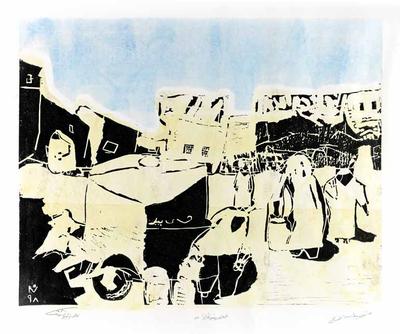
Al-Yousif did not separate from his popular memory, which represented for him an undeniable pivotal visual momentum. The evidence for this is those subjects that his paintings and engravings addressed, as they were the guides to places in Bahraini neighborhoods. His references to those places were clear, hiding behind them memoirs of sight and insight, where he offered from his soul a special mood for those places that appeared empty at one moment and in another moment engaged with humans... features of neighbors and the nature of the Bahraini person with his clothes and special rituals...
All this made the locality of his subjects a material realized through them on the features of the place. Many places in Bahrain that Al-Yousif and other pioneer artists painted have changed their features, so that honest witness was that brush that inked that place in a moment of special love alongside the historical photography of those neighborhoods and the cultural and political events they witnessed, reaching the popular rituals from the joys of holidays and market scenes teeming with people. His works were the memory that recorded those scenes with the feelings of a son of the region, away from the logic of cold orientalism. Rather, his works were an oasis of love filled with the warmth of memories and the heart's palpitation.
Works discussed on this page
النص الأصلي
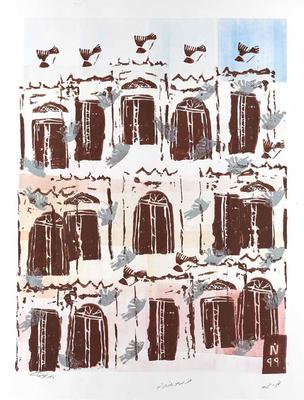
كمدينة المحرق ( مسقط ظله ) مثلاً التي شكلت مثالاً مهماً في أعماله بل وعكس طبيعة عمائرها وأبوابها ونوافذها... إن تلك الذاكرة التي كانت تنهل من المحيط.
والحيز من شكل ورائحة وذكريات عشق وصداقات ارتبطت بتلك الأمكنة، جاءت لتكون مؤونته الأولى في التعبير عن دهشاته .
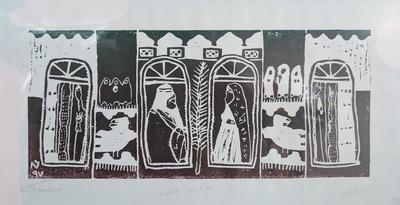
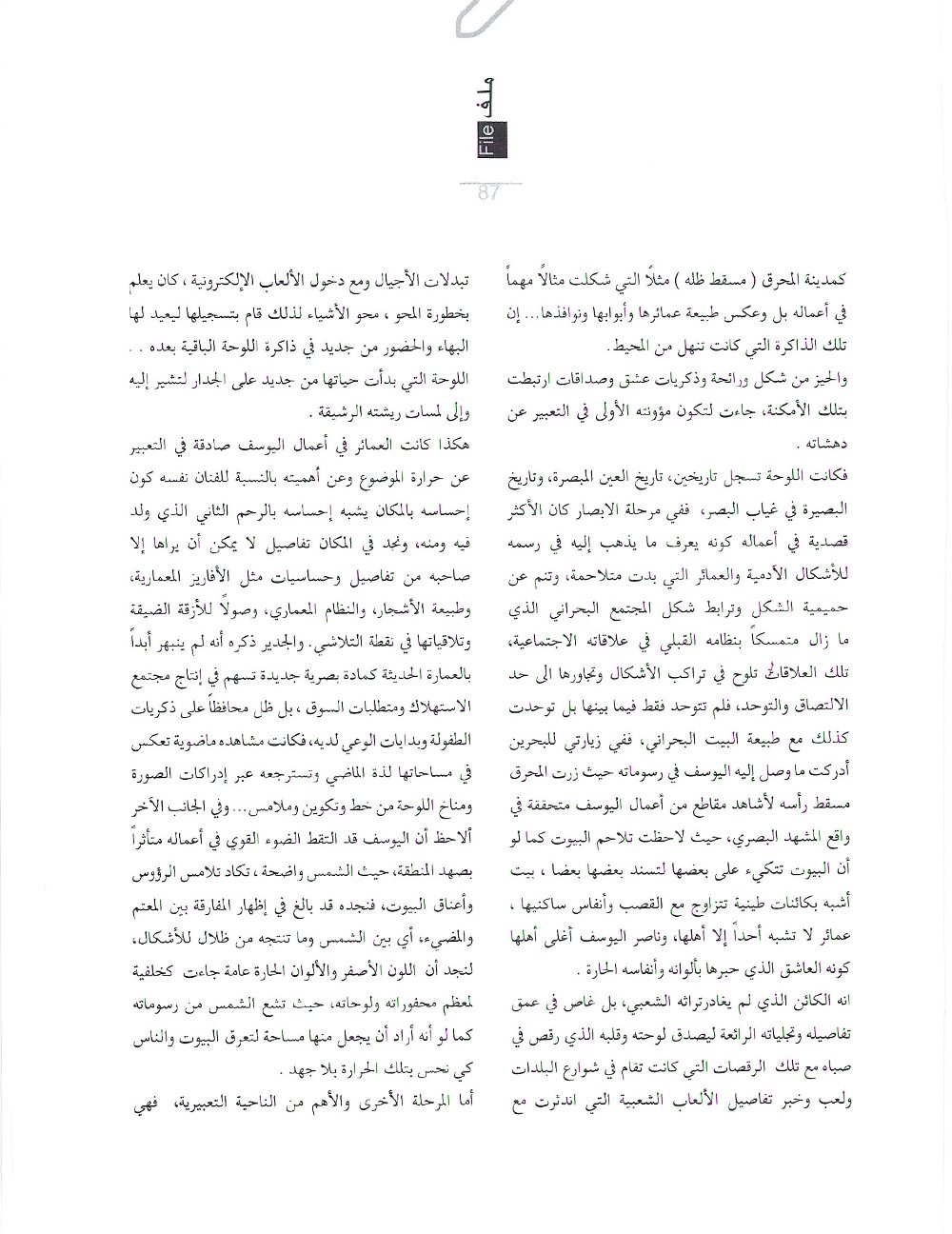
فكانت اللوحة تسجل تاريخين، تاريخ العين المبصرة، وتاريخ لبصيرة في غياب البصر، ففي مرحلة الابصار كان الأكثر قصدية في أعماله كونه يعرف ما يذهب إليه فى رسمه للأشكال الأدمية والعمائر التي بدت متلاحمة، وتنم عن حميمية الشكل وترابط شكل المجتمع البحراني الذي ما زال متمسكاً بنظامه القبلي في علاقاته الاجتماعية، تلك العلاقات تلوح في تراكب الأشكال وتجاورها الى حد الالتصاق والتوحد، فلم تتوحد فقط فيما بينها بل توحدت كذلك مع طبيعة البيت البحراني، ففي زيارتي للبحرين أدركت ما وصل إليه اليوسف في رسوماته حيث زرت المحرق مسقط رأسه لأشاهد مقاطع من أعمال اليوسف متحققة في واقع المشهد البصري، حيث لاحظت تلاحم البيوت كما لو أن البيوت تتكيء على بعضها لتسند بعضها بعضا ، بيت أشبه بكائنات طينية تتزاوج مع القصب وأنفاس ساكنيها ، عمائر لا تشبه أحدا إلا أهلها، وناصر اليوسف أغلى أهلها كونه العاشق الذي حبرها بالوانه وأنفاسه الحارة .
انه الكائن الذي لم يغادر تراثه الشعبي، بل غاص في عمق تفاصيله وتجلياته الرائعة ليصدق لوحته وقلبه الذي رقص في صباه مع تلك الرقصات التي كانت تقام في شوارع البلدات ولعب وخبر تفاصيل الألعاب الشعبية التي اندثرت مع تبدلات الأجيال ومع دخول الألعاب الإلكترونية ، كان يعلم بخطورة المحو ، محو الأشياء لذلك قام بتسجيلها ليعيد لها البهاء والحضور من جديد في ذاكرة اللوحة الباقية بعده . .
اللوحة التي بدأت حياتها من جديد على الجدار لتشير إليه وإلى لمسات ريشته الرشيقة .
هكذا كانت العمائر في أعمال اليوسف صادقة في التعبير عن حرارة الموضوع وعن أهميته بالنسبة للفنان نفسه كون إحساسه بالمكان يشبه إحساسه بالرحم الثاني الذي ولد فيه ومنه، ونجد في المكان تفاصيل لا يمكن أن يراها إلا صاحبه من تفاصيل وحساسيات مثل الأفاريز المعمارية، وطبيعة الأشجار، والنظام المعماري، وصولًا للأزقة الضيقة وتلاقياتها في نقطة التلاشي. والجدير ذكره أنه لم ينبهر أبداً بالعمارة الحديثة كمادة بصرية جديدة تسهم في إنتاج مجتمع الاستهلاك ومتطلبات السوق ، بل ظل محافظا على ذكريات الطفولة وبدايات الوعي لديه، فكانت مشاهده ماضوية تعكس في مساحاتها لذة الماضي وتسترجعه عبر إدراكات الصورة ومناخ اللوحة من خط وتكوين وملامس... وفي الجانب الآخر ألاحظ أن اليوسف قد التقط الضوء القوي في أعماله متأثراً صهد المنطقة، حيث الشمس واضحة ، تكاد تلامس الرؤوس وأعناق البيوت، فنجده قد بالغ في إظهار المفارقة بين المعتم والمضيء، أي بين الشمس وما تنتجه من ظلال للأشكال، لنجد أن اللون الأصفر والألوان الحارة عامة جاءت كخلفية لمعظم محفوراته ولوحاته، حيث تشع الشمس من رسوماته كما لو أنه أراد أن يجعل منها مساحة لتغرق البيوت والناس كي نحس بتلك الحرارة بلا جهد .
Translation
Like the city of Muharraq (his birthplace), for example, which formed an important example in his works and even reflected the nature of its buildings, doors, and windows... That memory that drawn from the surrounding environment.
And the space of form, smell, and memories of love and friendships connected to those places came to be his first provision in expressing his amazements.
The painting recorded two histories: the history of the seeing eye and the history of insight in the absence of sight. In the sight phase, he was more intentional in his works because he knew what he was going to do in human forms and buildings that appeared cohesive, indicating the intimacy of form and the interconnectedness of Bahraini society's form, which still adheres to its tribal system in social relations. Those relations appear in the accumulation of forms and their adjacency to the point of adhesion and unity. They not only united among themselves but also united with the nature of the Bahraini house. In my visit to Bahrain, I realized what Al-Yousif reached in his drawings when I visited Muharraq, his birthplace, to see segments of Al-Yousif's works realized in the reality of the visual scene, where I noticed the cohesion of houses as if the houses lean on each other to support one another - houses resembling clay beings mating with reeds and the breaths of their inhabitants, buildings that resemble no one except their people. Nasser Al-Yousif is their dearest because he is the lover who inked them with his colors and warm breaths.
He is the being who did not leave his popular heritage but dove into the depth of its details and wonderful manifestations to authenticate his painting and his heart that danced in his youth with those dances that were held in town streets. He played and experienced the details of popular games that disappeared with generational changes and with the entry of electronic games. He knew the danger of erasure - the erasure of things - so he recorded them to restore their splendor and presence anew in the memory of the painting remaining after him...
The painting that began its life anew on the wall pointed to him and to the touches of his elegant brush.
Thus the buildings in Al-Yousif's works were honest in expressing the warmth of the subject and its importance to the artist himself, as his feeling for place resembles his feeling for the second womb in which and from which he was born. We find in the place details that only its owner can see - details and sensitivities like architectural friezes, the nature of trees, the architectural system, reaching the narrow alleys, and their meetings at the vanishing point. Worth mentioning is that he was never dazzled by modern architecture, as new visual material contributed to producing a consumer society and market requirements. Rather, he remained conservative about childhood memories and the beginnings of his consciousness, so his scenes were past-oriented, reflecting in their spaces the pleasure of the past and retrieving it through image perceptions and the painting's climate of line, composition, and textures... On the other side, I notice that Al-Yousif captured strong light in his works, influenced by the region's heat, where the sun is clear, almost touching the heads and necks of houses. We find he exaggerated in showing the contrast between the dark and the bright, meaning between the sun and the shadows it produces for forms, so we find that yellow color and warm colors generally came as background for most of his engravings and paintings, where the sun radiates from his drawings as if he wanted to make it a space to drown houses and people so we feel that heat without effort.
Works discussed on this page
النص الأصلي
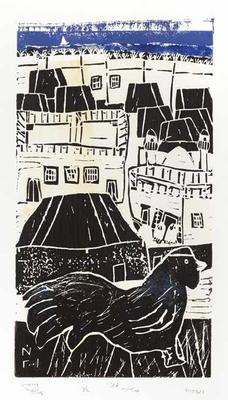
أما المرحلة الأخرى والأهم من الناحية التعبيرية، فهي مرحلة فقدان البصر واشعاع البصيرة لنرى إلى أن اشكال الناس والبيوتات بدت مفرغة مستثمراً إيضاحاته الخطوطية، فالإنسان يبدو لديه مجموعة من الخطوط الخارجية، وأعتقد أن ذلك له علاقة بمسألتين، مسألة الصورة المخزنة في أيام الإبصار، وذكرى الصورة الباقية في القلب وخبرة اليد، وصولا إلى الطرائق التي اتبعها في تنفيذ تلك المحفورات التي كانت تمر بأكثر من مرحلة، مرحلة قص الشكل وإسقاطه على الباليته، ومرحلة الحفر من باب التغلب على عدم الرؤية وتثوير حاسة اللمس حتى إن أصابعه أصبحت كما عكاكيز تقتفي أثر الخط الذي يشكل المشهد، فأصبح يرى بخمسة أعين بدلا من العينين ، إنه الإصرار على الحياة ضد ذاكرة لموت والدفاع عن الذات العالية في مواصلتها بالكد والعمل للحصول على وجود من نوع ما . فأصبح كما لو أنه كائن تركز في منطقة النحت الملموس، فكان اللمس الأجدى للتلذذ بما فعل ليقدم قيما فنية مختلفة في التعبير وأكثر تأثيراً على المشاهد.
ولعل معرضه الشخصي الذي أقيم في سبتمبر في غاليري دار البارح بعنوان (تجلي البصيرة) هو التحدى الواضح الذي
يقدمه اليوسف كرسالة انسانية وثقافية للمبدع العربي، كما لو أنه أراد القول إن ( اللوحة في القلب لا بالكلام)، بل إن أعمال ناصر اليوسف بمجملها الزيتية والحفر، لم تخرج عن التراث البحريني الشعبي.
وأعتقد أن البيئة التي استهوته لم تكن مجرد شكل لمنظر طبيعي بل كانت الروح التي تتحرك من خلالها الأشياء، فنجح بكثير من العفوية في إنجاح لوحة تقترب من التجريد والانطباعية الخاصة لتكون الأكثر تفاعلا مع الخاصة والعامة.
لم يتوقف اليوسف كذلك عن المغامرة في الفن عبر تجريب أنماط جديدة. فكانت تجربته في التجريد في ديوان على عبدالله خليفة (عطش النخيل) حين استبطن الشعر من خلال الرسم ليقد مساحة جديدة من المغامرة الفنية مردها الشعر والتشكيل، ولم يكن حضوره العربي بأقل من حضوره المحلي، حيث قدم مشاركات في مهرجان أصيلة مع مجموعة من الفنانين البحرينيين منهم عبد الكريم البوسطة، وابراهيم بوسعد، والتي أسهمت في انفتاحه على فن الحفر بشتى أنواعه مثل المنوتايب، والزنك، والمنوبرنت، واللنوليوم، والكولوتايب، ليقدم مجموعة من تجاربه الأولى في الحفر.
Translation
As for the other and more important phase from the expressive standpoint, it is the phase of losing sight and the radiation of insight, where we see that the forms of people and houses appeared hollow, investing their linear clarifications. The human appears to him as a group of external lines, and I believe this relates to two matters: the matter of the image stored in the days of sight, and the memory of the image remaining in the heart and the hand's experience, reaching the methods he followed in executing those engravings that went through more than one stage - the stage of cutting the form and projecting it onto the palette, and the stage of engraving to overcome the lack of vision and revolutionize the sense of touch, so that his fingers became like crutches following the trace of the line forming the scene. He became seeing with five eyes instead of two. It is an insistence on life against the memory of death and a defense of the high self in continuing with effort and work to obtain the existence of some kind. He became as if he were a being concentrated in the region of tangible sculpture, so touch was most beneficial for enjoying what he did to present different artistic values in expression, and more influential on the viewer.
Perhaps his personal exhibition held in September at Dar Al-Bareh Gallery titled "Manifestation of Insight" is the clear challenge that Al-Yousif presents as a human and cultural message to the Arab creator, as if he wanted to say that "the painting is in the heart, not in words." Indeed, Nasser Al-Yousif's works in their entirety - oil and engraving - did not depart from Bahraini popular heritage.
I believe the environment that attracted him was not merely a form of natural scenery, but was the spirit through which things move. He succeeded with much spontaneity in making a painting that approaches abstraction and special impressionism to be the most interactive with both elite and general audiences.
Al-Yousif also did not stop adventuring in art through experimenting with new patterns. His experience in abstraction was in Ali Abdullah Khalifa's poetry collection "Thirst of Palm Trees," when he internalized poetry through drawing to provide a new space of artistic adventure whose source is poetry and visual art. His Arab presence was no less than his local presence, where he presented participations in Asilah Festival with a group of Bahraini artists including Abdul Karim Al-Busta and Ibrahim Busaad, which contributed to his openness to engraving art in all its types such as monotype, zinc, monoprint, linoleum, and collotype, to present a group of his first experiences in engraving.
Works discussed on this page