"The Impact of Faith on the Muslim Artist"
Essay by Nasser Al-Yousif on spirituality in Islamic art
Philosophical essay by artist Nasser Al-Yousif examining the relationship between religious faith and artistic creation in Islamic art. Article begins with personal reflection on a 13th-century glass lantern at the Islamic Museum in Cairo, analyzes technical mastery of Muslim artists in glassmaking and colored glass production using metal oxides, explores spiritual dimensions of Islamic art across various media (glass, wood, copper), discusses Islamic architecture as expression of prayer and devotion, and concludes with contemporary commentary on Ministry of Housing's efforts to incorporate Islamic architectural elements in modern building design. Combines art historical analysis with personal spiritual reflection and cultural critique.
- Archive no. ARC-20250707-001
- 9 pages scanned
SubjectsNasser Al-Yousif writingsIslamic artMuslim artistsfaith and artreligious devotionglass lanternIslamic Museum Cairo13th century artcolored glass techniquesmetal oxidescopper oxideiron oxideantimony acidIslamic architecturemosque designspiritual artprayer and artArab-Islamic identitycontemporary architectureMinistry of Housingcultural heritageart philosophyreligious art studies
النص الأصلي
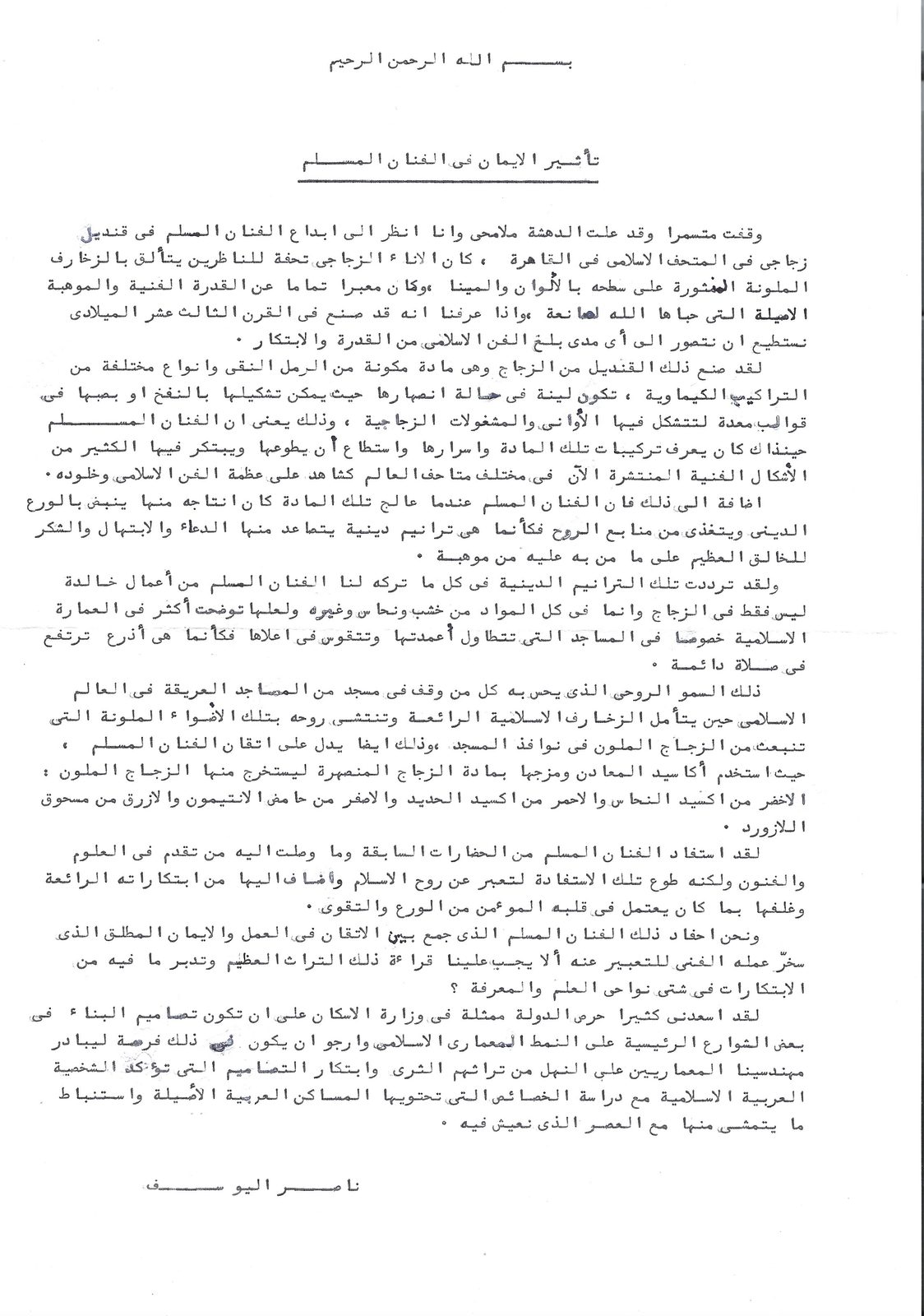
تأثير الايمان فى الفنان المسلم
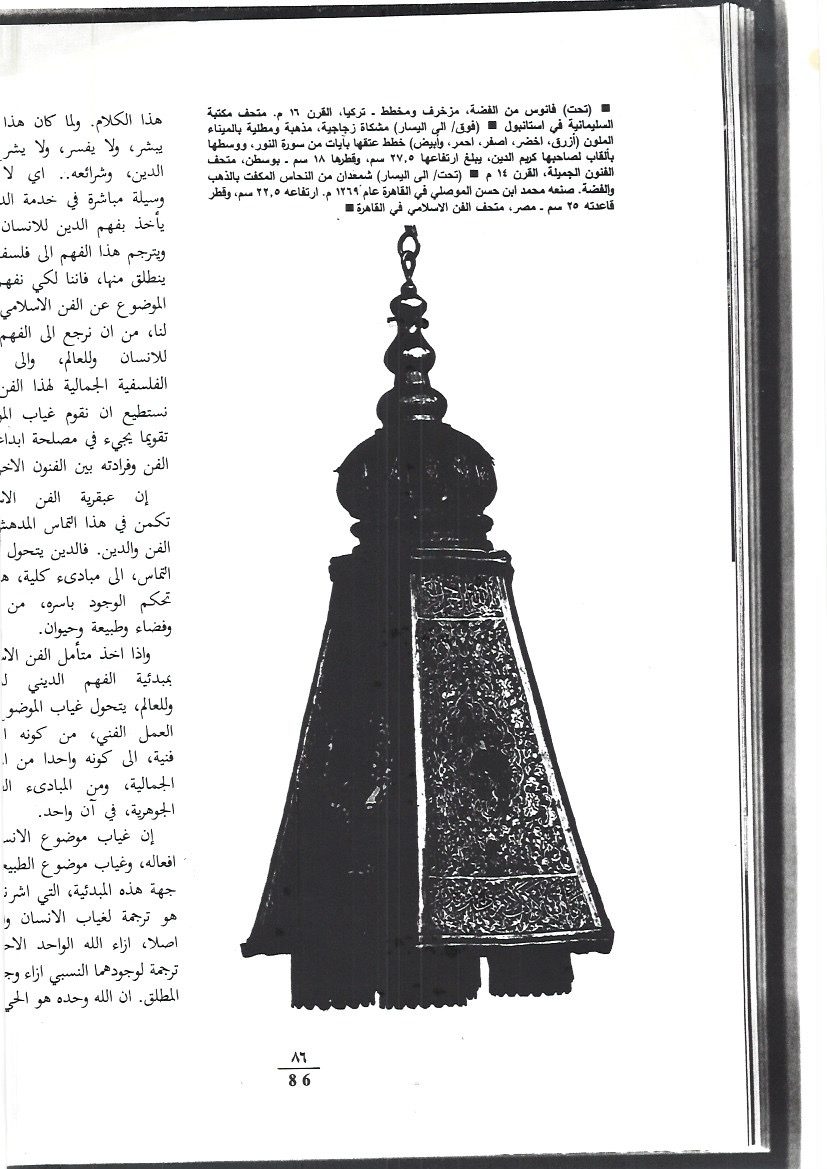
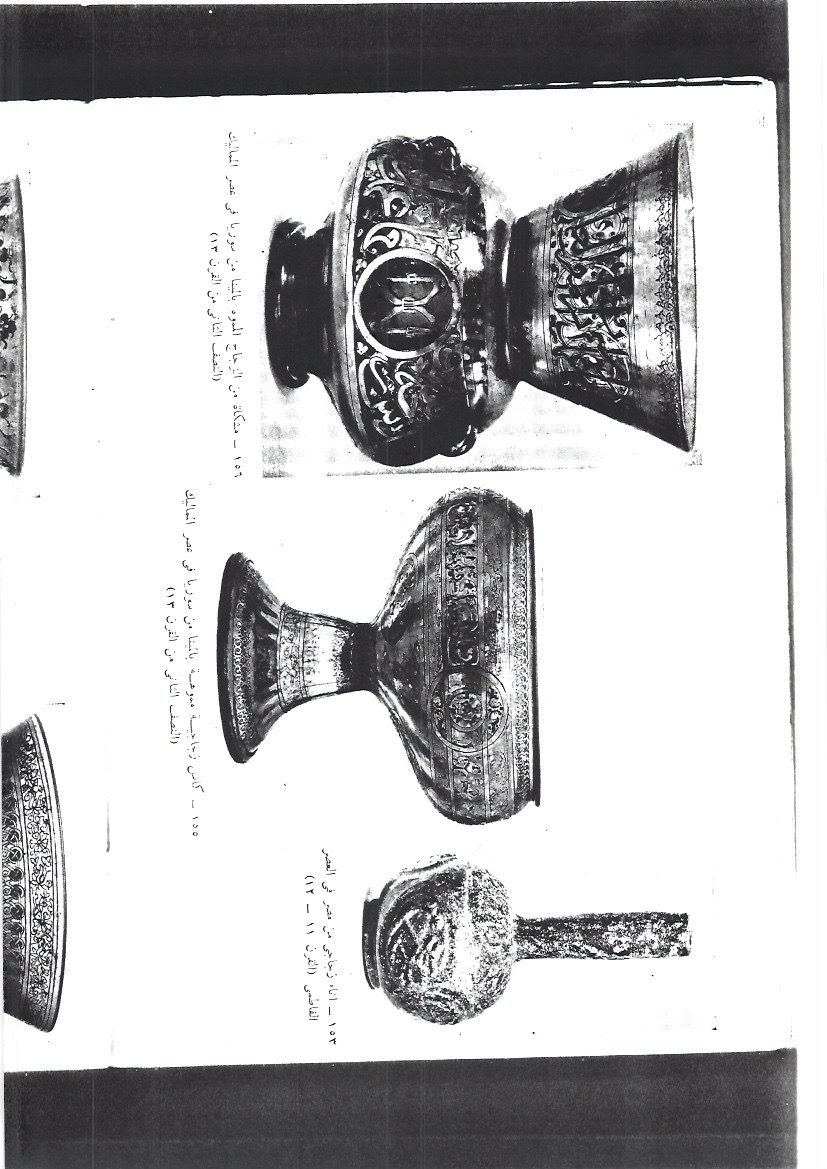
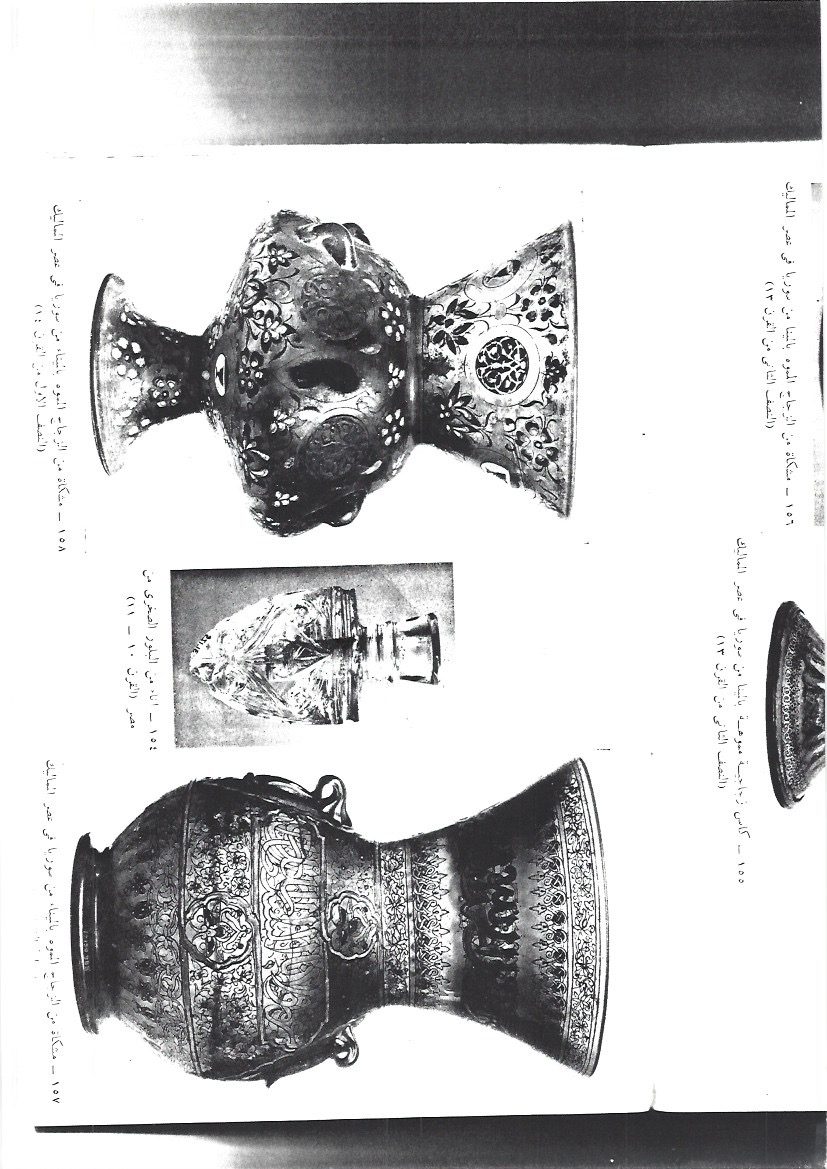
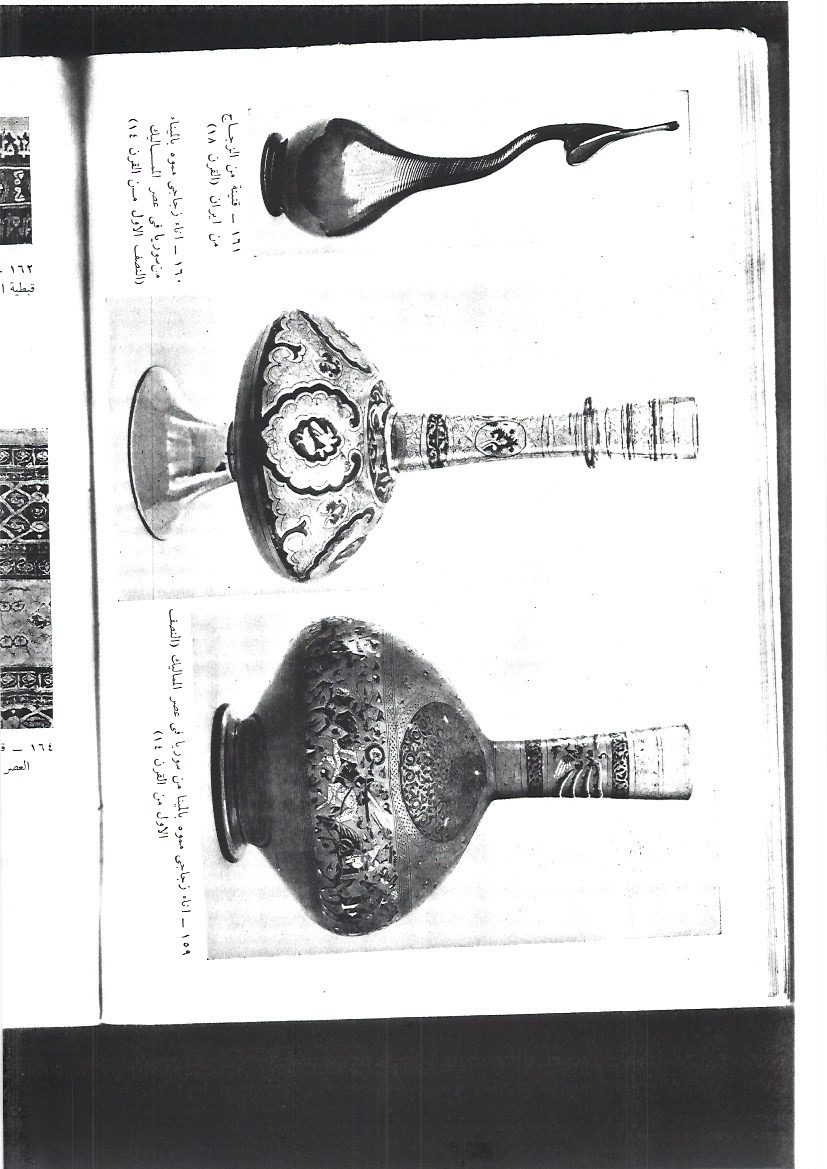
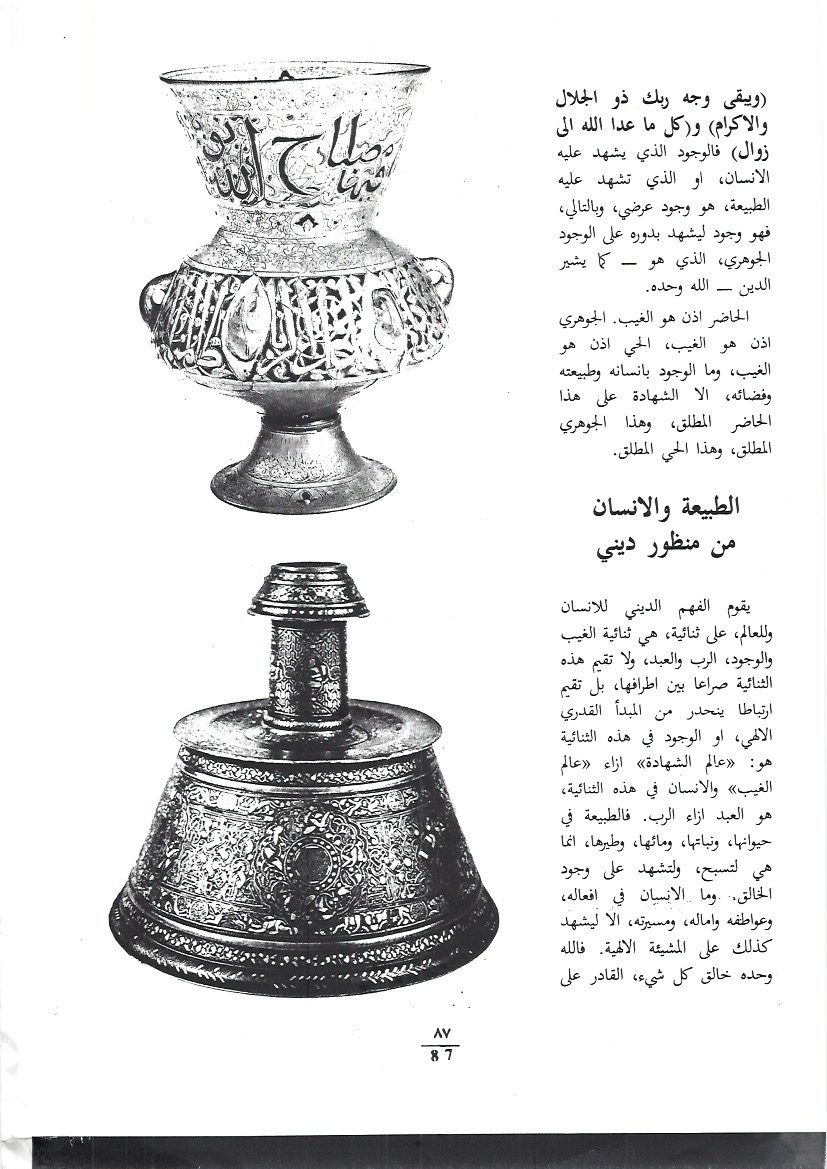
وقفت متسمرا وقد علت الدهشة ملامحى وانا انظر الى ابداع الفنان المسلم فى قنديل زجاجى فى المتحف الاسلامى فى القاهرة ، كان الاناء الزجاجى تحفة للناظرين يتألق بالزخارف الملونة المنثورة على سطحه بالألوان والمينا وكان معبرا تماما عن القدرة الغنية والموهبة الاميلة التى حباها الله لها نعة ،واذا عرفنا انه قد صنع فى القرن الثالث عشر الميلادى بستطيع ان نتصور الى أى مدى بلغ الغن الاسلامى، من القدرة والابتكار .
لقد صنع ذلك القنديل من الزجاج وهى مادة مكونة من الرمل النقى وانواع مختلفة من التراكيب الكيماوية ، تكون لينة فى حالة انصهارها حيث يمكن تشكيلها بالنفخ او بصبها فى» قواطب معدة لتتشكل فيها الأوانى والمشغولات الزجاجية ، وذلك يعنى ان الفنان المسل حينذا ك كان يعرف تركيبات تلك المادة واسرارها واستطاع أن يطوعها ويبتكر فيها الكثير من الأشكال الفنية المنتشرة الآن فى، مختلف متاحف العالم كشاهد على عظمة الغن الاسلامى، وخلوده .
اضافة الى ذلك فان الفنان المسلم عندما عالج تلك المادة كان انتاجه منها ينبض بالورع الدينى ويتغذى من منا بع الروح فكأنما هى ترانيم دينية يتصاعد منها الدعاء والابتهال والشكر للخالق العظيم على ما من به عليه من موهبة .
ولقد ترددت تلك الترانيم الدينية فى كل ما تركه لنا الفنان المسلم من أعمال خالدة ليس فقط فى الزجاج وانما فى كل المواد من خشب ونحاس وغيوه ولعلها توضحت أكثر فى العمارة الاسلامية خصوصا فى المساجد التى تتطاول أعمدتها وتتقوس فى اعلاها فكأنما هى أذرع ترتفع فى صلاة دائمة .
ذلك السمو الروحى الذى يحس به كل من وقف فى مسجد من المصاجد العريقة فى العالم الاسلامى، حين يتأمل الزخارف الاسلامية الرائعة وتنتشر روحه بتلك الاضواء الملونة التى تنبعث، من الزجاج الملون فى نوافذ المسجد وذلك ايضا يدل على اتقان الفنان المسلم ، حيث استخدم أكاسيد المعادن ومزجها بمادة الزجاج المنصهرة ليستخرج منها الزجاج الملون :
الاخضر من اكسيد النحاس والاحمر من اكسيد الحديد والاصفر من حامض الانتيمون والازرق من مسحوق
لقد استفاد الفنان المسلم من الحضارات السابقة وما وصلت اليه من تقدم فى العلوم والفنون ولكنه طوع تلك الاستفادة لتعبر عن روح الاسلام وأضاف اليها من ابستكاراته الرائعة وغلفها بما كان يعتمل فى قلبه الموءمن من الورع والتقوى.
ونحن احفاد ذلك الفنان المسام الذى جمع بين الاتقان فى العمل والايمان المطلق الذى سخرّ عمله الغنى للتعبير عنه ألا يجب علينا قراءة ذلك التراث العظيم وتدبر ما فيه من الابتكارات فى شتى نواحى العلم والمعرفة ؟
لقد اسعدنى كثيرا حرص الدولة ممثلة فى وزارة الاسكان على ان تكون تمساميم البناء فى بعض الشوارع الرئيسية على النمط المعمارى الاسلامى، وارجو ان يكون أ ذلك فرسة ليبادر مهندسينا المعماريين على النهل من تراثهم الثرى وابتكار التضاميم التى تؤكد الشخصية العربية الاسلامية مع دراسة الخصائص التى تحتويها المساكن العربية الأصيلة واستنباط ما يتمشى منها مع العصر الذى نعيش فيه .
ناصر اليوسف
Translation
The Impact of Faith on the Muslim Artist
I stood transfixed, amazement filling my features as I looked at the creation of a Muslim artist - a glass lantern in the Islamic Museum in Cairo. The glass vessel was a masterpiece for viewers, gleaming with colorful decorations scattered across its surface with colors and enamel. It was a complete expression of the rich ability and beautiful talent that God blessed this artist with. When we know that it was made in the thirteenth century AD, we can imagine to what extent Islamic art reached in terms of capability and innovation.
That lantern was made from glass, which is a material composed of pure sand and various types of chemical compounds. It becomes soft when melted, allowing it to be shaped by blowing or pouring into molds prepared for forming vessels and glass artifacts. This means that the Muslim artist at that time knew the compositions of that material and its secrets, and was able to master it and innovate many artistic forms that are now spread in various museums around the world as testimony to the greatness and immortality of Islamic art.
In addition to that, when the Muslim artist worked with that material, his production from it pulsed with religious devotion and was nourished by spiritual sources, as if they were religious hymns from which prayer, supplication, and gratitude to the Great Creator rose for the talent He bestowed upon him.
Those religious hymns echoed in everything the Muslim artist left us as immortal works, not only in glass but in all materials - wood, copper, and others. Perhaps this became clearest in Islamic architecture, especially in mosques whose columns rise tall and arch at their tops as if they were arms raised in eternal prayer.
That spiritual elevation felt by anyone who stands in one of the venerable mosques in the Islamic world, when contemplating the magnificent Islamic decorations and their soul spreads with those colored lights emanating from the colored glass in the mosque windows - this also demonstrates the mastery of the Muslim artist, where he used metal oxides and mixed them with molten glass material to extract colored glass: green from copper oxide, red from iron oxide, yellow from antimony acid, and blue from [powder - text unclear].
how do you classify this content as an archival subject: The Muslim artist benefited from previous civilizations and their progress in sciences and arts, but he adapted that benefit to express the spirit of Islam and added his wonderful innovations to it, wrapping it with the devotion and piety that stirred in his believing heart.
We, the descendants of that Muslim artist who combined mastery in work with absolute faith that dedicated his artistic work to express it - should we not read that great heritage and contemplate the innovations it contains in various aspects of science and knowledge?
I was greatly pleased by the state's keenness, represented by the Ministry of Housing, to make building designs in some main streets follow the Islamic architectural style. I hope this will be an opportunity for our architects to draw from their rich heritage and innovate designs that affirm the Arab-Islamic personality while studying the characteristics contained in authentic Arab homes and deriving what suits the era we live in.
Nasser Al-Yousif