"The Embers and Ashes in Nasser Al-Yousif's Heritage: Extracting the Light of Insight from the Darkness of Sight"
Critical essay by Asaad Arabi
Comprehensive critical essay by Lebanese visual artist, critic, and aesthetics researcher Asaad Arabi examining Nasser Al-Yousif's artistic legacy and contribution to Arab contemporary art. Essay provides in-depth analysis of Al-Yousif's artistic evolution from early "Manama Group" period through his later works created after losing his sight. Discusses his role in Bahraini art renaissance, comparison with orientalist painters, synthesis of visual and auditory memories in his engravings, relationship between his work and local musical traditions, and critical misunderstanding of disability in art criticism. Places Al-Yousif within broader context of Arab artists seeking independence from Western artistic formulas. Mentions his recognition at 1996 Sharjah Biennial and Dana Prize. References specific works including "The Bird and the Cage" and "Ghannawi Al-Shawq." Compares him to other Arab artists across region.
- Archive no. ARC-20250710-005
- 5 pages scanned
SubjectsAsaad ArabiNasser Al-Yousif critical analysisArab contemporary artBahraini art historyManama Groupart and blindnessexpressionismheritage and modernitySharjah Biennial 1996Dana Prizetactile memoryblack and white compositionspearl diving culturemusical notation artorientalism critiqueArab art independenceAl-Bareh GalleryNational Museum Bahrainvisual impairment artistsexistential artDilmun memoryaesthetic theory
النص الأصلي
الجمر والرماد في تراث ناصر اليوسف استخراج نور البصيرة من عتمة البصر
بقلم أسعد عرابي / تشكيلي وناقد وباحث في علم الجمال - لبناني مقيم في باريس.
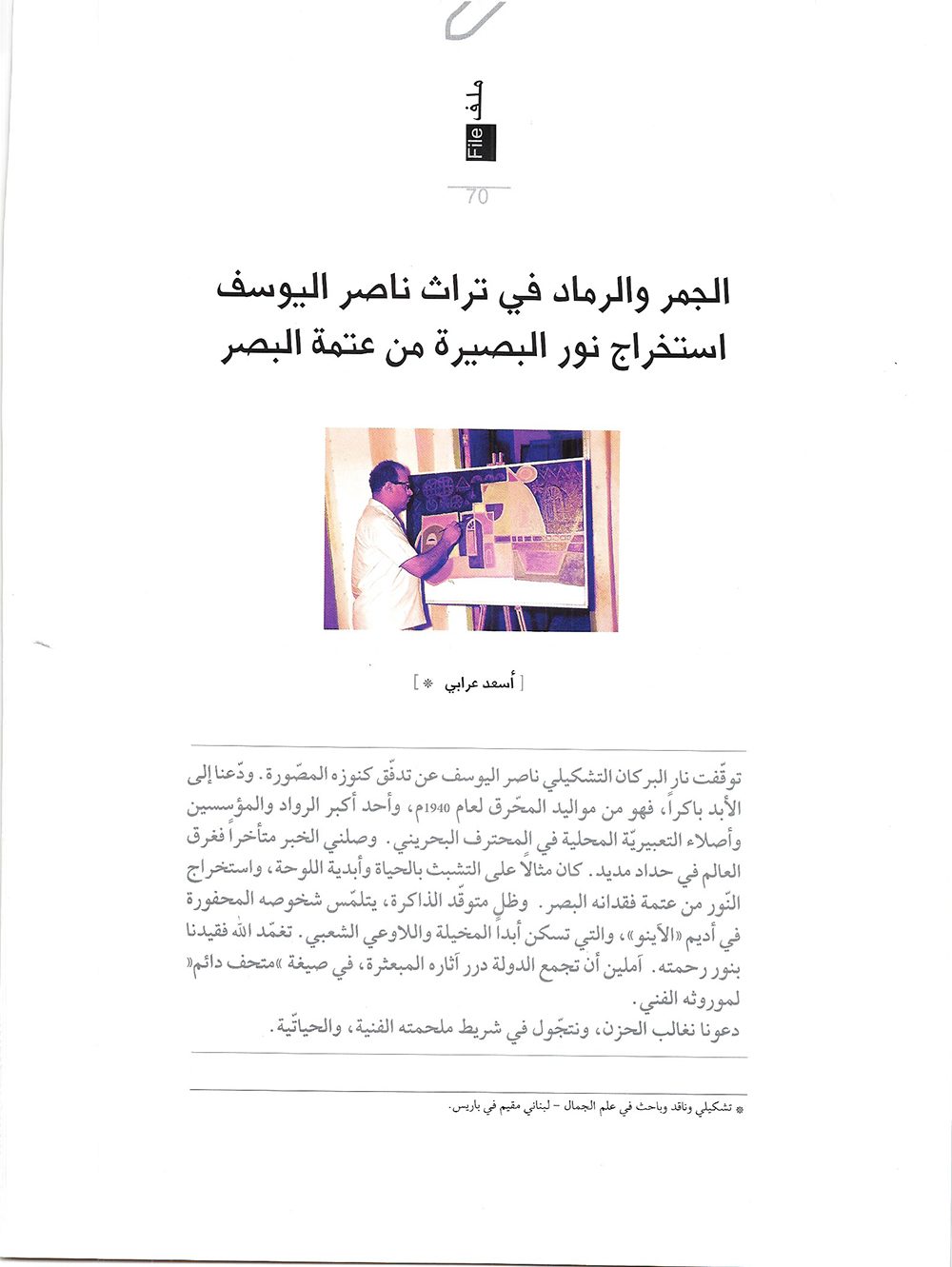
توقفت نار البركان التشكيلي ناصر اليوسف عن تدفّق كنوزه المصّورة. ودّعنا إلى الأبد باكراً، فهو من مواليد المحّرق لعام 1910م، وأحد أكبر الرواد والمؤسسين وأصلاء التعبيريّة المحلية في المحترف البحريني. وصلني الخبر متاخرا فغرق العالم في حداد مديد. كان مثالا على التشبث بالحياة وأبدية اللوحة، واستخراج لنّور من عتمة فقدانه البصر. وظل متوقد الذاكرة، يتلمّس شخوصه المحفورة في أديم («الآينو»، والتي تسكن أبدا المخيلة واللاوعي الشعبي. تغمّد اللّه فقيدنا بنور رحمته. آملين أن تجمع الدولة درر آثاره المبعثرة، في صيغة »متحف دائم (« موروثه الفني.
دعونا نغالب الحزن، ونتجول في شريط ملحمته الفنية، والحياتية.
Translation
The Embers and Ashes in Nasser Al-Yousif's Heritage: Extracting the Light of Insight from the Darkness of Sight
By Asaad Arabi / Visual Artist, Critic, and Aesthetics Researcher - Lebanese residing in Paris
The volcanic fire of visual artist Nasser Al-Yousif has stopped flowing its pictorial treasures. He bid us farewell forever too early, born in Muharraq in 1940, and was one of the greatest pioneers, founders, and originators of local expressionism in the Bahraini workshop. The news reached me late, and the world was plunged into prolonged mourning. He was an example of clinging to life and the eternity of painting, and extracting light from the darkness of losing his sight. He remained burning with memory, feeling his characters engraved in the leather of "lino," which forever inhabit the imagination and popular unconscious. May God embrace our departed with the light of His mercy, hoping that the state will gather the scattered pearls of his scattered works in the form of a "permanent museum" of his artistic legacy.
Let us overcome sadness and tour through the epic of his artistic and life journey.
النص الأصلي
الشراكة (النهضوية)
قد يكون المحترف البحريني الأول لدولة خليجية وصلتها وصفة )لوحة الحامل ( (أو المسند)، بمادتها القماشية الملونة بالعجائن الصباغية الزيتية، وذات القياس المتوسط بين لتصوير الجداري (الفريسك)، ورسوم المنمنمات (تصاوير المخطوطات العربيّة- الإسلامية). هي الفترة التي درجنا على دعوتها ثقافيا، وفنيا » بالنهضة ((، بمعنى الصحوة التي أعقبت الانغلاق العثماني وتميزت بانفتاح فنون جنوب المتوسط على شماله.
من المعروف أنها ابتدأت في مصر في بداية القرن العشرين (معهد الفنون الأول في القاهرة كان عام 1908م)، تلتها لبنان، فالعراق، وسورية، والأردن، وفلسطين، بما يثبت سبق المشرق العربي على مغربه وخليجه. تأخر إذن، وصول )نهضة (( الفن التشكيلي في البحرين عدة عقود عن نظائره المشرقية المذكورة رغم سبقه لبقية (المونوبلات) الفنية الخليجية. هو ما يفسر تعلم أغلب الرواد في القاهرة أو بغداد أو دمشق.
بحضرني »جماعة المنامة( الذين كانوا يصورون المناظر على طريقة فناني البعثات الأوروبيين، يحملون أدواتهم كل جمعة إلى ظاهر المنامة، ومنهم ناصر اليوسف إلى جانب سوار، والسني، والعريض، أسامة عبدالصالح، والعريفي، وبوسطه وغيرهم.
إن ممارسة عقد الخمسينات المبكر »لفن اللوحة« كان استجابة عفوية (بريئة من التثاقف) وأحيانا »عصامّية(، ابتدأوا من تلمس الخصائص البيئية والجغرافية المكانية من دور، وغيطان، وصيادين، ومراكب، وفرق موسيقية شعبية، وتجمهرات وقائع الحياة اليومية سواء الريفية منها أم الحضرية.
توجّهت مقامات بعضهم اللونية إلى امتحان خصائص النّور المحلي. فالشمس لا تبث أشعتها (وتزامنها القزحي) بنفس الطريقة على موقعين من الكوكب الأرضي؛ تعرفنا هذه الفرادة العاطفية على معنى «اللاتماثل» الإنفعالي. هو الذي يقترح صيرورة الاختيارات اللونية (بالمعنى الانطباعي). ثم وأشد رهافة لدى فناننا. فقد تجاوز هنا (اللاتماثل» الإنفعالي حدود حقول الصباغة إلى الطبيعة النورانية في رفيف الخط المرسوم في الفضاء » التنزيهي(، وذلك بالتحول من الحيز الطبيعي إلى «الصفحة الفرضية)» واسطة اللوحة، يعتبر الكون بمثابة ورقة أو جدار مسطح، أو مرآة عاكسة للحلم، والهذيان، والمعراج، والشطح.
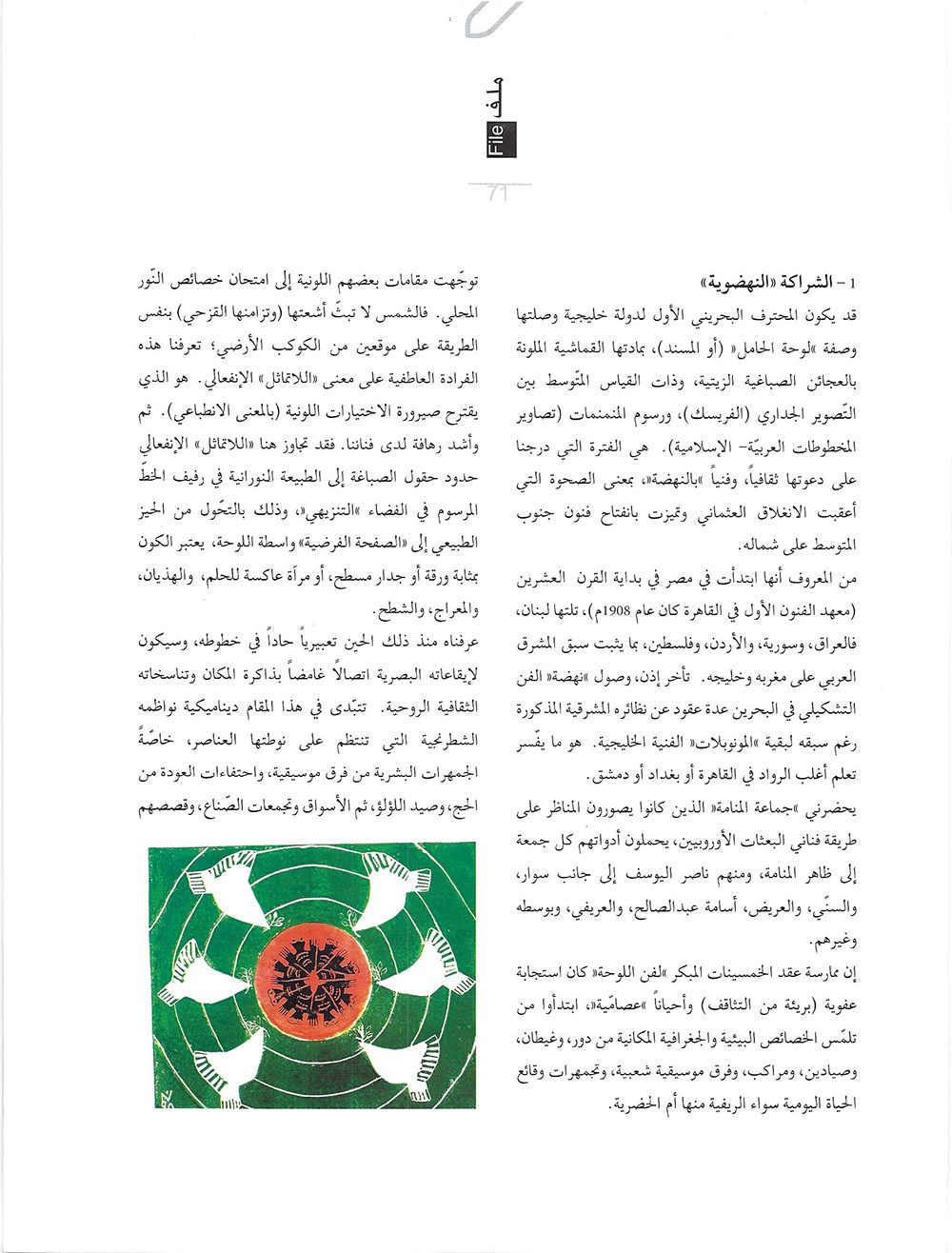
عرفناه منذ ذلك الحين تعبيرياً حاداً في خطوطه، وسيكون لإيقاعاته البصرية اتصالا غامضاً بذاكرة المكان وتناسخاته الثقافية الروحية. تتبّدى في هذا المقام ديناميكية نواظمه الشطرنجية التي تنتظم على نوطتها العناصر، خاصّةً الجمهرات البشرية من فرق موسيقية، واحتفاءات العودة من الحج، وصيد اللؤلؤ، ثم الأسواق وتجمعات الصّناع، وقصصهم العاطفية والإنسانية.
Translation
The (Renaissance) Partnership
The Bahraini workshop may be the first for a Gulf state to receive the recipe for "easel painting" (or the stand), with its fabric material colored with oil paint pastes, and of medium size between wall painting (fresco) and miniature drawings (Arab-Islamic manuscript illustrations). This is the period we have become accustomed to calling culturally and artistically "the Renaissance," meaning the awakening that followed Ottoman isolation and was distinguished by the opening of southern Mediterranean arts to its north.
It is known that it began in Egypt at the beginning of the twentieth century (the first Art Institute in Cairo was in 1908), followed by Lebanon, then Iraq, Syria, Jordan, and Palestine, proving the precedence of the Arab East over its West and Gulf. The arrival of the "renaissance" of fine arts in Bahrain was thus delayed several decades from its aforementioned Eastern counterparts, despite preceding the rest of the Gulf artistic "monopolies." This explains why most pioneers learned in Cairo, Baghdad, or Damascus.
I recall the "Manama Group" who used to paint landscapes in the manner of European mission artists, carrying their tools every Friday to the outskirts of Manama, including Nasser Al-Yousif alongside Swar, Al-Sunni, Al-Areed, Osama Abdul Saleh, Al-Arifi, Busta, and others.
The practice of the early fifties of "easel art" was a spontaneous response (innocent of acculturation) and sometimes "self-taught," beginning from feeling the environmental and geographical spatial characteristics of houses, courtyards, fishermen, boats, folk musical groups, and gatherings of daily life events, whether rural or urban.
The color scales of some of them were used to test the characteristics of local light. The sun does not emit its rays (and their rainbow synchronization) in the same way at two locations on planet Earth; this emotional uniqueness teaches us the meaning of emotional "asymmetry." This suggests the emergence of color choices (in the impressionist sense). Then, more refined in our art. Here he transcended emotional "asymmetry" beyond the boundaries of paint fields to the luminous nature in the flutter of lines drawn in "transcendent" space, by transforming from natural space to the "hypothetical page" through the painting medium, considering the universe as a paper or flat wall, or a mirror reflecting dream, delirium, ascension, and ecstasy.
We have known him since then as sharply expressive in his lines, and his visual rhythms would have a mysterious connection with the memory of place and its spiritual cultural transmigrations. The dynamics of his chess-like systems that organize elements on their score appear here, especially human crowds of musical groups, celebrations of return from pilgrimage, pearl hunting, then markets and gatherings of craftsmen, and their emotional and human stories.
النص الأصلي
تكشف المقارنة الجمالية بين نتائج ناصر اليوسف ومعه ((رواد المنامة» مع لوحات المستشرقين المقيمين أو العابرين الفرق الذي يمثّل مشروع التفرد النّهضوي للجيل التالي، والذي سيقوم عليه ازدهار المحترف عبر جيلين.
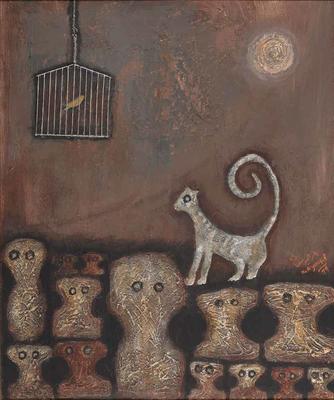
علينا بالاعتراف بأن فقد ناصر اليوسف لبصره لم يمر دون خسائر على المستوى اللوني، فقد توصّل في لوحاته التي سبقت مصابه المتأخر، إلى تكوينات لونية مدهشة، مثالها لوحة «الطائر والقفص)) المحفوظة في المتحف الوطني، أو التي اختيرت لبطاقة معرض تكريمة في (صالة البارح للفنون)، وذلك رغم أنه عوضها بذاكرته اللمسية بتمفصل محبوك بين الأسود والأبيض لم نشهد إحكام «طوبوغرافيته» المأسوية بهذا المستوى قبل ذلك.
(الديمومة) الحدسيّة في موسيقى اللوحة البحرينية
تناقلت الأجيال تقاليد وطقوس صيد اللؤلؤ (حتى بعد انقطاعه)، وذلك عن طريق الأهازيج، والموسيقى، وأناشيد لبحر، وأصول ألحانه، وطرز التّصفيق على إيقاعاته، مرتبطة جميعها بطقوس أفراح العودة، والسلامة من غطسات الموت، أو توديعاتهم الوجلة. وهكذا استمّدت الموسيقى من دورات مواسم الصيد مقاطعها اللحنية، ومواويلها، وتصفيقها، عاكسة هدير البحر، ووحشة أمواجه التي تهدر بين المد والجزر، بين قدوم الموج ثم ارتداده مثل الشهيق، والزفير، من صدحات أسراب الطيور المقلقة وهي تخطف السمك، أو تتقاتل، أو تعبر مهاجرة.
تواشجت هذه النواظم عبر أجيال مع الرسوم التي كانت تبصم بها المراكب العريقة؛ ثم أصبح الفنان الشعبي يصّور على الصفائح المعمرة لبقايا أخشاب هذه المراكب بعد تقاعدها، وطعن شيخوختها، مستعيراً مادة اللوحة الغربية، أي الألوان الزيتية.
نعثر في هذه التصاوير على الأنسال المندثرة من نماذج، وطرز هذه المراكب. ثم على الملامح والإشارات التأسيسيّة في خصائص الاستهلالات المعاصرة، والحداثه المتواصلة مع الذاكرة الألفية «الدلمونية». ثم أصبح هذا النسخ الحدسي غذاءً متراكما لوحدة تقاليد الذاكرة الفنية المحلية مع حاضرها، وذلك من خلال الذين مر ذكرهم من الرواد، بما فيهم ناصر اليوسف، أي الذين يمثلون أعمدة خصائص المحترف البحريني.
ناصر اليوسف : التوليف بين الذاكرتين البصرية والسماعية
ستطاع فناننا بأصالة مدهشة في محفوراته التي أنجزها بعد فقده بصره أن يتحول من موضوع الرقص والإنشاد إلى نواظم توقيعية في تواتر مساحات الأسود والأبيض. تلامس تكويناته شفاف القلب، وأحانين الذاكرة دون أدنى محسنات بديعية، مثلها مثل القول الشعبي: » الموسيقى الحسان تدخل الآذان دون استئذان(. فعلاقة تنويطاته البصرية بالتنويط الموسيقي المحلي شبه محسوسة، تنور في تراكمات دهشته الطفولية المشاهدة للجموع وحشود الأفراح والماتم .
يعيدُ تشريحها وفق ما تمليه عليه النوطة أو التكوين التعبيري، فيصل حدود «التنزيه)» الموسيقي في علاقة الشخوص، والعناصر الرمزيّة بالفراغ.
بستخرج من صور البيئة المعنّدة على النسيان والمتجذرة في جعبة معاناته ما يحيلها إلى لقطات حلمية موشحة بالمرارة الوجودية- الوجدية التي يخلفها هدير الزمان، وتحولات التجربة الداخلية.
Translation
Aesthetic comparison reveals the difference between Nasser Al-Yousif's results and those of the "Manama pioneers" with the paintings of resident or passing orientalists, representing the project of renaissance uniqueness for the next generation, on which the workshop's prosperity across two generations will be based.
We must acknowledge that Nasser Al-Yousif's loss of sight did not pass without losses at the color level, as he had achieved amazing color compositions in his paintings that preceded his late affliction, such as the painting "The Bird and the Cage" preserved in the National Museum, or the one chosen for the card of his tribute exhibition at "Al-Bareh Art Gallery," although he compensated for this with his tactile memory through a well-woven articulation between black and white whose tragic "topography" we had not witnessed at this level before.
The Intuitive (Continuity) in the Music of Bahraini Painting
Generations passed down the traditions and rituals of pearl hunting (even after its cessation) through chants, music, sea songs, the origins of their melodies, and clapping styles to their rhythms, all connected to the rituals of return celebrations, safety from death dives, or their anxious farewells. Thus music derived from pearl hunting season cycles its melodic passages, mawals, and clapping, reflecting the sea's roar and the wildness of its waves that roar between high and low tide, between the coming of waves then their retreat like inhaling and exhaling, from the cries of flocks of disturbed birds as they snatch fish, fight, or migrate.
These systems intertwined across generations with the drawings that were stamped on venerable boats; then the folk artist began to paint on the aged plates of remnants of these boats' wood after their retirement and the stabbing of their old age, borrowing the material of Western painting, i.e., oil colors.
We find in these paintings the extinct lineages of models and styles of these boats. Then the features and foundational signs in the characteristics of contemporary beginnings, and modernity continuous with the millennial "Dilmun" memory. Then this intuitive copying became accumulated nourishment for the unity of local artistic memory traditions with its present, through those mentioned pioneers, including Nasser Al-Yousif, i.e., those who represent the pillars of Bahraini workshop characteristics.
Nasser Al-Yousif: Synthesis Between Visual and Auditory Memories
Our artist was able, with amazing authenticity in his engravings that he completed after losing his sight, to transform from the subject of dance and singing to signature systems in the frequency of black and white spaces. His compositions touch the transparent heart and the tender memories without the slightest rhetorical embellishments, like the popular saying: "Beautiful music enters the ears without permission." The relationship of his visual notations to local musical notation is almost tangible, illuminating in the accumulations of his childhood wonder at observing crowds and multitudes of joys and mourning.
He re-dissects them according to what the score or expressive composition dictates to him, reaching the limits of musical "transcendence" in the relationship of characters and symbolic elements to space.
He extracts from environmental images stubborn against forgetting and rooted in the quiver of his suffering what transforms them into dream shots embroidered with existential-emotional bitterness left by the roar of time and transformations of inner experience.
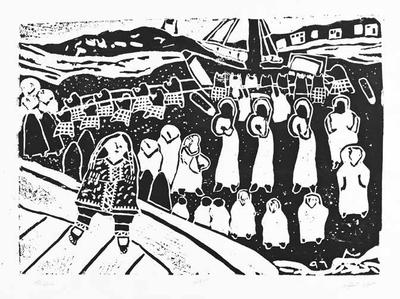
Works discussed on this page
النص الأصلي
ينتهي بالنتيجة إلى نواظم تشكيلية متينة التمفصل متقشفة زاهدة في اختزالها العالم إلى ثنائية الأسود والأبيض، التي تقابل الفراغ والامتلاء. تسجّل ما يترسّخ في الذات من أشواق وليس من توثيق الأحانين » الفولكلورية«. هو متحف روحي وليس أثرياً. تمثل لوحاته شهادة شطحية معراجية أكثر منها أرشيفاً ديكارتياً.
يبتدئ تأويله لذاكرة العالم المنظور أو الذي كان منظوراً من تحويل بقايا هيئاته «السيميولوجية» إلى إشارات مختزلة دون أدنى اكتراث بنظام الظل والنور، أو الأفق والمنظور أو الثقالة الأرضية. يختزل هذه الأشكال التشخيصية إلى هيكلها الإشاراتي أو التعريفي الأول بحثاً عن أبجدية عاطفية لا تخلو من رنّة الحزن والتقرح والأسى الفاجعي نستسلم شخصوصه لقدرية تواكلية، يريم عليها الصمت الذي يسبق الانفجار، والعاصفة.
كثيراً ما يسجّل حساسيته للمسية في الموضوعات الموسيقية مثل لوحة «غناوي الشوق».
وبالإجمال فهو يصوّر ذاكرته اللمسية ضمن حتمية مواقع العناصر، وضمن »طوبوغرافية« ينتقل وهمها إلى المشاهد، فتغيب الهنات التشريحية الواقعية، لتحل محلها نسب نوعية لا يمكن أن تكون إلا كما هي عليه.
تبدو محضوراته نخبويةً مثقفة عارفة (بعكس ما توحي به من بدائية)، ولكنها متوافقةً مع أبدية الذاكرة الشعبية الحكيمة.
هي الذاكرة التي لا تبقي من الشكل المحفوظ سوى عمارته الحلمية.
يأكل النور الأبيض جوانح الرسم بالأسود، فتبدو وكأنها شظايا تتنازع البقاء. وهكذا تنتظم خرائط مساحات الأسود والأبيض والتباسات دورها من تواتر الشخوص وصفوف الجماهير.
ترق الحدود من جديد في هذا «الالتباس) البصري (مثلها مثل الرقش والمقرنصات) بين الحواس، يدعونا إلى السمع بالبصيرة، وإلى الإبصار بالقلب، تماماً كما هي مفاخرة المتنبي:
أنا الذي نظر الأعمى إلى أدبي
وأسمعت كلماتي من به صمم
أو غزلية الشاعر الضرير بشار بن برد:
يا قوم أذني لبعض الحي عاشقة
والأذن تعشق قبل العين أحيانا
قالوا بمن لا ترى تهذي فقلت لهم
الأذن كالعين توفي القلب ما كانا
معاناة سوء الفهم النقدي
يقع سوء فهم أعمال ناصر اليوسف خلف استضعاف إعاقته بطريقة عنصرية، أو إثارة الشفقة على مصابه.
نادرون الذين استطاعوا أن يجردوا العمل الفني من مشكلة صاحبه، لذلك سبق التقدير الخارجي الاعتراف المحلي.
Translation
He ends up with solid, articulated, ascetic visual systems, abstemious in their reduction of the world to the duality of black and white, which corresponds to emptiness and fullness. They record what settles in the self of yearnings and not of documenting "folkloric" tender feelings. It is a spiritual museum, not an archaeological one. His paintings represent an ecstatic, ascensional testimony more than a Cartesian archive.
He begins his interpretation of the memory of the visible world, or what was visible, by transforming the remains of its "semiological" forms into abbreviated signs without the slightest concern for the system of shadow and light, or horizon and perspective, or earthly gravity. He reduces these diagnostic forms to their first indicative or definitional structure in search of an emotional alphabet not devoid of the ring of sadness, ulceration, and tragic sorrow. His characters surrender to fatalistic dependency, over which silence reigns that precedes the explosion and storm.
He often records his tactile sensitivity in musical subjects like the painting "Ghannawi Al-Shawq" (Songs of Longing).
In general, he paints his tactile memory within the inevitability of element positions, and within a "topography" whose illusion transfers to the viewer, so realistic anatomical defects disappear, replaced by qualitative proportions that can only be as they are.
His engravings appear elite, cultured, knowledgeable (contrary to what they suggest of primitiveness), but compatible with the eternity of wise popular memory.
It is the memory that keeps from the preserved form only its dream architecture.
White light eats the sides of the black drawing, so they appear as fragments competing for survival. Thus, maps of black and white spaces and the ambiguities of their role are organized from the frequency of characters and rows of masses.
Boundaries become refined again in this visual "ambiguity" (like ornamentation and muqarnas) between the senses, inviting us to hear with insight and see with the heart, exactly like Al-Mutanabbi's boast:
I am he whose literature the blind have seen, And my words have made the deaf hear
Or the blind poet Bashar ibn Burd's love poetry:
O people, my ear is in love with some of the tribe. The ear sometimes loves before the eye. They said, "You rave about whom you cannot see," so I told them, "The ear is like the eye, fulfilling what the heart was."
The Suffering of Critical Misunderstanding
Misunderstanding of Nasser Al-Yousif's works occurs behind the racist weakening of his disability, or arousing pity for his affliction.
Rare are those who could strip the artwork from its creator's problem, so external appreciation preceded local recognition.
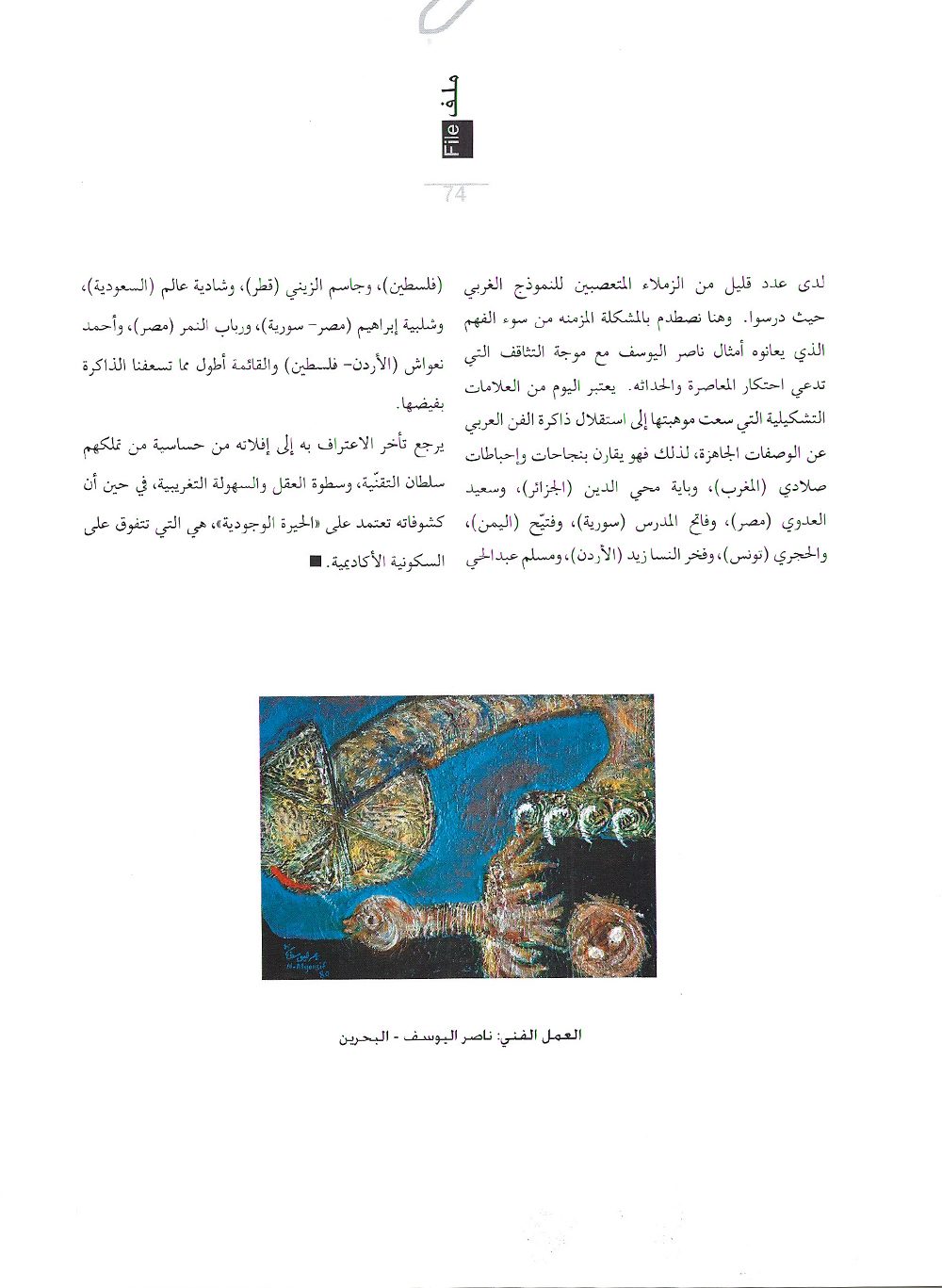
النص الأصلي
فتكريمه في بينالي الشارقة عام 1996م سبق جائزة الدانة في المعرض السنوي العام، وكان لي شرف الشراكه بمنحه إياها من خلال وجودي في لجنة التحكيم إلى جانب نذير نبعه، وعادل السيوي، وبرئاسة الفنان الشيخ راشد آل خليفة. لم أخف قبلها حماسي لأعماله، مما سبب بعضا من الحساسية لدى عدد قليل من الزملاء المتعصبين للنموذج الغربي حيث درسوا. وهنا نصطدم بالمشكلة المزمنه من سوء الفهم الذي يعانوه أمثال ناصر اليوسف مع موجة التثاقف التي تدعي احتكار المعاصرة والحداثه. يعتبر اليوم من العلامات التشكيلية التي سعت موهبتها إلى استقلال ذاكرة الفن العربي عن الوصفات الجاهزة، لذلك فهو يقارن بنجاحات وإحباطات صلادي (المغرب)، وباية محي الدين (الجزائر)، وسعيد العدوي (مصر)، وفاتح المدرس (سورية)، وفتيّح (اليمن)، والحجري (تونس)، وفخر النسازيد (الأردن)، ومسلم عبدالحي (فلسطين)، وجاسم الزيني (قطر)، وشادية عالم (السعودية)، وشلبية إبراهيم (مصر - سورية)، ورباب النمر (مصر)، وأحمد نعواش (الأردن- فلسطين) والقائمة أطول مما تسعفنا الذاكرة بفيضها،
يرجع تأخر الاعتراف به إلى إفلاته من حساسية من تملكهم سلطان التقنّية، وسطوة العقل والسهولة التغريبية، في حين أن كشوفاته تعتمد على «الحيرة الوجودية»، هي التي تتفوق على السكونية الأكاديمية.
Translation
His honor at Sharjah Biennial in 1996 preceded the Dana Prize at the annual general exhibition, and I had the honor of participating in awarding it to him through my presence on the jury alongside Nazir Nabaa, Adel Al-Siwi, and under the presidency of artist Sheikh Rashid Al Khalifa. I had not hidden my enthusiasm for his works before, which caused some sensitivity among a few colleagues biased toward the Western model where they studied. Here we collide with the chronic problem of misunderstanding suffered by the likes of Nasser Al-Yousif with the wave of acculturation that claims to monopolize contemporaneity and modernity. He is considered today among the visual landmarks whose talent sought to liberate Arab art memory from ready-made recipes, so he is compared with the successes and frustrations of Sladi (Morocco), Baya Mahieddine (Algeria), Said Al-Adawi (Egypt), Fateh Al-Mudarris (Syria), Fatih (Yemen), Al-Hajri (Tunisia), Fakhr Al-Nasazi (Jordan), Muslim Abdul Hai (Palestine), Jasim Al-Zeini (Qatar), Shadia Alam (Saudi Arabia), Shalabiya Ibrahim (Egypt-Syria), Rabab Al-Nimr (Egypt), Ahmed Nawash (Jordan-Palestine), and the list is longer than memory serves us with its overflow.
The delay in recognizing him is due to his escape from the sensitivity of those possessed by the authority of technique, the dominance of reason, and Western ease, while his discoveries depend on "existential confusion," which surpasses academic stagnation.