"Nasser Al-Yousif's Lesson: The Hand That Precedes Us in Looking on the Path to Our Dreams"
Philosophical essay by Iraqi critic Farouk Yousuf
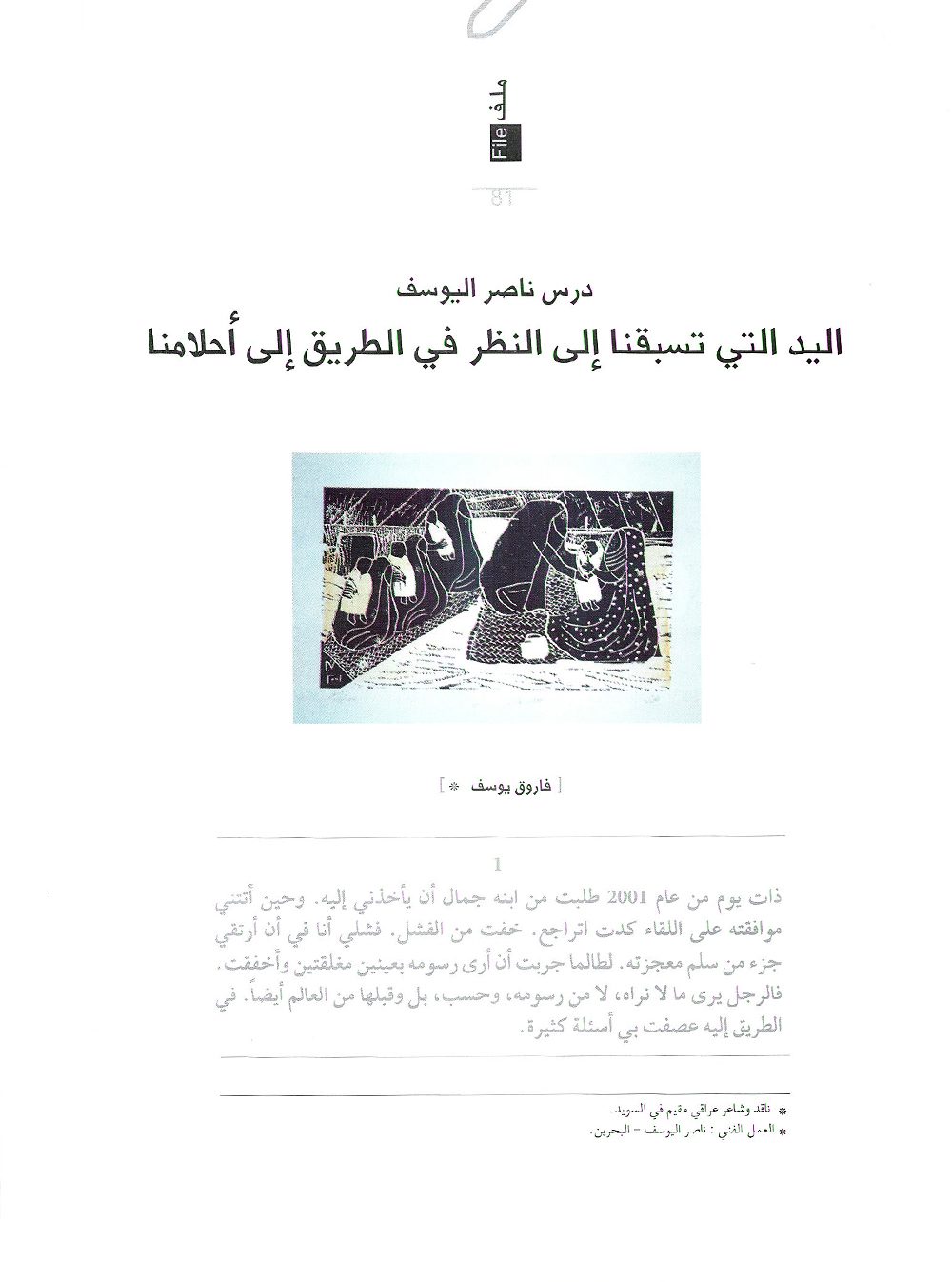
Profound philosophical essay by Iraqi critic and poet Farouk Yousuf (residing in Sweden) following his 2001 meeting with Nasser Al-Yousif. The essay explores the transformation of artistic vision after blindness, examining how Al-Yousif's loss of sight led to a different kind of seeing through touch and memory. Discusses the concept of "thinking hand" that creates different pictorial space, the disruption of senses leading to new artistic methodology, and the challenge to conventional notions of visual art. Written in a poetic, contemplative style, the essay positions Al-Yousif's work as a philosophical inquiry into the nature of perception and artistic creation. Arranged through his son Jamal Al-Yousif, the meeting provided Yousuf with lessons about both art and life. The essay emphasizes Al-Yousif's invention of new ways of living through art.
- Archive no. ARC-20250711-001
- 2 pages scanned
SubjectsFarouk YousufIraqi critic Sweden2001 meetingJamal Al-Yousif sonphilosophical art criticismblindness and visionthinking hand concepttactile visionsensory disruptioninvisible worldengraving from unseenmemory and creationvisual surrenderrecovered find metaphorspecialized sensesartistic transformationnew ways of livinglife lessons through art
النص الأصلي
درس ناصر اليوسف اليد التي تسبقنا إلى النظر في الطريق إلى أحلامنا
فاروق يوسف / ناقد وشاعر عراقي مقيم في السويد
ذات يوم من عام 2001 طلبت من ابنه جمال أن يأخذني إليه. وحين أتتني موافقته على اللقاء كدت اتراجع. خفت من الفشل. فشلي أنا في أن أرتقي جزء من سلم معجزته. لطالما جربت أن أرى رسومه بعينين مغلقتين وأخفقت.
فالرجل يرى ما لا نراه، لا من رسومه، وحسب، بل وقبلها من العالم أيضا. في الطريق إليه عصفت بي أسئلة كثيرة.
Translation
Nasser Al-Yousif's Lesson: The Hand That Precedes Us in Looking on the Path to Our Dreams
Farouk Yousuf / Iraqi Critic and Poet residing in Sweden
One day in 2001, I asked his son, Jamal, to take me to him. When his approval for the meeting came to me, I almost backed down. I was afraid of failure. My failure to rise up the ladder of his miracle. I had long tried to see his drawings with closed eyes and failed.
The man sees what we do not see, not only from his drawings, but also from the world as well. On the way to him, many questions stormed through me.
النص الأصلي
ناصر اليوسف كان جريئا حين بعث في أصابعه رسلا تتحدى بياض اللوحة لتصل إلى أعماقها بخيال شقي. كانت يداه ترسلان شعاعا، يخترق القشرة ليذهب عميقا. فتطلع الرسوم من هناك كما لو أنها تلبي نداء خفيا. كان اليوسف عن طريق الحفر يستخرج رسومه من الغيب، ويجرؤ على استنبات كائناته في العتمة: ليله وقد استقر مطمئنا في ليل العالم. صار اليوسف يتماهى من خلال الرسم مع العالم اللامرئي الذي كان الرسم يتوق الى الرحيل اليه. لقد حدثني عن عالم بصري مختلف، عالم يرى لانه يلمس.
وفي هذا الخيار نوع من خلخلة بريئة للحواس. وهي الخلخلة التي عاشها الرسام منذ أن شعر أن العالم المرئي لم يعد ملك عينيه. لقد تداعت الحقائق كلها بالنسبة اليه، صارت ذكرى الرسام تستدعي عناصرها، وهي عناصر لا تقيم في المرئي وحده، بل أنها كانت تتخذ منه باستمرار ذريعة لنشاطها. "لا أرى غير أنني أرسم ما أراه". كان يقول لي، وهو يقصد نوعا مختلفا من البصر. لم يقل لي: ما اتخيله أو ما أفكر به أو ما أتذكره، كان مصرا على فعل الرؤية. ولأن الرسم يتطلب النظر فان ناصر اليوسف كان يرى بطريقته. وهي طريقة قد تحتمل الخطأ، مثلما يحدث لنا جميعا. وهكذا فان البحث عن أخطاء اليد في رسوم اليوسف انما يعد فعلا عبثيا. فيده التي تفكر انما تخترع فضاء صوريا مختلفا عما نراه ونتوقع رؤيته.
إنها تراودنا على ما نحن فيه من استسلام بصري سعيد. تضع أمامنا عالما هو أشبه باللقية المستعادة. عالما تصنعاه عينان تريان بحاسة البصر الأولى، يوم لم يكن هنالك شيء يرى.
في كل ما قاله يومها ناصر اليوسف، في كل ما لم يقله، كنت أشعر بنوع من الهزيمة لكل ما تعلمته من الرسم وعنه. ها أنذا أمام رسام حقيقي لا يقيم وزنا لما يمليه الواقع المرئي من أحكام مطلقة. رسام يذهب الى حقيقة ما يرى بعينين مشدودتين إلى حقائق ما قبل الحواس المتخصصة. حيث يمكن النظر عن طريق اليد. ما الذي يمكن أن نقوله عن العين بعد ذلك؟ في خبرة ناصر اليوسف نوع من الدرس البليغ. هل كان اليوسف يتحدى في ما يفعله الرسم أم العين؟ يتذكر ناصر اليوسف رسومه الاولى جيدا وفي الوقت نفسه فانه يتذكر ما كان يراه من العالم الذي صار يعيش على هامشه. غير أنه صار يفضل أن يكون انسانا مختلفا عما كانه من قبل، رساما لا يصف ما يراه بل يرى ما يمكن أن يصفه الآخرون. لذته تكمن في أنه يخترع رؤى من شأنها أن تتحول إلى مرئيات تصبح جزء من حياة معاشة. لقد اخترع ناصر اليوسف من خلال رسومه سبلا جديدة للعيش. كالعادة، كما يحدث لي في كل لقاء مع رسام كبير، فقد تلقيت من خلال لقائي باليوسف درسا في الحياة بحجم الدرس الذي تلقيته في الرسم.
Translation
Nasser Al-Yousif was bold when he sent messengers in his fingers to challenge the whiteness of the canvas to reach its depths with mischievous imagination. His hands sent a ray that penetrated the surface to go deep. The drawings emerged from there as if they were answering a hidden call. Al-Yousif, through engraving, was extracting his drawings from the unseen, and dared to cultivate his beings in darkness: his night having settled reassuringly in the world's night. Al-Yousif came to identify through drawing with the invisible world that drawing longed to journey to. He told me about a different visual world, a world that sees because it touches.
In this choice, there is a kind of innocent disruption of the senses. This is the disruption that the painter lived with since he felt that the visible world was no longer his eyes' domain. All realities collapsed for him; the painter's memory began to summon its elements, elements that do not reside in the visible alone, but were constantly taking it as a pretext for their activity. "I see nothing except I draw what I see," he would tell me, meaning a different kind of sight. He didn't tell me: what I imagine, what I think about, or what I remember. He insisted on the act of seeing. And because drawing requires looking, Nasser Al-Yousif was seeing in his own way. A way that might tolerate error, as happens to all of us. Thus, searching for hand errors in Al-Yousif's drawings is an absurd act. His thinking hand invents a different pictorial space from what we see and expect to see.
It tempts us away from our happy visual surrender. It places before us a world more like a recovered find. A world made by two eyes that see with the first sense of sight, when there was nothing to be seen.
In everything Nasser Al-Yousif said that day, in everything he didn't say, I felt a kind of defeat for everything I had learned about drawing and from it. Here I am before a real painter who gives no weight to what visible reality dictates of absolute judgments. A painter who goes to the truth of what he sees with eyes drawn to truths from before, specialized senses. Where one can look through the hand. What can we say about the eye after that? In Nasser Al-Yousif's experience, there is a kind of eloquent lesson. Was Al-Yousif challenging drawing or the eye in what he was doing?
Nasser Al-Yousif remembers his first drawings well, and at the same time, he remembers what he used to see of the world that he came to live on its margins. However, he came to prefer being a different person from what he was before, a painter who doesn't describe what he sees but sees what others can describe. His pleasure lies in inventing visions that would transform into visibilities that become part of lived life. Through his drawings, Nasser Al-Yousif invented new ways of living. As usual, as happens to me in every meeting with a great painter, through my meeting with Al-Yousif, I received a lesson in life the size of the lesson I received in drawing.