My Experience with Fine Arts and the Influence of Poetry and Folk Arts on It
Extensive five-part interview with artist Nasser Al-Yousif covering his childhood in Muharraq surrounded by folk decorations, artistic development from childhood through professional career, detailed descriptions of his pearl diving painting series inspired by Mohammed Al-Fayez's poetry, Western and global artistic influences including Van Gogh, Rembrandt, and Picasso, critical assessment of contemporary Bahraini art movement, role of artistic critique in Bahrain, and comprehensive explanation of zinc engraving techniques and materials. The interview provides primary source documentation of Bahraini cultural traditions, pearl diving heritage, traditional architecture, folk arts, and the development of modern Bahraini fine arts movement from the 1960s to the 1980s.
- Archive no. ARC-20250707-002
- 10 pages scanned
SubjectsNasser Al-YousifinterviewbiographyMuharraq childhoodfolk decorationspearl diving culturenawakhidatawawishzinc engravingetching techniquesMohammed Al-Fayez poetryAli Abdullah KhalifaBahrain Artists FamilyKuwait exhibition 1969Eagles Club exhibition 1970traditional architecturebukhnuqBahraini traditionsart critiqueVan Gogh influenceRembrandtPicassoMustafa Al-RazazCairo art sceneBritish Cultural Councilcultural developmentoral history
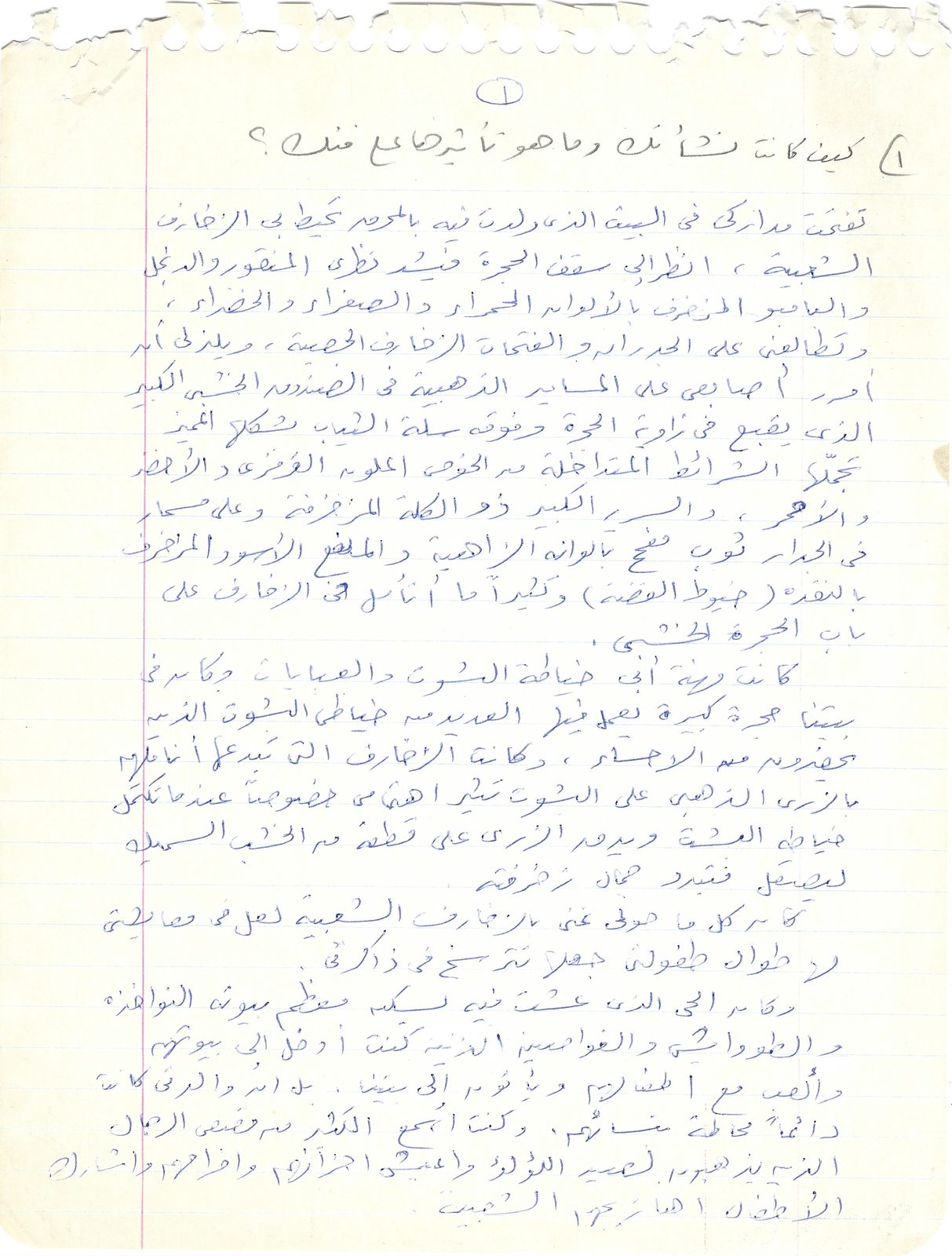
النص الأصلي
١) كيف كانت نشأتك وما هو تأثيرها على فنك ؟
تفتحت مداركى فى البيت الذى ولدت فيه بالمحرق تحيط بى الزخارف الشعبية ، انظر الى سقف الحجرة فيشد نظرى المنقور والدنجل والبامبو المزخرف بالألوان الحمراء والصفراء والخضراء :
وتطالعني على الجدران والفتحات الزخارف الجصية ، ويلذنى ان أمر, أصابعي على المسامير الذهبية فى الصندوق الخشبى الكبير الذى يقبع فى زاوية الحرة وفوقه سلة الشياب شكلها المميز تجمّلها الشرائط المتداخلة من الخوص الملون القرمزي والأخضر والأحمر ، والسرير الكبير أو الكلة المزخرفة وعلى مسمار فى الجدار ثوب مضح بالوانه الزاهية والملفع الأسود المزخر ف بالنقده (خيوط الفضة) وكثيرا ما أتأمل فى الزخارف على باب الحجرة الخشبي .
كانت مهنة أبى خياطة البشوت والعبايات وكان فى بيتنا حجرة كبيرة يعمل فيها العديد من خياطي البشوت الذين يحضرون من الاحساء ، وكانت الزخارف التى تبدعها أنا ملهم بالزري الذهبى على البشوت تثير اهتمامي خصوصاً عندما تكتمل خياطة البشت ويدق الزرى على قطعة من الخشب السميك ليصقل فتبدو جمال زخرفتة.
كان كل ما حولى غنى بالزخارف الشعبية لعل فى معايشتي لها طوال طفولتي جعلها تترسخ فى ذاكرتي.
وكان الحى الذى عشت فيه يسكن معظم بيوته النواخذة والطووايش والغواصين اللذين كنت أدخل الى بيوتهم
بل أن والدتي كانت دائما محاطة بنسائهم، كنت اسمع الكثير من قصص الرجال
الذين يذهبون لصيد اللؤلؤ وأعيش احزانهم وافراحهم واشارك الأطفال اها زيجهم الشعبية.
Translation
1) How was your upbringing, and what is its impact on your art?
My awareness awakened in the house where I was born in Muharraq, surrounded by folk decorations. I would look at the room's ceiling, and my eyes would be drawn to the carved wood (al-manqur), the dangal, and the bamboo decorated with red, yellow, and green colors.
Gypsum decorations would greet me on the walls and openings, and I delighted in running my fingers over the golden nails in the large wooden chest that sat in the corner of the room. Above it was a basket with its distinctive shape, beautified by interwoven strips of colored palm fronds - crimson, green, and red. There was the large bed or the decorated "kalla," and on a nail in the wall hung a bright garment with its vivid colors and the black "milfa'a" decorated with "naqda" (silver threads)." I would often contemplate the decorations on the wooden door of the room.
My father's profession was tailoring bishts and abayas, and in our house, there was a large room where many bisht tailors worked, who came from Al-Ahsa. The decorations created by the needles inspired by the golden threads (Zari) on the bishts caught my attention, especially when the bisht tailoring was completed and the zari was hammered on a piece of thick wood to be polished, revealing the beauty of its decoration.
Everything around me was rich with folk decorations. Perhaps living with them throughout my childhood made them become deeply rooted in my memory.
The neighborhood I lived in was mostly inhabited by sea captains (nawakhida), pearl merchants (tawawish), and pearl divers whose homes I would enter. In fact, my mother was always surrounded by their women. I would hear many stories of the men who went pearl diving and lived their sorrows and joys, sharing with the children their folk games.
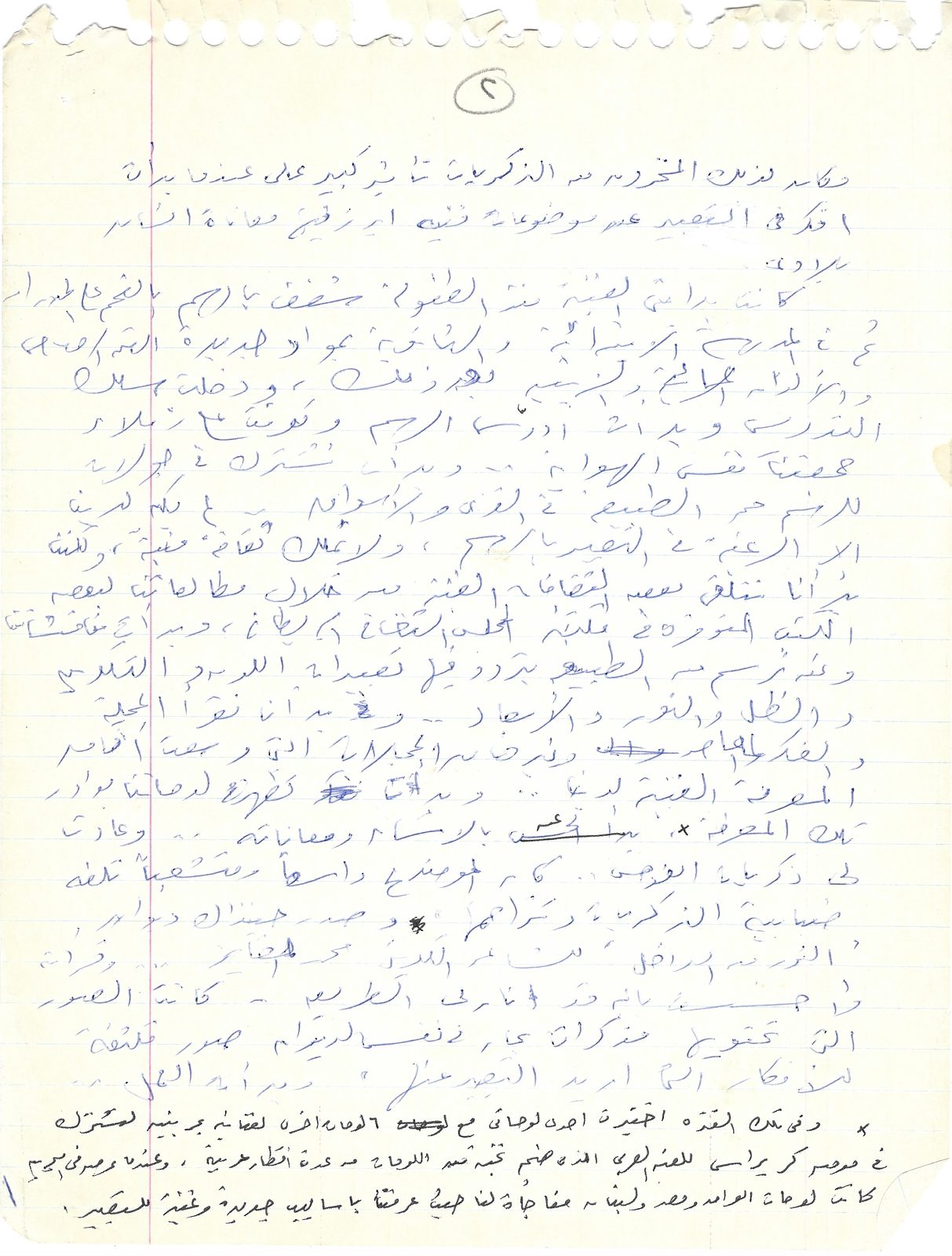
النص الأصلي
وكان لذلك المخزون من الذكريات تأثير كبير علي عندما بدات افكر فى التعبير عن موضوعات فنية ابرز فيها معاناة انسان بلادي.
كانت بدايتي الفنية منذ الطفولة شفف بالرسم ا بالفحم على الجدران ثم المدرسة الأبتدائية و الثانوية بمواد جديدة القلم الرصاص و الألوان المائية والزيتية وبعد ذلك ،دخلت سلك التدريس وبدأت ادرس الرسم وكونت مع زملاء جمعتنا نفس الهواية... وبدأت اشترك في جولات للرسم في الطبيعة في القرى و الأسواق ... لم يكن لدينا الا الرغبة في التعبير في الرسم، لانملك ثقافة فنية ، لكننا بدأنا نتلقى بعض الثقافات الفنية من خلال مطالعتنا لبعض الكتب الفنية المتوفرة في المجلس الثقافي البريطاني، وبدأت مناقشاتنا . وعند الرسم من الطبيعة يتردد فيها تعبيرات اللون و التكوين و الظل و النور و الأبعاد...وبدأت تظهر لوحاتنا بوادر تلك المعرفة عن الانسان ومعاناته،.. وعادت لي ذكريات الغوص.. كان الموضوع واسعاّ ومتشعباّ تلفه ضبابية الذكريات وتزاحمها. وصدر حينذاك ديوان (النور من الداخل) للشاعر الكويتي محمد الفايز .. وقرأته وأحسست بأنه أنار لي الطري - كانت الصور التي تحتويها مذكرات بحار في نفس الديوان صور متجانسة للأفكار التي اريد التعبير عنها..وبدأت العمل.
وفي الك الفترة اختيرت احدى لوحاتي مع ٦ لوحات اخرى لفنانين بحرينيين لتشترك في معرض كراريس الفن العربي الذي ضم نخبه من اللوحات من عدة أقطار عربية، وعندما عرض في البحرين كانت لوحات العراق و مصر ولبنان مفاجأة لنا حيث عرفتنا بأساليب جديدة وغنية للتعبير.
Translation
That reservoir of memories had a great impact on me when I began to think about expressing artistic subjects in which I highlight the suffering of the people of my country.
My artistic beginning since childhood was a passion for drawing with charcoal on walls, then in elementary and secondary school with new materials - pencils, watercolors, and oils. After that, I entered the teaching profession and began teaching drawing, and I formed [a group] with colleagues who shared the same hobby... and I began participating in drawing excursions in nature, in villages and markets...
We had nothing but the desire to express ourselves in drawing; we didn't possess artistic culture, but we began to receive some artistic education through our reading of some art books available at the British Cultural Council, and our discussions began. When drawing from nature, expressions of color, composition, shadow, light, and dimensions would resonate in them... and our paintings began to show signs of that knowledge about humanity and its suffering...
The memories of the pearl diving returned to me... the subject was broad and complex, wrapped in haziness and the crowding of memories. At that time the poetry collection "Light from Within" by the Kuwaiti poet Mohammed Al-Fayez was published... and I read it and felt that it illuminated the path for me - the images contained in the sailor's memoirs in the same collection were images harmonious with the ideas I wanted to express... and I began working.
During that period, one of my paintings was chosen along with 6 other paintings by Bahraini artists to participate in the Arab Art Notebooks exhibition which included an elite selection of paintings from several Arab countries. When it was exhibited in Bahrain, the paintings from Iraq, Egypt, and Lebanon were a surprise to us as they introduced us to new and rich methods of expression.
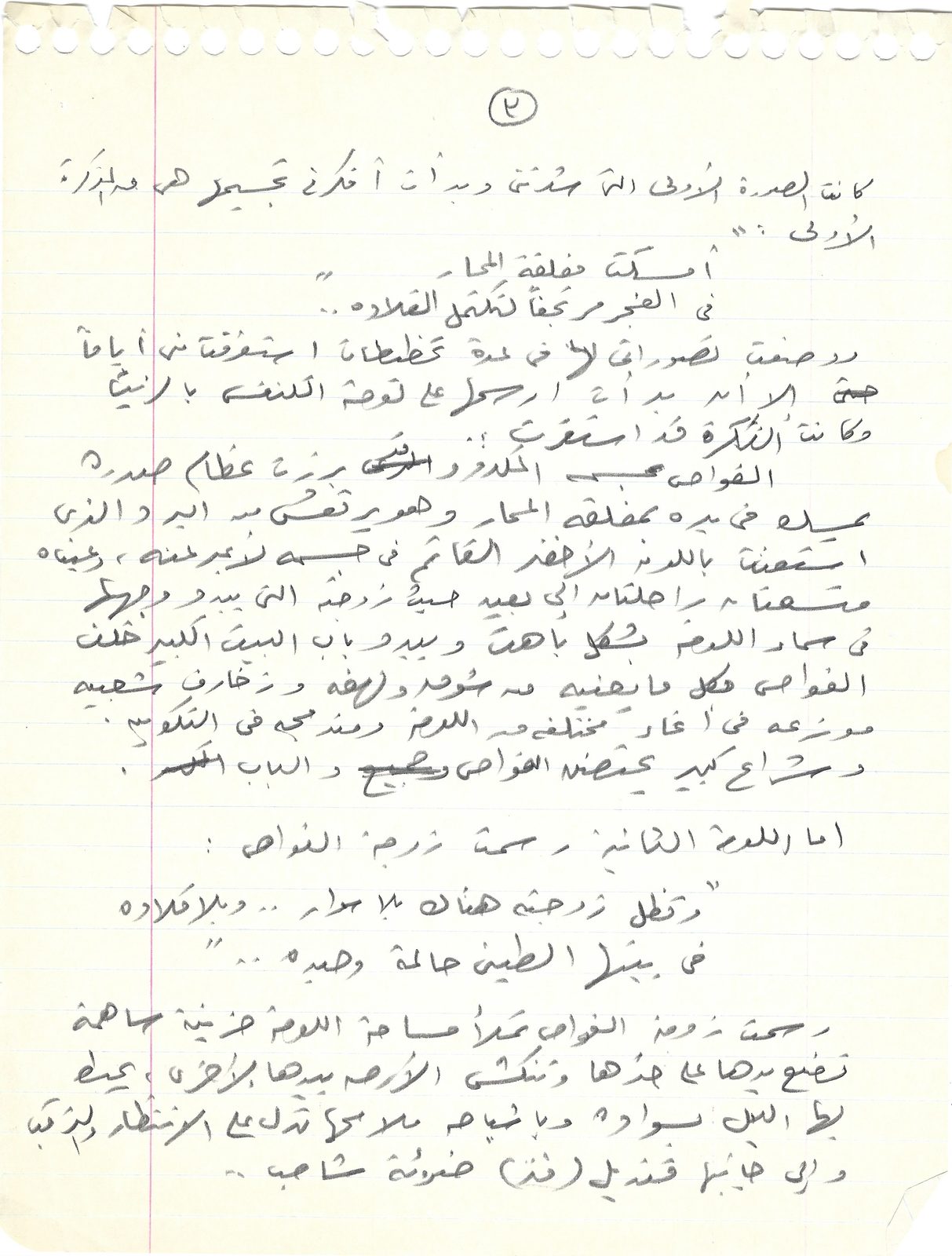
النص الأصلي
كانت الصورة الأولى التي شدتني و بدأت أفكر في تجسيمها هي المذكرة الأولى: "أمسكت مفلقة المحار..في الفجر مرتجفاّ لتكتمل القلادة.."
ووضعت تصوراتي لها في عدة تخطيطات استغرقت مني أياماّ الى أن بدأت ارسمها على لوحة كانفس بالزيت وكانت الفكرة قد استقرت..
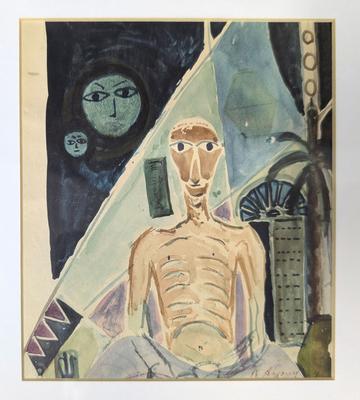
الغواص جسمه متعب وقد برزت عظام صدره يمسك في يده بمفلقة المحار و هو يرتعش من البرد الذي استعنت باللون الأخضر القاتم في جسمه لأعبر عنه، و عيناه متسعتان راحلتان الى بعيد حيث زوجته التي يبدو وجهها في سماء اللوحة بشكل باهت ويبدو باب البيت الكبير خلف الغواص بكل ما يعنيه من شوق ولهفه وزخارف شعبيه موزعه في انحاء مختلفه من اللوحه ومندمجه في التكوين وشراع كبير يحتضن الغواص و الباب.
اما اللوحة الثانية رسمت زوجة الغواص: "وتظل زوجته هناك بلا سوار.. وبلا قلادة في بيتها الطين حالمه وحيده.."
رسمت زوجة الغواص تملأ مساحة اللوحة حزينه ساهمة تضع يدها على خدها وتنكش الأرض بيدها الأخرى و يحيط بها الليل بسواده وبأشباحه ملامحها تدل على الانتظار والترقب وإلى جانبها قنديل (فنر) ضوئه شاحب..
Translation
The first image that captivated me and I began thinking about embodying was the first memoir: "He gripped the oyster opener... at dawn, trembling, for the necklace to be completed..."
I put my concepts for it in several sketches that took me days until I began painting it in oil on canvas. The idea had settled...
The diver's body is tired and his chest bones have protruded. He holds the oyster opener in his hand while shivering from the cold, which I used a dark green color in his body to express. His eyes are wide and distant, traveling far to where his wife appears - her face visible in the painting's sky in a faint form. The large door of the house appears behind the diver with all that it means of longing and yearning, Folk decorations distributed in different parts of the painting and integrated into the composition, and a large sail embracing the diver and the door.
As for the second painting, I painted the diver's wife: "And his wife remains there without bracelet... and without necklace in her clay house, dreaming and alone..."
I painted the diver's wife filling the painting's space - sad and pensive, placing her hand on her cheek and scratching the earth with her other hand. Night surrounds her with its darkness and its phantoms. Her features indicate waiting and anticipation, and beside her is a lantern (fanar) with pale light...
Works discussed on this page
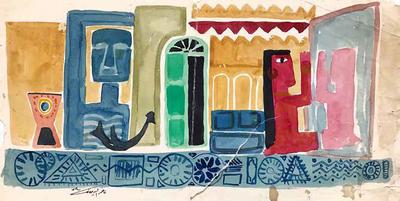
النص الأصلي
وفي مذكرة ثالثة يقول الشاعر عن لسان الغواص:
وصرخت عندي، وانتفضت و أبرقت كل العيون كشموع أقبية المناجم كالمجروح الداحيات ... قمر صغير .. في عشه الفضي أمسكه و صاح في الصحاب . طوباك...
وانتفض الرئيس كمن يحاذر أن تذوب من نار عينه...
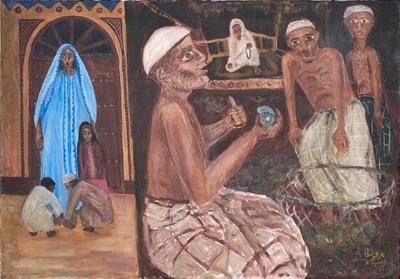
هذه اللوحة رسمت فيها الغواص وقد برزت عظام صدرة و هو يمسك بكلتا يديه وقد تقوست أصابع يديه حولها لتحميها وقد تجمع حوله نفر من البحارة تقوست اجسامهم العارية الهزيله وبرقت عيونهم وانصب اهتمامهم على اللؤلؤة..
وفي مؤخرة المركب تبدو حركة النوخذة ذو الجسم المكتنز وهو يهم بالقيام وقد برقت عيناه وفي يده خرقه حمراء ليضع فيها اللؤلؤة التي يخاف عليهآ من عيون بحارته..
وفي اللوحة الرابعة، رسمت عرس الغواص:
"سأشق دربي بينكن بثوبي الأبيض الجديد و عبائتي السوداء حيث بيدي.. تراقص خيط مسبحتي الطويل .. و الأصدقاء على الضفاف مع الشراع يترقبون مجيئ فارسك اليهم..
Translation
In a third memoir, the poet says through the diver's voice:
"And I screamed, and shuddered, and all eyes flashed like candles in mine vaults like the wounded crawling ones... a small moon... in its silver nest I grasped it and shouted to the companions: blessed be you...
And the captain shuddered like one who fears it would melt from the fire of his eyes..."
In this painting I depicted the diver with his chest bones protruding, holding [the pearl] with both hands, his fingers curved around it to protect it. A group of sailors have gathered around him, their naked, thin bodies curved, their eyes flashing, their attention focused on the pearl...
At the stern of the boat appears the movement of the captain with his stocky body as he is about to stand up, his eyes flashing, holding a red cloth in his hand to place the pearl in it - the pearl he fears for from the eyes of his sailors...
In the fourth painting, I painted the diver's wedding:
"I will forge my path among you in my new white garment and my black abaya where in my hand... the thread of my long prayer beads dances... and friends on the shores with the sail await the coming of your sad knight..."
Works discussed on this page
النص الأصلي
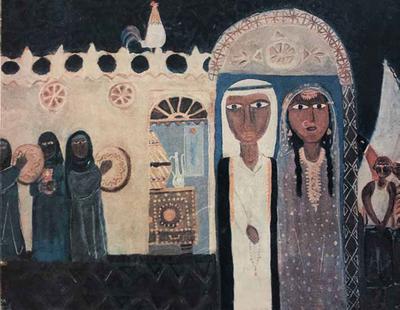
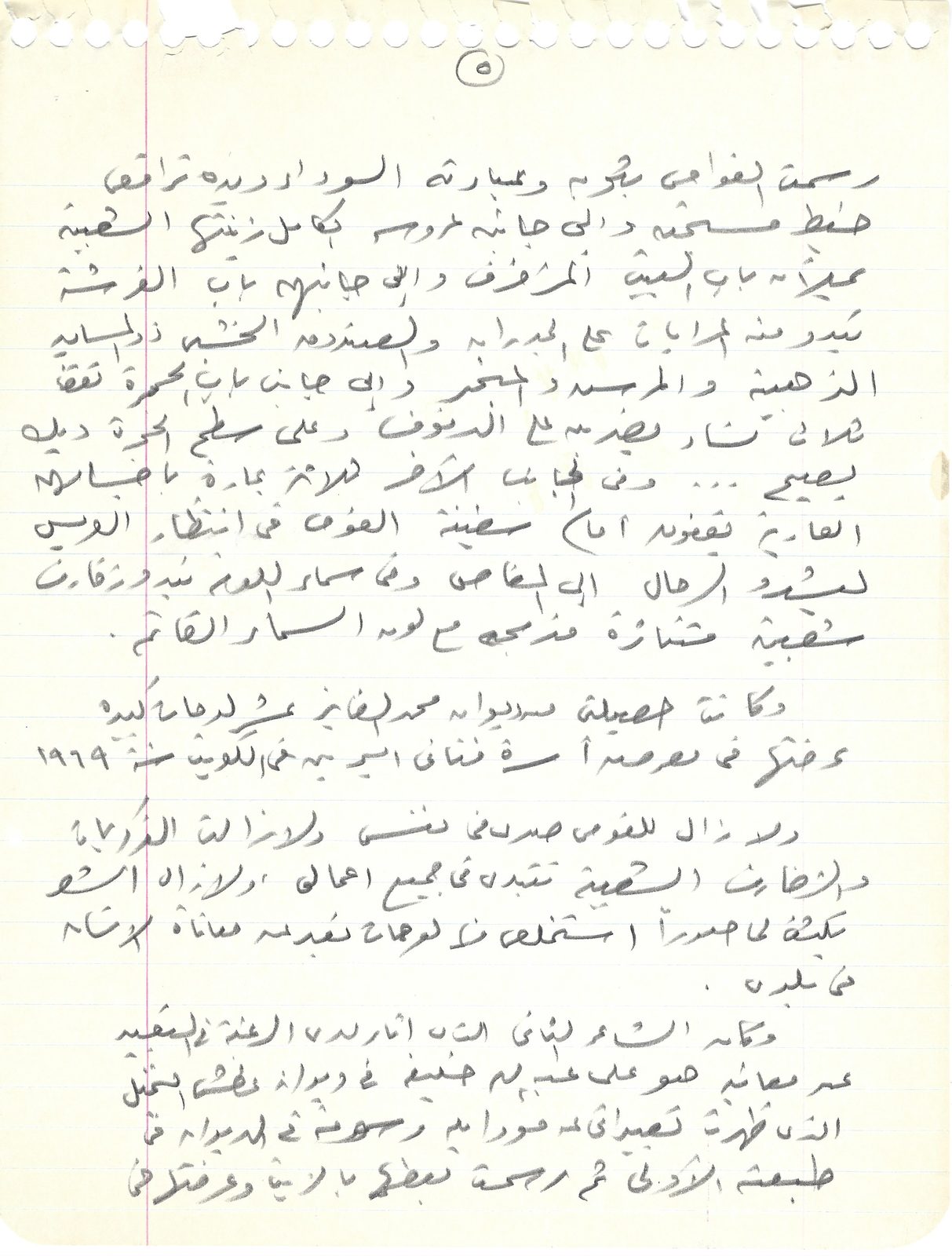
رسمت الغواص بثوبه وعبائته السوداء ويده تراقص خيط مسبحته وإلى جانبه عروسه الكامل زينتها الشعبية يملآن باب البيت المزخرف وإلى جانبهم باب الفرشه تبدو من المرايات على الجدران و الصندوق الخشبي ذو المسامير الذهبيه والمرس و المنجر وإلى جانب باب الحجرة تقف ثلاث نساء يضربن على الدفوف وعلى سطح الحجرة ديك يصيح … وفي الجانب الآخر ثلاثة بحارة بأجسامهم العارية يقفون امام سفينة الغوص في انتظار العريس ليشدو الرحال إلى المغاص وفي سماء اللوحة تبدو زخارف شعبية متناثرة ممتزجه مع لون السماء القاتم.
وكانت حصيلة من ديوان محمد الفايز عشر لوحات كبيرة عرضتها في معرض أسرة فناني البحرين في الكويت سنة ١٩٦٩م.
ولازال للغوص صدى في نفسي ولازالت الذكريات و الزخارف الشعبية تتبدى في جميع أعمالي. ولازال الشعر يكشف لي صوراّ أستخلص منها لوحات تعبر عن معانات الانسان في بلدي.
وكان الشاعر الثاني الذي اثار لدي الرغبة في التعبير عن معانيه هو على عبدالله خليفة في ديوان عطش النخيل الذي ظهرت تعبيراتي عن صورا في رسومه في الديوان في طبعته الألى ثم رسمت بعضها بالزيت و عرضتها في معرض اسرة فناني البحرين في نادي النسور سنة ١٩٧٠م.
Translation
I painted the diver in his garment and black abaya, his hand dancing with the thread of his prayer beads, and beside him his bride with her complete folk adornments - they fill the decorated door of the house. Next to them is the bedroom door with mirrors visible on the walls, and the wooden chest with golden nails, and the traditional furniture (al-maris and al-manjar). Beside the room door stand three women beating drums, and on the roof of the room a rooster crows... And on the other side, three sailors with their naked bodies stand before the diving ship, waiting for the groom to set off for the diving grounds. In the painting's sky, scattered folk decorations appear, mixed with the dark color of the sky.
The result from Mohammed Al-Fayez's poetry collection was ten large paintings that I exhibited at the Bahrain Artists' Family exhibition in Kuwait in 1969.
Pearl diving still echoes in my soul, and memories and folk decorations still appear in all my works. Poetry still reveals to me images from which I extract paintings that express the suffering of humanity in my country.
The second poet who stirred in me the desire to express his meanings was Ali Abdullah Khalifa in his collection "Thirst of the Palm Trees." My expressions of his images appeared in drawings in the collection's first edition, and then I painted some of them in oil and exhibited them at the Bahrain Artists' Family exhibition at the Eagles Club in 1970.
Works discussed on this page
النص الأصلي
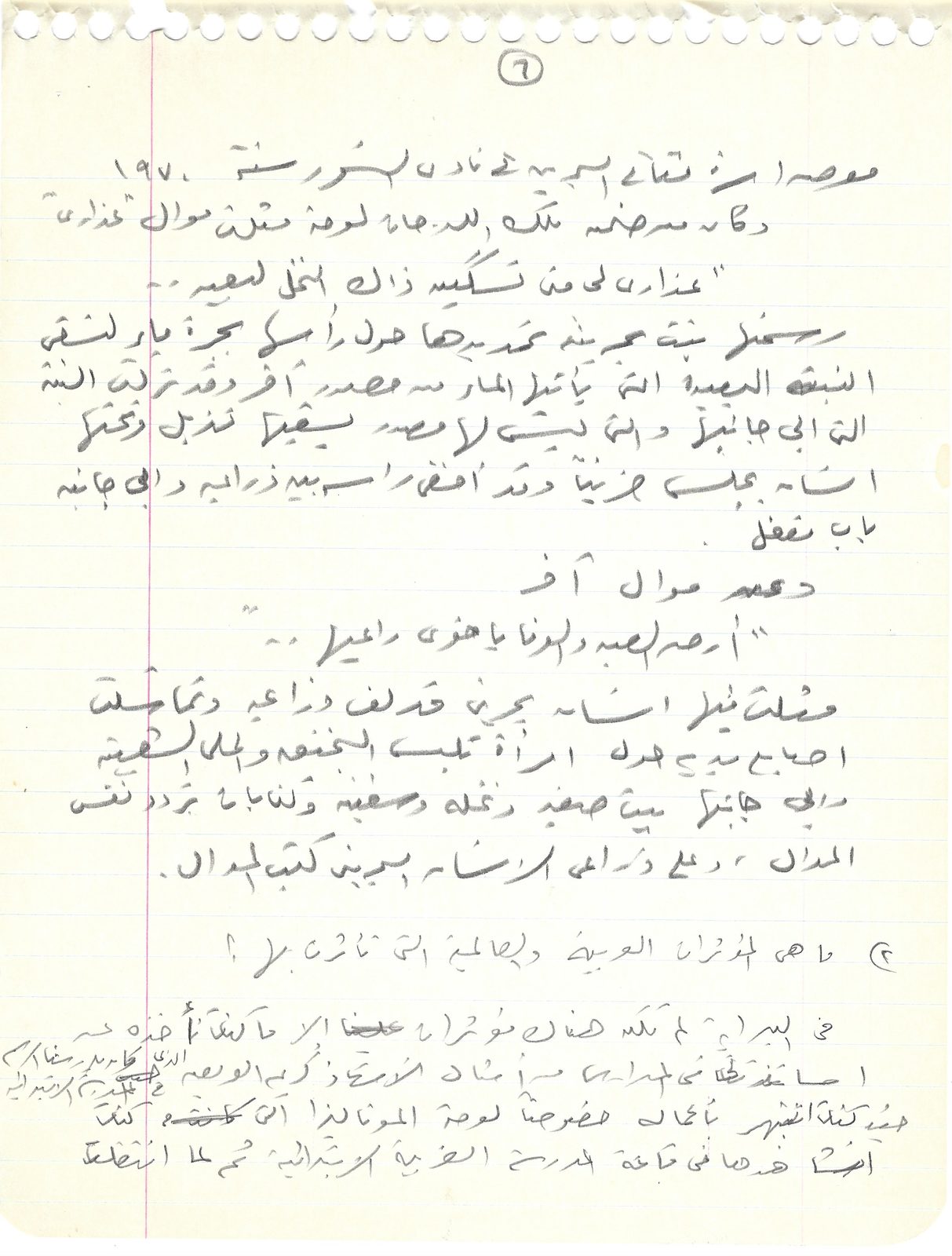
وكان من ضمن تلك اللوحات لوحة مثلت موال عذاري “عذاري لي من تسكَين ذاك النخل البعيد…”
رسمتها بنت بحرينية تحمل بيدها فوق رأسها بجرة ماء لتسقي النبته البعيدة التي يأتها الماء من مصدر يسقيها تذبل وتحتها انسان يجلس حزينا وقد أخفى رأسه بين ذراعيه وإلى جانبه باب مقفل.
وعن موال آخر
“ أرض الصيد والوفا ياخوي راعيها .. “
مثلت فيها انسان بحريني قد لف ذراعيه وتماسكت اصابع يديه حول امرأة تلبس البخنق والخلف الشعبيه والى جانبها بيت صغير ونخله و سفينه وكتابات تردد نفس الموال، وعلى ذراعي الانسان البحريني كتب الموال.
٢) ماهي المؤثرات الغربية و العالمية التي تأثرت بها؟
في البدايه لم تكن هناك مؤثرات الا ما كنت أخذه من اساتذتي في المدارس من امثال الأستاذ كريم العريض الذي كان يدرسنا الرسم في المدرسة الإبتدائية حيث كنت انبهر بأعماله خصوصا لوحة الموناليزا التي كنت اشاهدها في قاعة المدرسة الغربية الابتدائية ثم لما انتقلنا
Translation
Among those paintings was one that represented the folk song (موال) "Adhāri": "Adhāri, who will water that distant palm tree for me..."
I painted it as a Bahraini girl carrying a water jug above her head with her hand to water the distant plant that, when water doesn't reach it from a source to water it, withers. Beneath it sits a sad person who has hidden his head between his arms, and beside him is a locked door.
About another موال: "Land of loyalty and faithfulness, my brother, tend to it..."
I depicted a Bahraini man who had wrapped his arms around a woman wearing the bukhnuq and traditional folk dress, and beside her, a small house, a palm tree, and a ship, with writings repeating the same موال. On the arms of the Bahraini man, the موال was written.
2) What are the Western and global influences that affected you?
In the beginning, there were no influences except what I took from my teachers in school, such as Professor Kareem Al-Areed, who taught us drawing in elementary school, where I was amazed by his works, especially the Mona Lisa painting that I used to see in the hall of Al-Gharbiya Elementary School. Then, when we moved..
[To be continued on the next page]
النص الأصلي
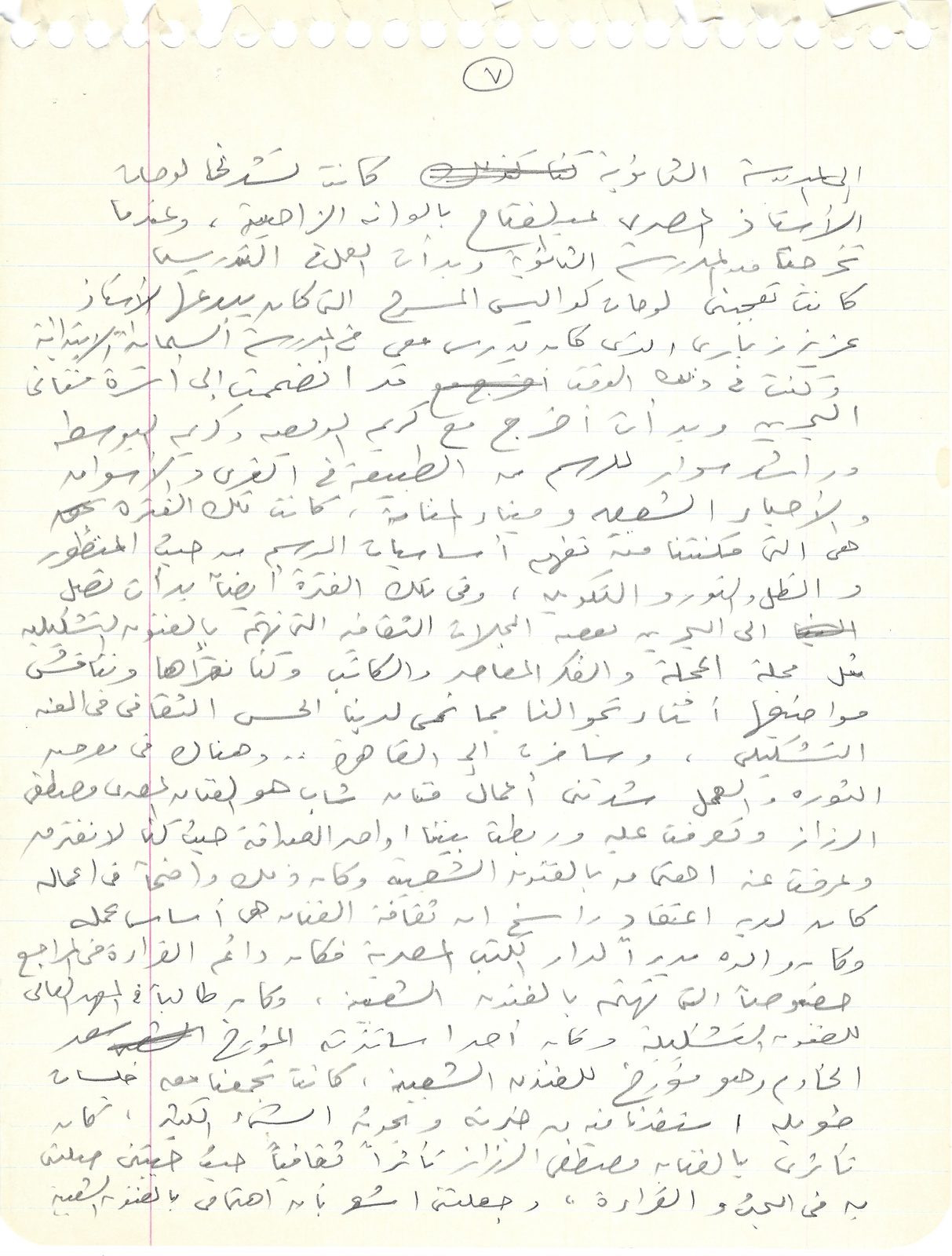
الى المدرسة الثانوية. كانت تشدني لوحات الأستاذ المصري عبد الفتاح بالوانه الزاهيه، و عندما تخرجنا من المدوسة الثانوية وبدأت العمل في التدريس كانت تعجبني لوحات كواليس المسرح التي كان يبدعها الأستاذ عزيز زباري الذي كان يدرس معي في مدرسة السلمانية الأبتدائية وكنت في ذلك الوقت قد انضممت الى أسرة فناني البحرين وبدأت أخرج مع كريم العريض وكريم البوسطة و راشد سوار للرسم من الطبيعة في القرى و الأسواق والأحياء الشعبية وميناء المنامة، كانت تلك الفترة هي التي مكنتنا من تفهم أساسيات الرسم من حيث المنظور و الظل والنور والتكوين، وفي تلك الفترة أيضا بدأت تصل الى البحرين بعض المجلات الثقافية التي تهتم بالفنون التشكيلية مثل مجلة المجلة والفكر المعاصر و الكاتب وكنا نقرأها ونناقش مواضيعها أثناء تجوالنا مما نمى ليدينا الحس الثقافي في الفن التشكيلي، وسافرت الى القاهرة .. وهناك في روح الثورة والعمل شدتني أعمال فنان شاب هو الفنان مصطفى الرزاز وتعرفت عليه وربطت بيننا اواصر الصداقة حيث كنا لانفترق وعرفت عن اهتمامه بالفنون الشعبية وكان ذلك واضحا في اعمالة، كان لديه اعتقاد راسخ ان ثقافة الفنان هي أساس عمله وكان والده مديرا لدار الكتب المصرية فكان دائم القراءة في المراجع خصوصا التي تهتم بالفنون الشعبية، وكان طالبا في المعهد العالي للفنون التشكيلية وكان أحد اساتذته المؤرخ سعد الخادم وهو مؤرخ للفنون الشعبية، كانت تجمعنا معه جلسات طويلة استفدنا من خبرته و حديثه الشيء الكثير، كان تأثري بالفنان مصطفى الرزاز تأثرا ثقافيا حيث شجعتني صلتي به في البحث و القراءة، وجعلتني أشعر بأن اهتمامي بالفنون الشعبية..
Translation
...to secondary school. I was drawn to the paintings of the Egyptian professor Abd Al-Fattah with his bright colors. When we graduated from secondary school and I began working in teaching, I was impressed by the theater backdrop paintings that Professor Aziz Zubari used to create - he taught with me at Salmaniya Elementary School. At that time I had joined the Bahrain Artists' Family and began going out with Kareem Al-Areed, Kareem Al-Busta, and Rashid Swar to paint from nature in villages, markets, popular neighborhoods, and Manama port. That period was what enabled us to understand the fundamentals of drawing in terms of perspective, shadow, light, and composition.
In that period also, some cultural magazines that were interested in fine arts began reaching Bahrain, such as Al-Majalla magazine, Contemporary Thought, and The Writer. We would read them and discuss their topics during our wanderings, which developed our cultural sense in fine arts.
I traveled to Cairo... and there, in the spirit of revolution and work, I was drawn to the works of a young artist, the artist Mustafa Al-Razaz. I got to know him and bonds of friendship formed between us where we were inseparable. I learned about his interest in folk arts, which was clear in his works. He had a firm belief that the artist's culture is the foundation of his work. His father was the director of the Egyptian Library, so he was constantly reading references, especially those concerned with folk arts. He was a student at the Higher Institute of Fine Arts and one of his professors was the historian Saad Al-Khadem, who was a historian of folk arts. We would have long sessions with him from which we benefited greatly from his experience and conversation.
My influence by the artist Mustafa Al-Razaz was a cultural influence, where my connection with him encouraged me in research and reading, and made me feel that my interest in folk arts...
[To be continued on the next page]
النص الأصلي
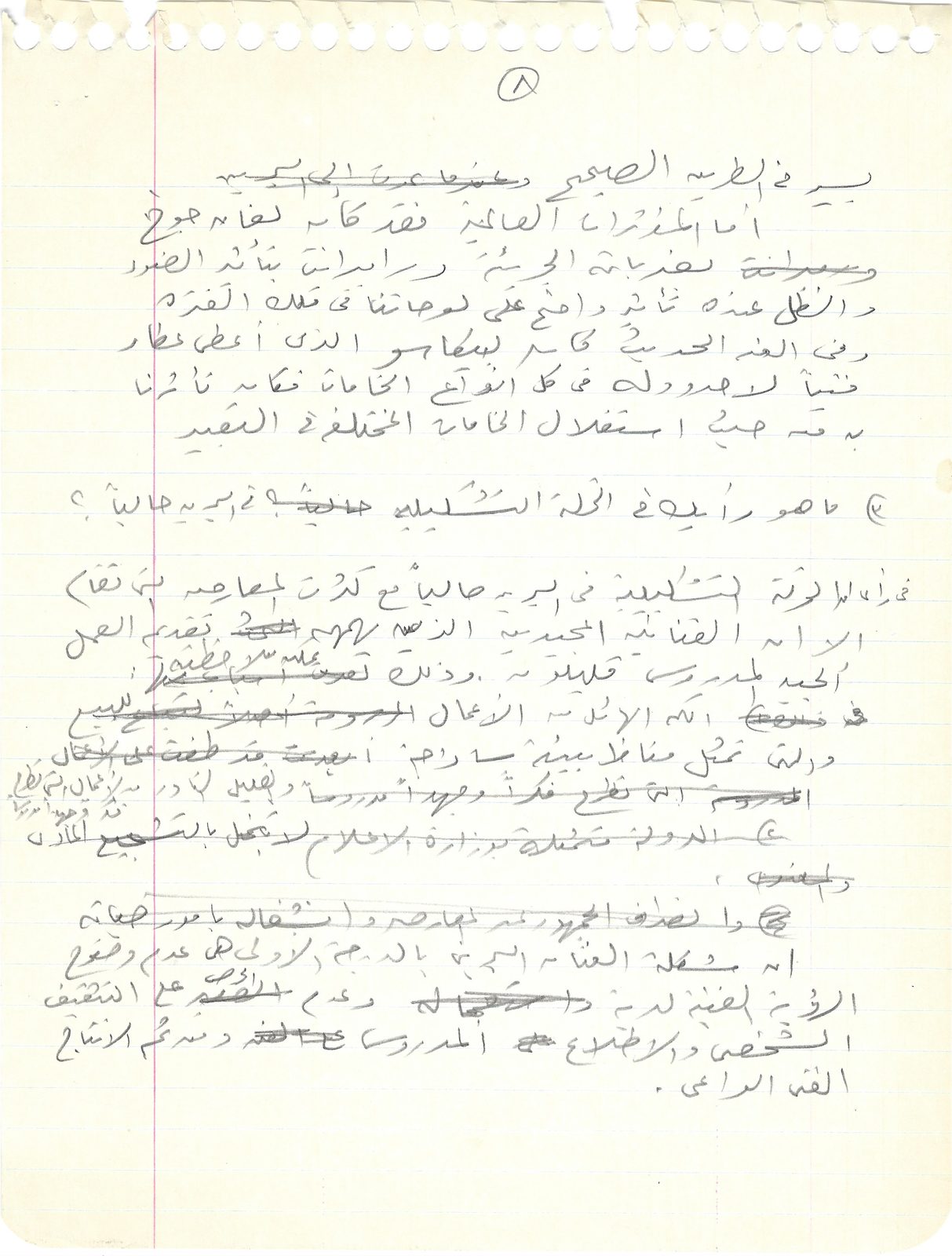
يسير في الطريق الصحيح
أما المؤثرات العالمية فقد كلن لفان جوخ بضرباته الجريئه ورامبرانت بتأثير الضوء و الظل عنده تأثير واضح على لوحاتنا في تلك الفترة وفي الفن الحديث كان لبيكاسو الذي أعطى عطاء فنيا لا حدود له في كل الخامات فكان تأثرنا به من حيث استغلال الخامات المختلفة في التعبير.
٣) ماهو رأيك في الحركة التشكيلية في البحرين حاليا؟
في رأيي ان الحركة التشكيلية في البحرين حاليا مع كثرت المعارض التي تقام الا ان الفنانين الجيدين الذين يهمهم تقديم العمل الجيد المدروس قليلون وذلك يمكن ملاحظته في الكم الهائل من الأعمال والتي تمثل مناظر بيئيه ساذجة و القليل النادر من الأعمال التي تطرح وجهة مدروسة.
ان مشكلة الفنان البحريني بالدرجة الأولى هي عدم وضوح الرؤية الفنية لديه وعدم الحرص على التثقيف الشخصي والاطلاع المدروس ومن ثم الانتاج الفني الواعي.
Translation
...was going in the right direction.
As for the global influences, Van Gogh with his bold brushstrokes and Rembrandt with his light and shadow effects had a clear influence on our paintings in that period. In modern contemporary art, Picasso, who gave unlimited artistic output in all materials, influenced us in terms of exploiting different materials in expression.
3) What is your opinion on the current fine arts movement in Bahrain?
In my opinion, the fine arts movement in Bahrain currently, despite the many exhibitions that are held, the good artists who are concerned with presenting good, well-studied work are few. This can be observed in the huge quantity of works that represent naive environmental scenes and the rare few works that present a studied perspective.
The problem of the Bahraini artist primarily is the lack of clarity in his artistic vision and the lack of concern for personal education and studied exploration, and consequently conscious artistic production.
النص الأصلي
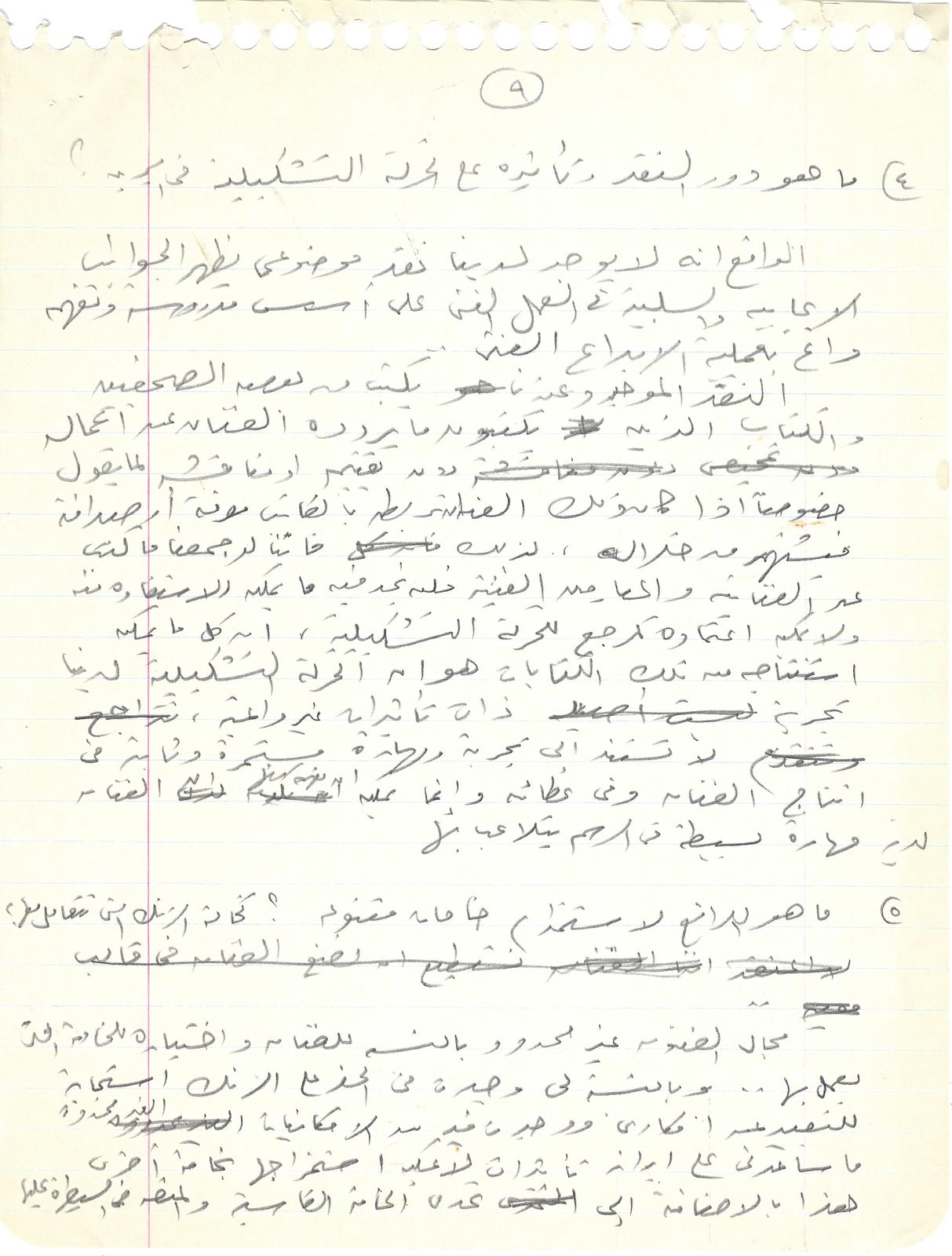
٤) ماهو دور النقد و تأثيره على الحركة التشكيلية في البحرين؟
الواقع انه لا يوجد لدينا نقد موضوعى يظهر الجوانب الايجابية والسلبية فى العمل الفنى على أسس مدروسه وتفهم واع معملية الابداع الفني..
النقد الموجود عندنا هو يكتب من بعض الصحفيين والكتاب الذين يكتبون ما يردده الفنان عن اعماله دون تقييم او مناقش لما يقول خصوصا اذا كان الفنان تربطه بالكاتب معرفه أو صداقة فيشتهر من خلاله، لذلك فأننا لو جمعنا ما كتب عن الفنانين و المعارض الفنية فلن نجد فيه ما يمكن الاستفادة منه ولايمكن اعتباره كمرجع للحركة التشكيلية، ان كل مايمكن استنتاجه من تلك اللقاءات هو ان الحركة التشكيلية لدينا تجربه ذات تأثيرات غير واعية لا تستند الى تجربة و مهارة مستمرة وثابته في انتاج الفنان وفي عطائه وإنما الاستنتاج بأن الفنان لديه مهارة بسيطة في ارسم يتلاعب بها.
٥) ماهو الدافع لإستخدام خامات متنوعة ؟ كخامة الزنك التي تتعامل معها؟
مجال الفنون غير محدود بالنسبة الى الفنان واختياره للخامة التي يعمل بها.. وبالنسبة لي وجدت في الحفر على الزنك استجابة للتعبير عن افكاري ووجدت فيه من الامكانيات الغير محدودة ما ساعدني على ابراز تأثيرات لايمكن استخراجها بخامة أخرى هذا بالاضافة إلى تحدي الخامة القاسية والثقة في السيطرة عليها..
Translation
4) What is the role of artistic critique and its impact on the fine arts movement in Bahrain?
The reality is that we don't have objective criticism that shows the positive and negative aspects of artistic work based on studied foundations and conscious understanding of the artistic creation process...
The criticism we have is written by some journalists and writers who write what the artist repeats about his works without evaluation or discussion of what he says, especially if the artist has an acquaintance or friendship with the writer, so he becomes famous through him. Therefore, if we gathered what was written about artists and art exhibitions, we wouldn't find anything useful in it, and it cannot be considered a reference for the fine arts movement. All that can be concluded from those encounters is that our fine arts movement is an experience with unconscious influences that doesn't rely on continuous and consistent experience and skill in the artist's production and output, but rather the conclusion that the artist has simple drawing skills that he manipulates.
5) What is the motivation for using various materials? Such as the zinc material you work with?
The field of arts is unlimited for the artist and his choice of the material he works with... For me, I found in engraving on zinc a response to expressing my ideas, and I found in it unlimited possibilities that helped me highlight effects that cannot be extracted with another material. This is in addition to challenging the hard material and having confidence in controlling it...
النص الأصلي
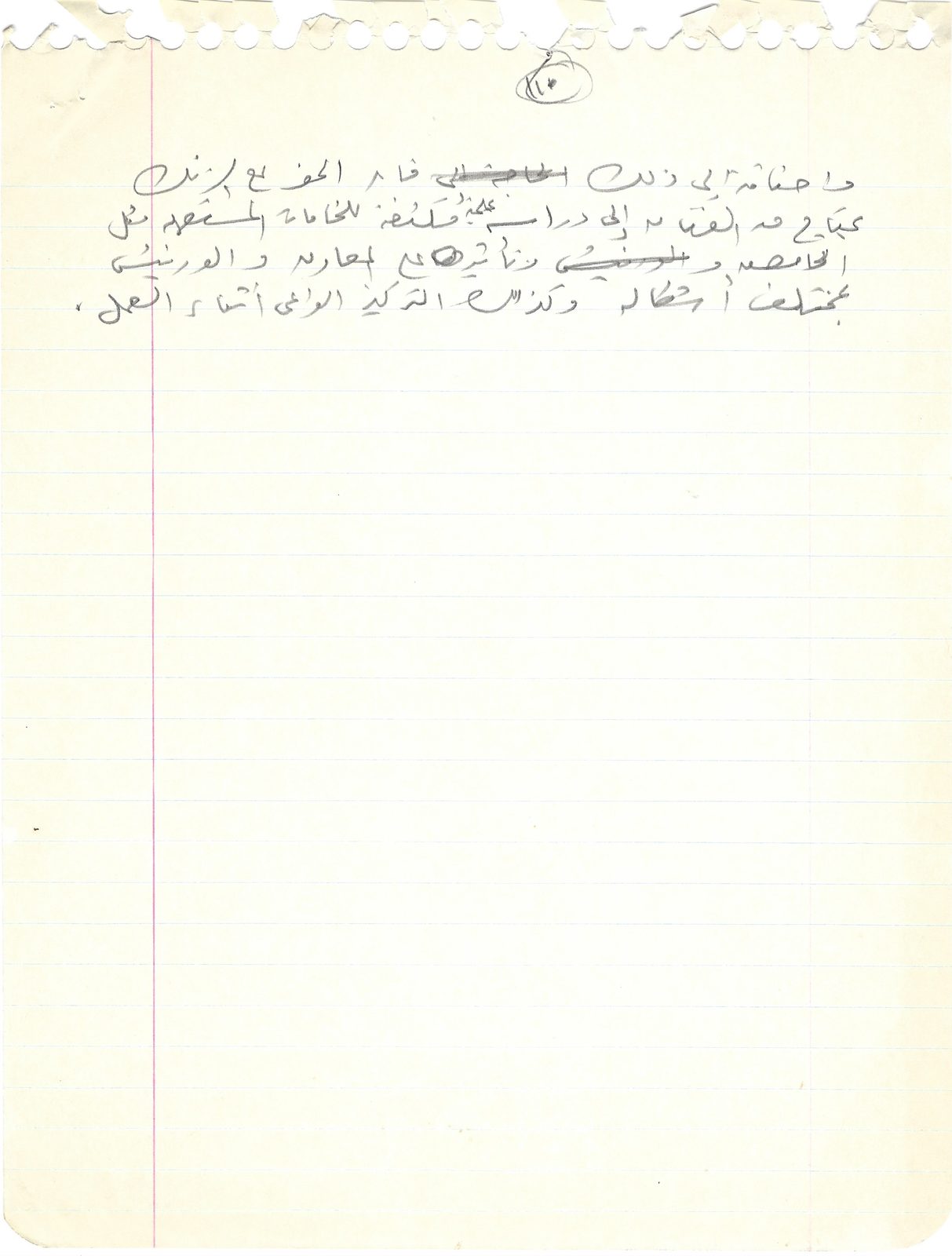
واضافة الى ذلك فإن الحفر على الزنك يحتاج من الفنان الى دراسة علمية مكثفة للخامات المستعملة مثل الحامض و تأثيرة على المعادن و الورنيش بمختلف اشكاله وكذلك التركيز الواعي أثناء العمل.
Translation
In addition to that, zinc engraving requires from the artist intensive scientific study of the materials used, such as acid and its effect on metals, and varnish in its various forms, as well as conscious concentration during work.