Introduction to the Art of Zinc Engraving
Technical guide and process documentation
Comprehensive technical guide explaining the art and process of zinc engraving. Document covers the historical significance of engraving arts, properties of zinc as an artistic medium, chemical processes involved, and detailed step-by-step methodology for creating zinc engravings. Includes explanation of materials (etching varnish, zinc sheets) and tools (engraving needles) used in the process. Serves as both educational material and documentation of specialized artistic technique.
- Archive no. ARC-20250709-001
- 2 pages scanned
Subjectszinc engravingprintmakingetching techniquesartistic methodszincographyengraving needleetching varnishmetal oxidationchemical processesart instructiontechnical documentationprintmaking materialsengraving artsartistic techniques
النص الأصلي
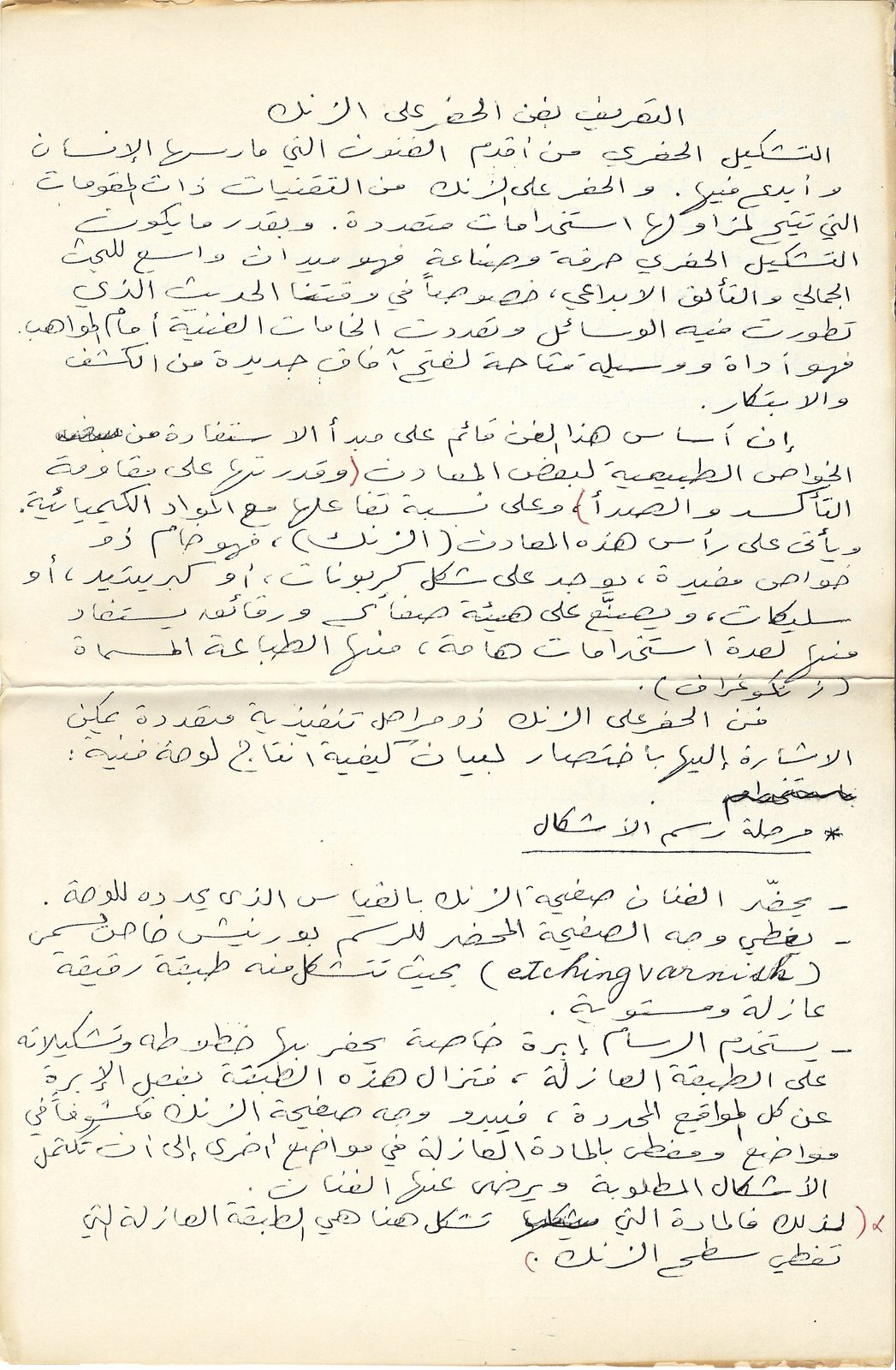
التعريف بفن الحفر على الزنك
التشكيل الحفرى من أقدم الفنون التي مارسها الإنسان وأبدع فيها. والحفر على الزنك من التقنيات ذات المقومات التي تتيح لمزاولها استخدامات متعددة. وبقدر ما يكون التشكيل الحفري حرفة وصناعة فهو ميدان واسع للبحث الجمالي والتألق الابداعي، خصوصاً في وقتنا الحديث الذي تطورت فيه الوسائل وتعددت الخامات الفنية أمام المواهب. فهو أداة ووسيلة متاحة لفتح آفاق جديدة من الكشف والابتكار.
إن أساس هذا الفن قائم على مبدأ الاستفادة من الخواص الطبيعية لبعض المعادن (وقدرتها على مقاومة التأكسد و الصدأ)، وعلى نسبة تفاعلها مع المواد الكيميائية.
ويأتي على رأس هذه المعادن (الزنك)، فهو خام ذو خواص مفيدة ، يوجد على شكل كربونات، أو كبريتيد، أو سليكات، ويصنَّع على هيئة صفائح ورقائق يستفاد منها لعدة استخدامات هامة ، منها الطباعة المسماة (زنكوغراف).
فن الحفر على الزنك ذو مراحل تنفيذية متعددة يمكن الاشارة إليها بأختصار لبيان كيفية انتاج لوحة فنية :
مرحلة رسم الأشكال:
- يحضّر الفنان صفيحة الزنك بالقيا س الذى يحدده للوحة
- يغطي وجه الصفيحة المحضر للرسم بورنيش خاص يسمى (etching varrnish) بحيث
- تتشكل منه طبقة رقيقه عازلة ومستويه.
- يستخدم الرسام إبرة خاصة يحفر بها خطوطه، وتشكيلاته على الطبقة العازلة ، فتزال هذه
- الطبقة بفضل الإبرة عن كل المواقع المحددة ، فيبدو وجه صفيحة الزنك مكشوفاً في مواضع ومغطى بالمادة العازلة في مواضع أخرى إلى أن تكتمل الأشكال المطلوبة ويرضى عنها
- الفنان .
(لذلك فالمادة التي تشكل هنا هي الطبقة العازلة التي تغطي سطح الزنك.)
Translation
Introduction to the Art of Zinc Engraving
Engraving art is one of the oldest arts that humans have practiced and excelled in. Zinc engraving is among the techniques with qualities that allow its practitioners multiple uses. As much as engraving art is a craft and industry, it is also a broad field for aesthetic research and creative brilliance, especially in our modern time when methods have developed and artistic materials have multiplied before talents. It is a tool and available means for opening new horizons of discovery and innovation.
The foundation of this art is based on the principle of benefiting from the natural properties of some metals (and their ability to resist oxidation and rust), and on their rate of reaction with chemical materials.
Zinc comes at the forefront of these metals, as it is a raw material with useful properties. It exists in the form of carbonate, sulfide, or silicate, and is manufactured as sheets and foils that are used for several important applications, including printing called (zincography).
The art of zinc engraving has multiple implementation stages that can be briefly indicated to show how to produce an artistic work:
Stage of Drawing Shapes:
- The artist prepares the zinc sheet in the size he determines for the painting
- He covers the surface of the sheet prepared for drawing with a special varnish called (etching varnish) so that a thin, insulating, and level layer is formed from it
- The artist uses a special needle with which he engraves his lines and formations on the insulating layer, so this layer is removed by means of the needle from all the designated locations, so the face of the zinc sheet appears exposed in some places and covered with the insulating material in other places until the required shapes are completed and the artist is satisfied with them
(Therefore, the material being shaped here is the insulating layer that covers the zinc surface.)
النص الأصلي
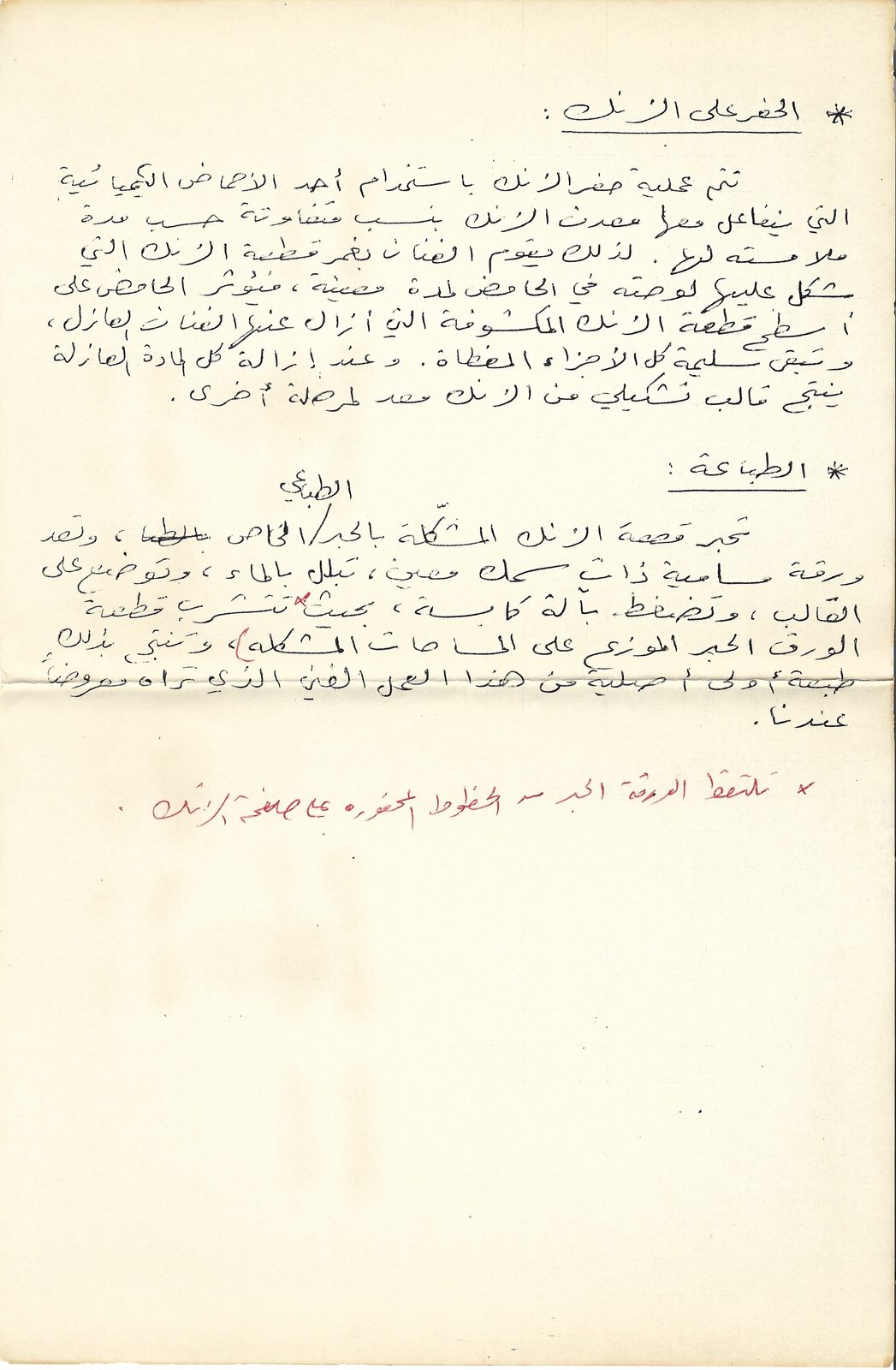
الحفر على الزنك :
تتم عملية حفر الزنك باستخدام أحد الأحماض الكميائية التي يتفاعل معها معدن الزنك بنسب متفاوتة حسب مدة ملامسته لها . لذلك يقوم الفنان بغمر قطعة الزنك التي شكل عليها لوحته في الحامض لمدة معينه، فيؤثر الحامض على أسطح قطعة الزنك المكشوفة التي أزال عنها الفنان العازل، وتبقى سليمة كل الأجزاء المغطاة. وعند إزالة كل المادة العازلة ينتج قالب تشكيلي من الزنك معد لمرحلة أخرى.
الطباعة :
تحبر قطعة الزنك المشكلة بالحبر الطباعي الخاص وتعد ورقة مسامية ذات سمك معين، تبلل بالماء، وتوضع على القالب، وتضغط بآلة كابسة، بحيث* تتشرب قطعة الورق الحبر الموزع على (المساحات المشكله) وتنتج بذلك طبقة أولى أصلية من هذا العمل الفني الذي تراه معروضا عندنا.
* تلتقط الورقة الحبر من الخطوط المحفورة على صفحة الزنك.
Translation
Zinc Engraving:
The zinc etching process is carried out using one of the chemical acids that zinc metal reacts with at varying rates according to the duration of its contact with them. Therefore, the artist immerses the zinc piece on which he formed his painting in the acid for a certain period, so the acid affects the exposed surfaces of the zinc piece from which the artist removed the insulating material, while all the covered parts remain intact. When all the insulating material is removed, a zinc forming plate is produced, prepared for another stage.
Printing:
The formed zinc piece is inked with special printing ink, and a porous paper of a certain thickness is prepared, moistened with water, and placed on the plate, then pressed with a pressing machine, so that the piece of paper absorbs the ink distributed on (the formed areas) and thus produces an original first impression of this artwork that you see displayed with us.
*The paper picks up the ink from the engraved lines on the zinc sheet.