"Impressions of an Unforgettable Memory"
Personal memoir by Abdul Jabbar Al-Ghadban on artistic relationship with Nasser Al-Yousif
Comprehensive personal memoir by Bahraini visual artist Abdul Jabbar Al-Ghadban documenting his decades-long relationship with Nasser Al-Yousif from 1968 until Al-Yousif's death. Memoir covers Al-Ghadban's introduction to Al-Yousif through Abdul Karim Al-Busta at Altaleb Stationery Bookstore, Al-Yousif's role as art teacher at Al-Hawra School in 1969, mentorship in wood engraving and oil painting, Altaleb Stationery Bookstore as an artistic hub with art books and classical music. Details: Al-Ghadban's Damascus University studies 1972-1975 in zincography and lithography, Al-Yousif's visit to Damascus 1975, closure of Altaleb Stationery Bookstore due to financial issues. Chronicles the development of graphics/printmaking in Bahrain through 1980, Asilah Festival workshop with Sudanese artist Mohammed Omar Khalil, 1982 joint graphics exhibition at the Graduates Club with Ibrahim Busaad, Karim Al-Areed, Kamil Barakat. Describes Al-Yousif's 1988 solo exhibition at Dar Al-Ghad, the establishment of the Graphics Workshop in 1989 at the Bahrain Fine Arts Association. Poignant account of Al-Yousif's continued work after losing sight using the lino engraving technique, final period artistic philosophy.
- Archive no. ARC-20250711-003
- 5 pages scanned
SubjectsAbdul Jabbar Al-Ghadban memoirAltaleb Stationery Bookstore artistic hubAbdul Karim Al-Busta introductionAl-Hawra School 1969wood engraving mentorshipDamascus University graphics studieszincography lithographyAsilah Festival 1980Mohammed Omar Khalil workshopjoint graphics exhibition 1982Graduates ClubIbrahim BusaadKarim Al-AreedKamil BarakatDar Al-Ghad 1988 exhibitionAli Abdullah Khalifa poetGraphics Workshop 1989Bahrain Fine Arts AssociationJamal Abdul RahimAbbas Yousuflino engraving blindness periodartistic philosophy memoryclassical music art booksoil painting color theorylocal environment nature integration
النص الأصلي
انطباعات عن ذاكرة لا تنسى
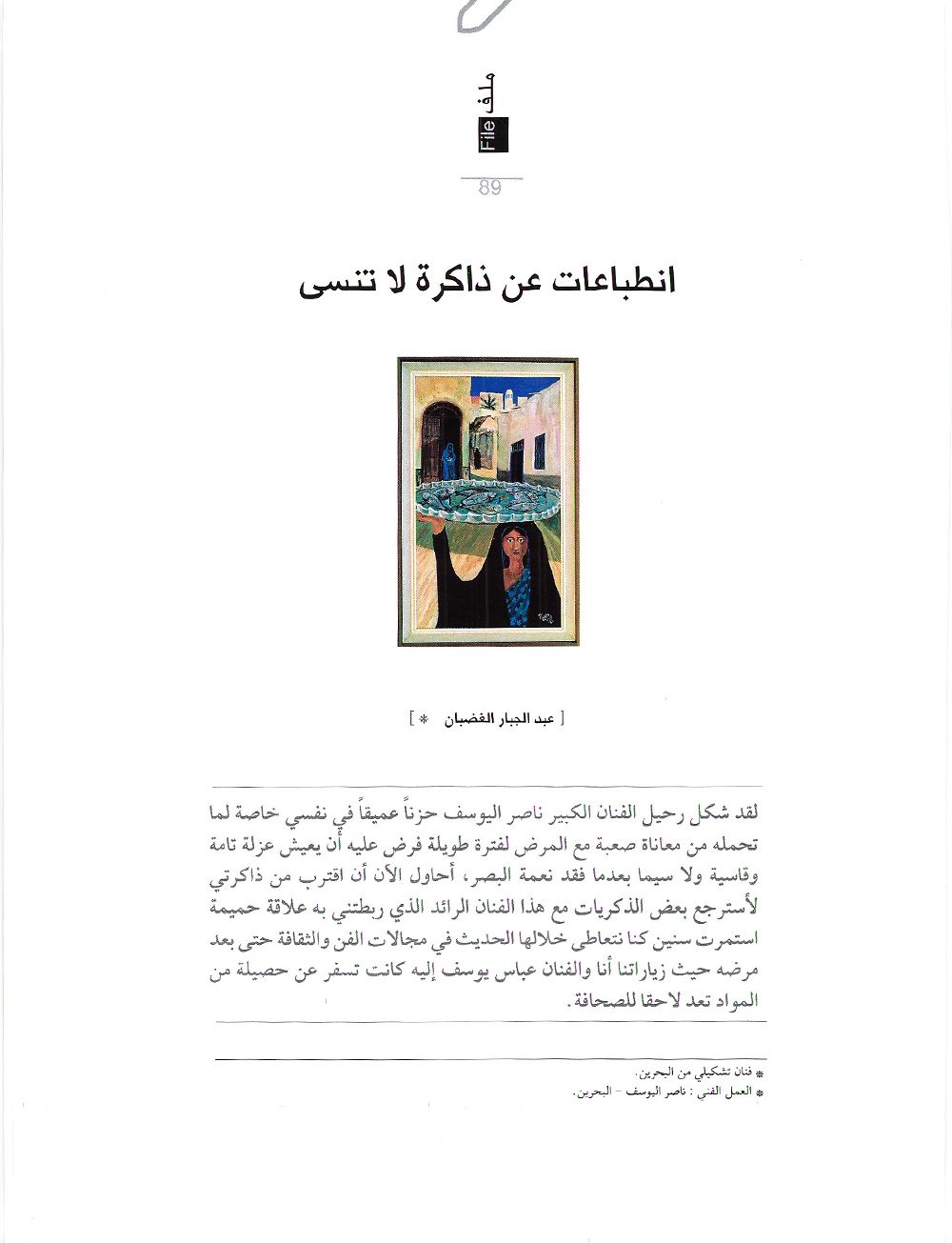
عبد الجبار الغضبان / . فنان تشكيلي من البحرين
لقد شكل رحيل الفنان الكبير ناصر اليوسف حزناً عميقاً في نفسي خاصة لما جمله من معاناة صعبة مع المرض لفترة طويلة فرض عليه ان يعيش عزلة تامة وقاسية ولا سيما بعدما فقد نعمة البصر، أحاول الأن أن اقترب من ذاكرتي لأسترجع بعض الذكريات مع هذا الفنان الرائد الذي ربطتني به علاقة حميمة استمرت سنين كنا نتعاطى خلالها الحديث في مجالات الفن والثقافة حتى بعد مرضه حيث زياراتنا أنا والفنان عباس يوسف إليه كانت تسفر عن حصيلة من لمواد تعد لاحقا للصحافة.
Translation
Impressions of an Unforgettable Memory
Abdul Jabbar Al-Ghadban / Visual Artist from Bahrain
The departure of the great artist Nasser Al-Yousif formed a deep sadness in my soul, especially for the difficult suffering he endured with illness for a long period that forced him to live in complete and harsh isolation, particularly after he lost the blessing of sight. I am now trying to approach my memory to retrieve some memories with this pioneer artist who had an intimate relationship with me that lasted years during which we would engage in conversations about art and culture, even after his illness, where our visits - Abbas Yousuf and I - to him would yield material that would later be prepared for the press.
النص الأصلي
لا أنسى الفضل الكبير للأستاذ الفنان عبد الكريم البوسطة عليّ في الجانب الفني ما قبل دراستي الجامعية وفي تعرفي الكثير من الفنانين عن طريقه، ذات يوم من عام 1968 أخذني البوسطة إلى مكتبة الطالب وهناك تعرفت إلى الفنان ناصر اليوسف المرحب دوماً بالطاقات الشبابية ثم أخذت أتردد على المكتبة بشكل يومي وكأني وجدت ضالتي إن لجهة تعرفي إلى اليوسف وبداية نسج العلاقة وعرض أعمالي عليه وإن لجهة اطلاعي على أعماله الزيتية وتخطيطاته بالأحبار وشرائي الكتب الفنية واشتراكي في العديد من المجلات كمجلة المجلة والفكر المعاصر المصريتين.
فقد ترسخت العلاقة بين الطالب واستاذه عندما انتقلت إلى المرحلة الثانوية بمدرسة الحورة عام 1969، كان مدرساً لمادة التربية الفنية فكنت ألتقي به بشكل يومي، أعطاني قطع خشب وأدوات الحفر عليها وقال: يجب أن تتعلم هذا النوع من الفن الذي يعتمد على حفر الموضوع على سطح الخشب.
شعرت برغبة عارمة في تعلم هذه الخامة الجديدة، فرحت اشتغل بشكل يومي بين الحفر على الخشب والرسم الزيتي وقتها كنت أعرض أعمالي على ثلاثة فنانين المرحومَيْن ناصر اليوسف وعباس المحروس وعبد الكريم البوسطة سواء في المدرسة أو في مكتبة الطالب التي أصبحت أنذاك مقرا لالتقاء الفنانين وحواراتهم في مجال الفن والمعارض وآخر ما صدر من كتب الفن الأوربية والعربية.
قال لي ذات يوم من عام 1960: لقد تطور مستواك في الرسم والتلوين الزيتي و موضوعاتك جميلة في تناولها.. رسم الوجوه ومناظر البحر والسفن والطبيعة الساكنة وتدل على اهتمامك و شغفك ودأبك، بعدها طلب مني إحضار أربع لوحات من مواضيع السفن للمشاركة في معرض كبير يضم الكثير من الفنانين،
حينها ذهبت إلى البيت فرحا وبروزت الأعمال بصورة بسيطة وأخذتها إلى مكتبة الطالب وقال مؤكدا على ضرورة حضوري يوم الافتتاح الذي كان حسب ظني في مدرسة المنامة الثانوية.
شعرت وقتها أن الفنان الراحل كان يعمل على دفعني لمواقع أمامية شيئا فشيئا للمشاركة في المعارض وبالفعل شاركت في الكثير من المعارض التي كانت تقام في تلك الفترة بين الفينة وأخرى.
كان المرحوم مثقفاً ومعلماً وملماً بأمور الفن وكنت ألجأ إليه في حل أية معضلة تعترضني في ممارسة الفن وكنت اشتري الأدوات والألوان بمبالغ مؤجلة الدفع أسددها فيما بعد، وشجعني على اقتناء الكثير من الكتب الفنية حيث كان الكتاب الجيد وقتها يكلف من ثلاثة إلى أربعة دنانير .
ناصر واللون والطبيعة
لقد دأبت على متابعة اللوحات التي كان يرسمها بالألوان الزيتية في فترة السبعينات فقد كانت له رؤية خاصة تنبع من خاصية الموضوع الذي يتناوله وليس من إمكانيات الألوان الزيتية وما تملكه من خصوصية تقنية وجمالية وفنية. ما تناوله الفنان الساذج وخاصة فيما يتعلق بمزج الألوان، لقد تعلق ناصر بروح البيئة المحلية وروح الطبيعة المندمجة في ذاته وتكوينه.. لقد بنى في ذاكرته ألوانه الخاصة ببساطتها وعفويتها كي تنسجم مع ما هو مرسوم في ذاكرته التاريخية والنفسية والتكوينية واستطاع أن يختزل ألوانه بعقلية صارمة ترفض أية لمسة لون دخيلة على عائلته اللونية- البني المحروق- الأوكر- الأزرق - الرمادي -الأبيض غير الصريح.
Translation
I do not forget the great favor of Professor Artist Abdul Karim Al-Busta to me in the artistic aspect before my university studies, and in my getting to know many artists through him. One day in 1968, Al-Busta took me to the Student Bookstore, and there I met artist Nasser Al-Yousif, who was always welcoming to young talents. Then I began frequenting the bookstore daily as if I had found what I was looking for, both in terms of getting to know Al-Yousif and beginning to weave the relationship and showing him my works, and in terms of viewing his oil works and ink sketches and buying art books and subscribing to many magazines like Al-Majalla and Contemporary Thought, both Egyptian.
The relationship between student and teacher was solidified when I moved to the secondary level at Al-Hawra School in 1969. He was a teacher of art education, so I would meet him daily. He gave me pieces of wood and tools for engraving on them and said, "You must learn this type of art that depends on engraving the subject on the wood surface."
I felt an overwhelming desire to learn this new medium, so I started working daily between wood engraving and oil painting. At that time I would show my works to three artists - the late Nasser Al-Yousif, Abbas Al-Mahrous, and Abdul Karim Al-Busta - whether at school or at the Student Bookstore, which had become by then a headquarters for artists' meetings and their dialogues in the field of art and exhibitions and the latest European and Arab art books.
He told me one day in 1960: "Your level in drawing and oil coloring has developed and your subjects are beautiful in their treatment... drawing faces, sea and ship views, and still life indicate your interest, passion, and perseverance." After that, he asked me to bring four paintings of ship subjects to participate in a large exhibition that included many artists. Then I went home happy and framed the works simply and took them to the Student Bookstore, and he confirmed the necessity of my attendance on opening day, which I believe was at Manama Secondary School.
I felt then that the late artist was working to push me to forward positions gradually to participate in exhibitions, and indeed, I participated in many exhibitions that were held in that period from time to time.
The deceased was cultured, a teacher, and knowledgeable about art matters, and I would resort to him to solve any problem I faced in practicing art. I would buy tools and colors with deferred payment amounts that I would pay later, and he encouraged me to acquire many art books, where a good book at that time cost three to four dinars.
Nasser, Color, and Nature
I habitually followed the paintings he drew with oil colors in the seventies, as he had a special vision stemming from the characteristics of the subject he addressed rather than from the possibilities of oil colors and their technical, aesthetic, and artistic specificity. What the naive artist addressed, especially regarding color mixing. Nasser became attached to the spirit of the local environment and the spirit of nature integrated in his self and composition... He built in his memory his own colors with their simplicity and spontaneity to harmonize with what was drawn in his historical, psychological, and compositional memory. He was able to reduce his colors with a strict mentality that rejected any intrusive color touch on his color family - burnt brown, ochre, blue, gray, and non-pure white.
النص الأصلي
سألته ذات يوم من عام 1970 لم أشاهد في لوحاتك الزيتية في رسم المناظر الطبيعية والقرى البحرينية والأساليب والطرق الكلاسيكية على النمط الأوروبي؟ فكان: اللون موجود في داخلي وفي مخيلتي وبصري، فأنا من يختار اللون وليس هو من يفرض نفسه عليّ، كان مخلصا لرؤيته ولانطباعاته الأولى.. فالطبيعة لديه واقع قبل أن تكون تخيلا خارجا عن المحيط اللوني.
ما بعد المدرسة. . وهم الجرافيك
عد تحصلي على الشهادة الثانوية انتابتني رغبة قوية في مواصلة الدراسة الجامعية والتخصص في مجال الفنون، لتقيته أحد الأيام في مكتبة الطالب من عام 1972 وأخبرته عمي على السفر للدراسة بكلية الفنون الجميلة بجامعة دمشق، فقال: لا تتردد أبدا في الدراسة تمدك بخبرات جديدة تطور من تجربتك الفنية و تغنيها، ولا تتوقف عن ممارسة الرسم والاطلاع على تجارب الفنانين في سورية واحرص على زيارة المعارض الفنية والندوات ولا تنس أن تأخذ معك بعضا من التخطيطات و نماذج من أعمالك الفنية.
حملت أمتعتي ورحلت وكلمات الأستاذ ناصر في ذاكرتي ورغبة جامحة تدفعني لخوض تجربة الدراسة والتعرف على أسرارها. بعد ثلاث سنوات من خوض تجربة الدراسة خصص حفر ( الزنكوغراف - الليثوغراف ) نفذت خلالها مجموعة من أعمال الحفر على المعدن والحجر عدت إلى البحرين لقضاء الإجازة الصيفية عام 1975 ، توجهت إلى مكتبة الطالب.. المكتبة التي أحببتها وشكلت موقعا هاما في تجربتي الشخصية كما شكلت للكثير من الفنانين أيضا واعتبرت مشروعاً رائداً في عالم الفن التشكيلي في البحرين.
وصلت المكتبة إلا أني لم أر المحل الذي عرفته وقتذاك زاخرا بالفنانين و الكتب الفنية ومعدات الفن واللوحات المعلقة والموسيقى الكلاسيكية والأحاديث في الفن ومشاريع الرسم على الطبيعة.. وجدت الباب مقفلا وقد أزيلت يافطة المكتبة عرفت فيما بعد أن الفنان ناصر استقال من وظيفة التدريس وتفرغ لعالم التجارة لأن المكتبة لم تعد مشروعاً مجزياً مادياً، التقيته وعرضت عليه مجموعة من الأعمال التي نفذتها في دمشق فجرى الحديث عن كنه هذا التخصص وطرق تنفيذ العمل فانهارت أسئلته بصورة متسارعة عن هذا الفن الساحر الجميل راغبا في معرفة المزيد وعن تقنياته ، و من فرط حماسته في المعرفة والاطلاع قال: سأزورك في دمشق للتعرف عن كثب على فن الجرافيك .
صيف عام 1977 عدت من دمشق بمجموعة من أعمال الجرافيك التي تناولت فيها العديد من الموضوعات الأكاديمية مستخدما تقنيات مختلفة، بورتريهات، طبيعة ساكنة، موضوعات تعبيرية، وبحكم عضويتي في نادي النعيم الثقافي والرياضي ومساهماتي في أنشطته الفنية والثقافية طلب مني تمثيل النادي في المعرض السنوي للأندية للفن التشكيلي،
Translation
I asked him one day in 1970: "Why don't I see in your oil paintings of natural landscapes and Bahraini villages the classical methods and approaches in the European style?" He said: "Color exists inside me, in my imagination and my sight. I am the one who chooses color, not it imposing itself on me." He was faithful to his vision and his first impressions... Nature for him was reality before being imagination outside the color environment.
After School... The Graphics Illusion
After obtaining my secondary certificate, I was seized by a strong desire to continue university studies and specialize in the arts field. I met him one day at the Student Bookstore in 1972 and told him about my intention to travel to study at the College of Fine Arts at Damascus University. He said: "Don't hesitate at all, as study will provide you with new experiences that develop and enrich your artistic experience. Don't stop practicing drawing and viewing artists' experiences in Syria, be keen to visit art exhibitions and seminars, and don't forget to take with you some sketches and samples of your artistic works."
I packed my belongings and left with Professor Nasser's words in my memory and an overwhelming desire pushing me to undergo the study experience and learn its secrets. After three years of studying specialized engraving (zincograph-lithograph), during which I executed a group of metal and stone engraving works, I returned to Bahrain to spend the summer vacation in 1975. I headed to the Student Bookstore... the bookstore I loved and which formed an important location in my personal experience as it did for many artists, and I considered it a pioneering project in the world of fine arts in Bahrain.
I arrived at the bookstore, but I didn't see the shop I knew then bustling with artists, art books, art equipment, hanging paintings, classical music, and art conversations and nature drawing projects... I found the door closed and the bookstore sign removed. I learned later that artist Nasser had resigned from his teaching position and devoted himself to the business world because the bookstore was no longer a financially viable project. I met him and showed him a group of works I had executed in Damascus, so the conversation went about the essence of this specialization and the methods of executing work. His questions poured out rapidly about this beautiful, charming art, wanting to know more about its techniques. Due to his excessive enthusiasm for knowledge and viewing, he said: "I will visit you in Damascus to get acquainted closely with graphic art."
Summer of 1977, I returned from Damascus with a group of graphic works in which I addressed many academic subjects using different techniques: portraits, still life, and expressive subjects. By virtue of my membership in Al-Naeem Cultural and Sports Club and my contributions to its artistic and cultural activities, I was asked to represent the club in the annual fine arts club exhibition.
النص الأصلي
أخذت الأعمال لأستاذي وصديقي ناصر اليوسف لعمل براويز لها ففرح جداً بها وهنأني ونصحني بإقامة معرض فردي ليطلع الجمهور والفنانون على هذا النوع من الفن، علقت قائلا: المهم إقامة المعرض بغض النظر عن نوع الصالة.
أهديته كتابين: الأول يتعلق بتقنية الحفر، والثاني بتاريخ فن الجرافيك في مصر. وقال في العام 1975 سافرت إلى دمشق وزرت كلية الفنون، سألت عنك، ولم استطع الالتقاء بك للأسف.
عموما افتتح المعرض في حديقة السلمانية ولاقى استحسان الحضور وكان من بين الحضور الفنان الراحل.
في العام 1980 شاركت مجموعة من الفنانين من ضمنهم ناصر في موسم أصيلة الثقافي في ورشة الحفر التي كان يديرها الفنان السوداني القدير محمد عمر خليل حيث تعلموا واطلعوا على بعض التقنيات الأساسية ونفذوا بعض الأعمال الجرافيكية، بعد ذلك استمر مشوار الجرافيك مع ناصر بعد عودته حيث استورد مكابس وأدوات له و لزملائه وانهمك في العمل وصار ينتج أعمالا بغزارة.
في عام 1982 أقام المرحوم، وإبراهيم بوسعد، وكريم العريض وكامل بركات معرضاً مشتركا لفن الجرافيك بنادي الخريجين، بعده بدأت مشاركاته الخارجية العربية والدولية ومنها بينالي النرويج للجرافيك، ثم أقام معرضا فرديا عام 1988 على صالة دار الغد - للشاعر علي عبد اللّٰه خليفة - شهد هذا المعرض قفزة نوعية في أحجام وقياسات اللوحات وفي التقنيات المتعددة التي استخدمها.
في العام 1989 أسست ورشة الجرافيك في جمعية البحرين للفنون التشكيلية واعتبرها مركزاً جديداً لنشر فنون الجرافيك.
وهذا ما حصل بالفعل حيث التحق مجموعة من الفنانين بها وشهدت نشاطاً ملحوظاً وهاماً وتميز من المشتغلين كل من جمال عبد الرحيم، وعباس يوسف اللذان استمرا في اشتغالهم وتدريبهم اليومي مما شجع الراحل على التفكير في إقامة معرض ثنائي مشترك (بيني وبينه) وأخذ يمدنا بعض مستلزمات فن الجرافيك إلى جانب زياراته المتكررة للمشغل - المرسم- بشكل مستمر، إلا أن ذلك وللأسف لم يدم طويلا إذ بدأ المرض يداهم ناصر فتوقف عن ممارسة فن الجرافيك (الحفر على المعدن) وزاد في معاناته فقدانه نعمة البصر في مطلع تسعينات القرن الماضي وهو في قمة توقده وعطائه الفني والإبداعي.
لم يستطع المرض الوقوف عائقا أمامه، حيث انتصرت الإرادة على المرض وعليه راحت البصيرة تبحث وتقترح وتجرب أسلوبا آخر يسعفها على إفراغ ما بداخل الروح من تفاعلات واحتمالات فلم تجد إلّاّ عالم الجرافيك حلاً منقذاً مرة أخرى.
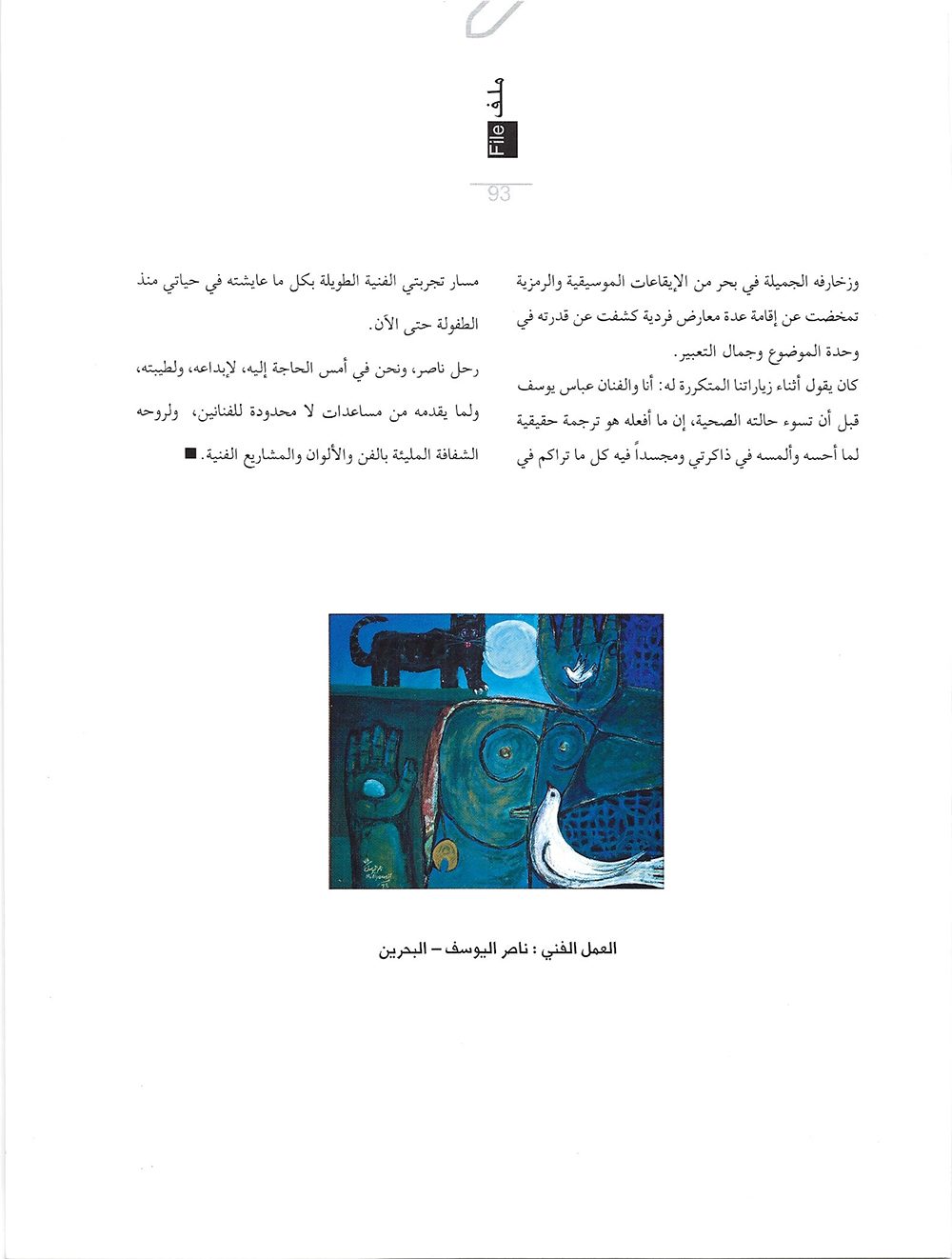
فراح المرحوم يشتغل على قطع وحفر أشكاله ومساحاته على ( اللاينو ) متحسسا حدودها وتفاصيلها بأنامله المبدعة معتمدا على بصيرة نفاذة وخبرة في التعامل مع مخزونه البصري والفني منتجا أعمالا فنية جرافيكية في غاية الروعة والجمال تحمل بداخلها القوة والبساطة وعفوية اللون والشكل، واعتبرت هذه المرحلة مكملة لتجربته السابقة حيث تعمق في بحثه عن عناصره التراثية مختزلا أشكاله وزخارفه الجميلة في بحر من الإيقاعات الموسيقية والرمزية مخضت عن إقامة عدة معارض فردية كشفت عن قدرته في وحدة الموضوع وجمال التعبير.
Translation
I took the works to my teacher and friend, Nasser Al-Yousif, to make frames for them. He was very happy with them, congratulated me, and advised me to hold a solo exhibition so the public and artists could view this type of art. I commented: "The important thing is holding the exhibition regardless of the type of hall."
I gifted him two books: the first related to engraving technique, and the second to the history of graphic art in Egypt. He said: "In 1975, I traveled to Damascus and visited the College of Arts, asked about you, but unfortunately couldn't meet you."
Generally, the exhibition opened in Salmaniya Garden and was well received by the audience, and the late artist was among the attendees.
In 1980, a group of artists, including Nasser, participated in the Asilah Cultural Season in an engraving workshop directed by the distinguished Sudanese artist Mohammed Omar Khalil, where they learned and viewed some basic techniques and executed some graphic works. After that, the graphics journey continued with Nasser after his return, where he imported presses and tools for himself and his colleagues and became immersed in work, producing prolifically.
In 1982, the deceased, Ibrahim Busaad, Karim Al-Areed, and Kamil Barakat held a joint graphics exhibition at the Graduates Club. After that, his external Arab and international participations began, including the Norway Graphics Biennial. Then he held a solo exhibition in 1988 at Dar Al-Ghad Hall - belonging to poet Ali Abdullah Khalifa - this exhibition witnessed a qualitative leap in the sizes and measurements of paintings and in the multiple techniques he used.
In 1989, I established the Graphics Workshop at the Bahrain Fine Arts Association and considered it a new center for spreading graphic arts. This is what actually happened, where a group of artists joined it and it witnessed notable and important activity. Distinguished among the workers were Jamal Abdul Rahim and Abbas Yousuf, who continued their work and daily training, which encouraged the deceased to think about holding a joint dual exhibition (between him and me). He began providing us with some graphic art supplies alongside his repeated visits to the workshop-studio. However, this unfortunately did not last long, as illness began to attack Nasser, so he stopped practicing graphic art (metal engraving), and his suffering increased when he lost the blessing of sight in the early nineties of the last century, while at the peak of his burning creativity and artistic giving.
The illness could not stand as an obstacle before him, where will triumphed over illness, and insight began searching, suggesting, and experimenting with another method to help it empty what was inside the soul of interactions and fermentations. It found only the world of graphics as a saving solution once again.
The deceased began working on cutting and engraving his shapes and spaces on lino, feeling their boundaries and details with his creative fingers, relying on penetrating insight and experience in dealing with his visual and artistic reservoir, producing graphic artworks of utmost magnificence and beauty carrying within them strength, simplicity, and spontaneity of color and form. This stage was considered complementary to his previous experience, where he deepened his search for his heritage elements, reducing his beautiful shapes and decorations in a sea of musical and symbolic rhythms that resulted in holding several solo exhibitions that revealed his ability in subject unity and beauty of expression.
النص الأصلي
كان يقول أثناء زيارتنا المتكررة له: أنا والفنان عباس يوسف قبل أن تسوء حالته الصحية، إن ما أفعله هو ترجمة حقيقية لما أحسه وألمسه في ذاكرتي ومجسداً فيه كل ما تراكم في مسار تجربتي الفنية الطويلة بكل ما عايشته في حياتي منذ الطفولة حتى الآن.
رحل ناصر، ونحن في أمس الحاجة إليه، لإبداعه، ولطيبته، ولما يقدمه من مساعدات لا محدودة للفنانين، ولروحه الشفافة المليئة بالفن والألوان والمشاريع الفنية.
Translation
He would say during our repeated visits to him - Abbas Yousuf and I - before his health condition worsened: "What I do is a true translation of what I feel and touch in my memory, embodying in it everything that accumulated in the course of my long artistic experience with everything I lived in my life from childhood until now."
Nasser departed, and we are in desperate need of him, of his creativity, his kindness, his unlimited assistance to artists, and his transparent spirit filled with art, colors, and artistic projects.