"Graphics.. A Material with No Limits"
Magazine article featuring Nasser Al-Yousif on printmaking techniques
Magazine article published in Bahrain Cultural Magazine in 1981 featuring an extensive interview with artist Nasser Al-Yousif about his exploration of graphics/printmaking techniques. The article discusses his transition from traditional oil painting to printmaking, his experience at the Asilah Festival in Morocco, where he discovered international graphic arts, technical aspects of zinc engraving, including acid etching processes, public reception of the graphics exhibition, and the need for advanced equipment and training. Al-Yousif shares detailed technical discoveries about acid timing effects on zinc plates, compares his work to historical masters like Rembrandt, and discusses the unlimited potential of the medium. The article provides insight into the early development of printmaking in Bahrain and the artist's philosophy about art's enduring value.
- Archive no. ARC-20250709-004
- 2 pages scanned
SubjectsNasser Al-YousifgraphicsprintmakingBahrain Cultural Magazine 1981zinc engravingacid etchingAsilah Festival MoroccoAbdul Karim Al-AreedRembrandt influenceprintmaking techniquesart education BahrainMinister of Information supportengraving workshopartistic developmenttraditional to modern art transitioninternational art festivalstechnical innovationart materialscultural heritage
النص الأصلي
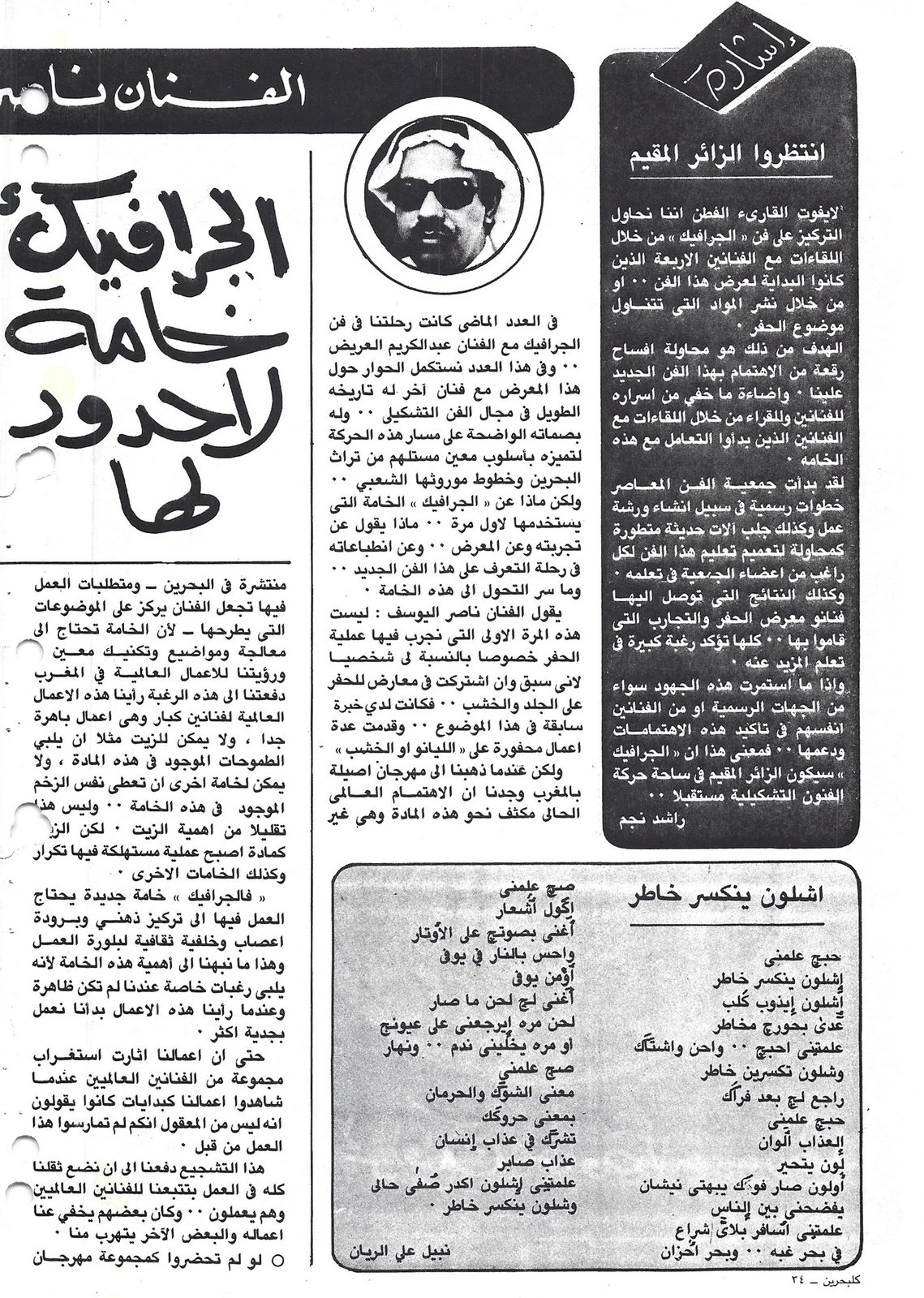
الفنان ناصر اليوسف يقول ..
الجرافيك .. خامة لاحدود لها
مقالة نشرت في مجلة البحرين الثقافية عام ١٩٨١
فى العدد الماضى كانت رحلتنا فى فن لجرافيك مع الفنان عبد الكريم العريض.. وفى هذا العدد نستكمل الحوار حول هذا المعرض مع فنان آخر له تاريخه الطويل فى مجال الفن التشكيلى .. وله بصماته الواضحة على مسار هذه الحركة لتميزه بأسلوب معين مستلهم من تراث للبحرين وخطوط موروثها الشعبي ..
ولكن ماذا عن « الجرافيك » الخامة التى يستخدمها لاول مرة .. ماذا يقول عن تجربته وعن المعرض .. وعن انطباعاته فى رحلة التعرف على هذا الفن الجديد .. وما سر التحول الى هذه الخامة .
يقول الفنان ناصر اليوسف : ليست هذه المرة الاولى التى نجرب فيها عملية الحفر خصوصا بالنسبة لى شخصيا لأنى سبق وان اشتركت فى معارض للحفر على الجلد والخشب .. فكانت لدي خبرة سابقة فى هذا الموضوع .. وقدمت عدة اعمال محفورة على « اللاينو أو الخشب» ولكن عندما ذهبنا الى مهرجان اصيلة بالمغرب وجدنا ان الاهتمام العالمى الحالى مكثف نحو هذه المادة وهي غير منتشرة فى البحرين - ومتطلبات العمل فيها تجعل الفنان يركز على الموضوعات التى يطرحها - لأن الخامة تحتاج الى معالجة ومواضيع وتكنيك معين و رؤيتنا للاعمال العالمية في المغرب دفعتنا الى هذه الرغبة رأينا هذه الاعمال العالمية لفنانين كبار وهى اعمال باهرة جدا ، ولا يمكن للزيت مثلا ان يلبي الطموحات الموجود فى هذه المادة ، ولا يمكن لخامة اخرى ان تعطى نفس الزخم الموجود فى هذه الخامة .. وليس هذا تقليلا من اهمية الزيت . لكن الزيت كمادة اصبح عملية مستهلكة فيها تكرار وكذلك الخامات الاخرى .
(( فالجرافيك )) خامة جديدة يحتاج العمل فيها الى تركيز ذهني وبرودة اعصاب وخلفية ثقافية لبلورة العمل وهذا ما نبهنا الى أهمية هذه الخامة لأنه يلبى رغبات خاصة عندنا لم تكن ظاهرة وعندما رأينا هذه الاعمال بدأنا نعمل بجدية اكثر .
حتى ان اعمالنا اثارت استغراب مجموعة من الفنانين العالميين عندما شاهدوا اعمالنا كبدايات كانوا يقولون انه ليس من المعقول انكم لم تمارسوا هذا العمل من قبل .
هذا التشجيع دفعنا الى ان نضع ثقلنا كله فى العمل بتتبعنا للفنانين العالميين وهم يعملون .. وكان بعضهم يخفي عنا اعماله والبعض الآخر يتهرب منا .
Translation
Artist Nasser Al-Yousif Says... Graphics.. A Material with No Limits
Article published in the Bahrain Cultural Magazine in 1981
In the last issue, our journey in graphic art was with artist Abdul Karim Al-Areed... and in this issue we continue the dialogue about this exhibition with another artist who has a long history in the field of fine arts... and has clear fingerprints on the path of this movement, distinguished by a certain style inspired by Bahrain's heritage and the lines of its folk legacy...
But what about "graphics" - the material he is using for the first time... what does he say about his experience and about the exhibition... and about his impressions in the journey of discovering this new art... and what is the secret of the transformation of this material?
Artist Nasser Al-Yousif says: This is not the first time we have experimented with the engraving process, especially for me personally, because I have previously participated in exhibitions for engraving on leather and wood... so I had previous experience in this subject... and I presented several works engraved on "lino or wood." But when we went to the Asilah Festival in Morocco, we found that the current global interest is intensive toward this material, and it is not widespread in Bahrain - and the requirements of working with it make the artist focus on the subjects he presents - because the material needs treatment and specific subjects and technique. Our vision of the global work in Morocco pushed us to this desire. We saw these global works by great artists, and they are very brilliant works, and oil, for example, cannot meet the ambitions found in this material, and no other material can give the same momentum found in this material... and this is not to diminish the importance of oil. But oil as a material has become a consumed process with repetition, and so have other materials.
"Graphics" is a new material that requires mental focus, nerve control, and cultural background to crystallize the work, and this is what alerted us to the importance of this material because it meets special desires we have that were not apparent, and when we saw these works we began to work more seriously.
Even our works surprised a group of international artists when they saw our works as beginnings - they were saying it's not reasonable that you haven't practiced this work before.
This encouragement pushed us to put all our weight into the work by following international artists as they work... and some of them would hide their works from us, and others would avoid us.
النص الأصلي
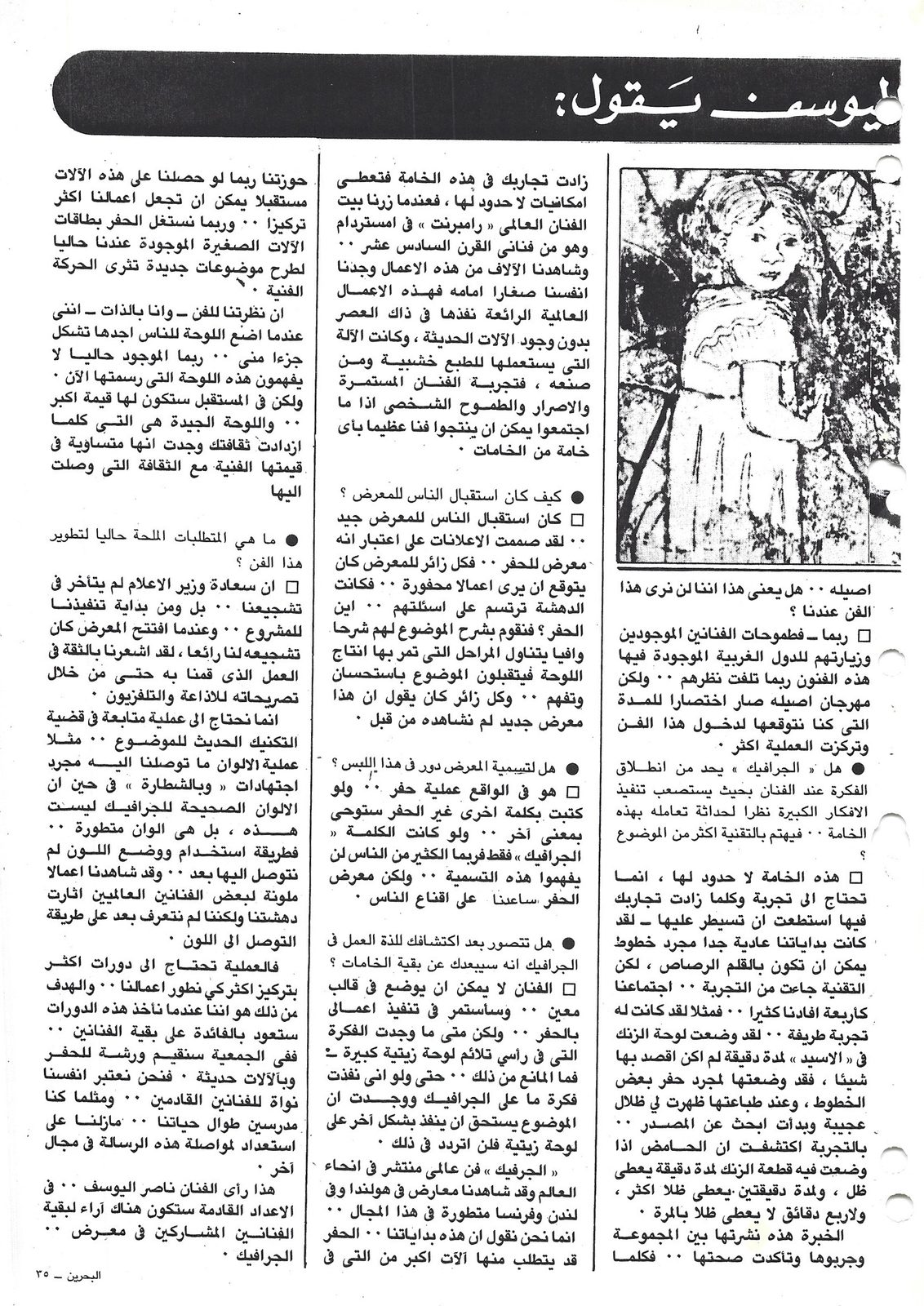
• لو لم تحضروا كمجموعة مهرجان اصيله .. هل يعنى هذا اننا لن نرى هذا الفن عندنا ؟
ربما - فطموحات الفنانين الموجودين وزيارتهم للدول الغربية الموجودة فيها هذه الفنون ربما تلفت نظرهم .. ولكن مهرجان اصيله صار اختصارا للمدة التى كنا نتوقعها لدخول هذا الفن وتركزت العملية اكثر .
• هل « الجرافيك » يحد من انطلاق لفكرة عند الفنان بحيث يستصعب تنفيذ الافكار الكبيرة نظرا لحداثة تعامله بهذه لخامة .. فيهتم بالتقنية اكثر من الموضوع؟
هذه الخامة لا حدود لها ، انما تحتاج الى تجربة وكلما زادت تجاربك فيها استطعت ان تسيطر عليها - لقد كانت بداياتنا عادية جدا مجرد خطوط يمكن ان تكون بالقلم الرصاص ، لكن التقنية جاءت من التجربة .. اجتماعنا كأربعة افادنا كثيرا .. فمثلا لقد كانت له تجربة طريفة . . لقد وضعت لوحة الزنك فى ( الاسيد ) لمدة دقيقة لم اكن اقصد بها شيئا ، فقد وضعتها لمجرد حفر بعض لخطوط ، وعند طباعتها ظهرت لي ظلال عجيبة وبدأت ابحث عن المصدر ..
بالتجربة اكتشفت ان الحامض اذا وضعت فيه قطعة الزنك لمدة دقيقة يعطي ظلا اكثر، ولأربع دقائق لا يعطي ظلا بالمرة.
الخبرة هذه نشرتها بين المجموعة وجربوها وتأكدت صحتها .. فكلما زادت تجاربك فى هذه الخامة فتعطى امكانيات لا حدود لها ، فعندما زرنا بيت الفنان العالمى « رامبرنت » فى امستردام وهو من فنانى القرن السادس عشر .. و شاهدنا الآلاف من هذه الأعمال وجدنا انفسنا صغارا امامه فهذه الاعمال العالمية الرائعة نفذها فى ذاك العصر بدون بدون وجود الآلات الحديثة ، وكانت الآلة تي يستعملها للطبع خشبية ومن صنعة ، فتجربة الفنان المستمرة والاصرار والطموح الشخصى اذا ما اجتمعوا يمكن ان ينتجوا فنا عظيما بأى خامة من الخامات .
• كيف كان استقبال الناس للمعرض ؟
• كان استقبال الناس للمعرض جيد .. لقد صممت الاعلانات على اعتبار انه معرض للحفر .. فكل زائر للمعرض كان يتوقع ان يرى اعمالا محفورة .. فكانت الدهشة ترتسم على اسئلتهم .. اين الحفر ؟ فنقوم بشرح الموضوع لهم شرحا وافيا يتناول المراحل التى تمر بها انتاج اللوحة فيتقبلون الموضوع باستحسان وتفهم .. وكل زائر كان يقول ان هذا معرض جديد لم نشاهده من قبل .
• هل لتسمية المعرض دور فى هذا اللبس ؟
• هو فى الواقع عملية حفر .. ولو كتبت بكلمة اخرى غير الحفر ستوحى بمعنى آخر .. ولو كانت الكلمة «الجرافيك » فقط فربما الكثير من الناس لن يفهموا هذه التسمية .. ولكن معرض الحفر ساعدنا على اقناع الناس .
• هل تتصور بعد اكتشافك للذة العمل فى الجرافيك انه سيبعدك عن بقية الخامات ؟
• الفنان لا يمكن ان يوضع فى قالب معين .. وسأستمر فى تنفيذ اعمالى بالحفر .. ولكن متى ما وجدت الفكرة التى فى رأسي تلائم لوحة زيتية كبيرة - فما المانع من ذلك .. حتى ولو انى نفذت فكرة ما على الجرافيك ووجدت ان الموضوع يستحق ان ينفذ بشكل آخر على لوحة زيتية فلن اتردد فى ذلك .
« الجرفيك » فن عالمى منتشر فى انحاء لعالم وقد شاهدنا معارض فى هولندا وفى لندن وفرنسا متطورة فى هذا المجال .. انما نحن نقول ان هذه بداياتنا .. الحفر قد يتطلب منها آلات اكبر من التى فى حوزتنا ربما لو حصلنا على هذه الآلات مستقبلا يمكن ان تجعل اعمالنا اكثر تركيزا .. وربما نستغل الحفر بطاقات الآلات الصغيرة الموجودة عندنا حاليا الطرح موضوعات جديدة تثرى الحركة لفنية.
ان نظرتنا للفن - وانا بالذات - اننى عندما اضع اللوحة للناس اجدها تشكل جزءا منى .. ربما الموجود حاليا لا يفهمون هذه اللوحة التى رسمتها الآن . ولكن فى المستقبل ستكون لها قيمة اكبر .. واللوحة الجيدة هى التى كلما ازدادت ثقافتك وجدت انها متساوية فى قيمتها الفنية مع الثقافة التى وصلت اليها.
• ما هي المتطلبات الملحة حاليا لتطوير هذا الفن ؟
• ان سعادة وزير الاعلام لم يتأخر فى تشجيعنا ٠٠ بل ومن بداية تنفيذنا للمشروع .. وعندما افتتح المعرض كان شجيعه لنا رائعا ، لقد اشعرنا بالثقة فى العمل الذى قمنا به حتى من خلال تصريحاته للاذاعة والتلفزيون .
انما نحتاج الى عملية متابعة فى قضية التكنيك الحديث للموضوع ٠٠ مثلا عملية الالوان ما توصلنا اليه مجرد اجتهادات « وبالشطارة ) فى حين ان الالوان الصحيحة للجرافيك ليست هذه ، بل هى الوان متطورة ..فطريقة استخدام ووضع اللون لم نتوصل اليها بعد .. وقد شاهدنا اعمالا ملونة لبعض الفنانين العالميين اثارت دهشتنا ولكننا لم نتعرف بعد على طريقة التوصل الى اللون .
فالعملية تحتاج الى دورات اكثر بتركيز اكثر كي نطور اعمالنا .. والهدف عن ذلك هو اننا عندما نأخذ هذه الدورات ستعود بالفائدة على بقية الفنانين .. ففى الجمعية سنقيم ورشة للحفر وبآلآلات حديثة . فنحن نعتبر انفسنا نواة للفنانين القادمين .. ومثلما كنا مدرسين طوال حياتنا .. مازلنا على ستعداد لمواصلة هذه الرسالة فى مجال آخر .
هذا رأى الفنان ناصر اليوسف .. فى الاعداد القادمة ستكون هناك آراء لبقية الفنانين المشاركين فى معرض ..الجرافيك .
Translation
- If you hadn't come as a group to the Asilah Festival... does this mean we wouldn't see this art here?
Perhaps - the ambitions of existing artists and their visits to Western countries where these arts exist might draw their attention... but the Asilah Festival became a shortcut to the period we expected for this art to enter, and the process became more focused.
- Does "graphics" limit the artist's freedom of ideas so that he finds it difficult to implement big ideas due to the novelty of dealing with this material... so he focuses on technique more than the subject?
This material has no limits, but it needs experimentation, and the more you experiment with it, the more you can control it - our beginnings were very ordinary, just lines that could be done with pencil, but the technique came from experimentation... our meeting as four [artists] benefited us greatly... for example, I had an interesting experience... I put the zinc plate in the acid for one minute - I didn't intend anything by it, I just put it to engrave some lines, and when I printed it, amazing shadows appeared to me and I began to search for the source...
Through experimentation, I discovered that if you put the zinc piece in acid for one minute, it gives more shadow, and for four minutes, it gives no shadow at all.
I shared this expertise with the group, and they tried it, and its validity was confirmed... so the more you experiment with this material, the more it gives unlimited possibilities. When we visited the house of the international artist "Rembrandt" in Amsterdam, who is from the 16th century artists... and we saw thousands of these works, we found ourselves small before him. These wonderful international works were executed in that era without the existence of modern machines, and the machine he used for printing was wooden and of his own making. So the artist's continuous experimentation, persistence, and personal ambition, when combined, can produce great art with any material.
- How was the people's reception of the exhibition?
The people's reception of the exhibition was good... I designed the advertisements considering it was an engraving exhibition... so every visitor to the exhibition expected to see engraved works... so surprise would be drawn on their questions... where is the engraving? So we would explain the subject to them comprehensively, covering the stages that the painting's production goes through, and they would accept the subject with approval and understanding... and every visitor would say this is a new exhibition we haven't seen before.
- Does the exhibition's title play a role in this confusion?
It is actually an engraving process... and if it were written with another word other than engraving, it would suggest another meaning... and if the word was just "graphics," perhaps many people wouldn't understand this title... but the Engraving Exhibition helped us convince people.
- Do you imagine that after discovering the pleasure of working in graphics, it will distance you from other materials?
The artist cannot be put in a certain mold... and I will continue to execute my works by engraving... but whenever I find the idea in my head suits a large oil painting - what's the obstacle to that... even if I executed an idea on graphics and found that the subject deserves to be executed in another form on an oil painting, I wouldn't hesitate to do so.
"Graphics" is an international art spread throughout the world, and we have seen exhibitions in Holland, London, and France that are advanced in this field... but we say these are our beginnings... engraving might require larger machines than those in our possession. Perhaps if we obtain these machines in the future, they can make our work more focused... and perhaps we can exploit engraving with the capacities of the small machines we currently have to present new subjects that enrich the artistic movement.
Our view of art - and I in particular - is that when I put the painting before people, I find it forms a part of me... perhaps those currently present don't understand this painting I painted now. But in the future it will have greater value... and a good painting is one that the more your culture increases, the more you find it equal in its artistic value to the culture you have reached.
- What are the urgent requirements currently for developing this art?
His Excellency the Minister of Information did not delay in encouraging us... but from the beginning of our project implementation... and when he opened the exhibition, his encouragement was wonderful. He made us feel confident in the work we did, even through his statements on the radio and television.
But we need a follow-up process in the issue of modern technique for the subject... for example, the colors process - what we reached is just efforts "and cleverness" while the correct colors for graphics are not these, but they are advanced colors... so the method of using and placing color we haven't reached yet... and we have seen colored works by some international artists that amazed us, but we haven't learned yet the method of reaching color.
So the process needs more courses with more focus so we can develop our works... and the goal of that is that when we take these courses, they will benefit the rest of the artists... in the association, we will establish an engraving workshop with modern machines. We consider ourselves a nucleus for coming artists... and just as we were teachers throughout our lives... we are still ready to continue this mission in another field.
This is artist Nasser Al-Yousif's opinion... In the coming issues, there will be opinions from the rest of the artists participating in the Graphics exhibition.