An Experience that Embroiders the World: A Study and Interview with Visual Artist Nasser Al-Yousif
Comprehensive interview and critical analysis of Bahraini visual artist Nasser Al-Yousif published in Al-Bahrain Al-Thaqafiya magazine, Issue 2, October 1994. Conducted by journalist Mohammed Ahmed Al-Banki with photography by Anwar Habeel. The article explores Al-Yousif's artistic philosophy, recurring motifs (doors, animals, eyes), use of materials, relationship to Islamic and folk art traditions, and his role in establishing modern art in Bahrain. Includes discussion of specific artworks from 1960s-1990s and the artist's approach to composition, symbolism, and heritage.
- Archive no. ARC-20250712-001
- 12 pages scanned
SubjectsNasser Al-Yousifناصر اليوسفBahraini artIslamic artfolk artvisual memoryheritagesymbolismallegorydoors in artanimal symbolismartistic materialsMohammed Ahmed Al-Bankiمحمد أحمد البنكيAl-Bahrain Al-Thaqafiyaالبحرين الثقافية1994Muharraqdiving cultureArabic calligraphyexpressionismcubism
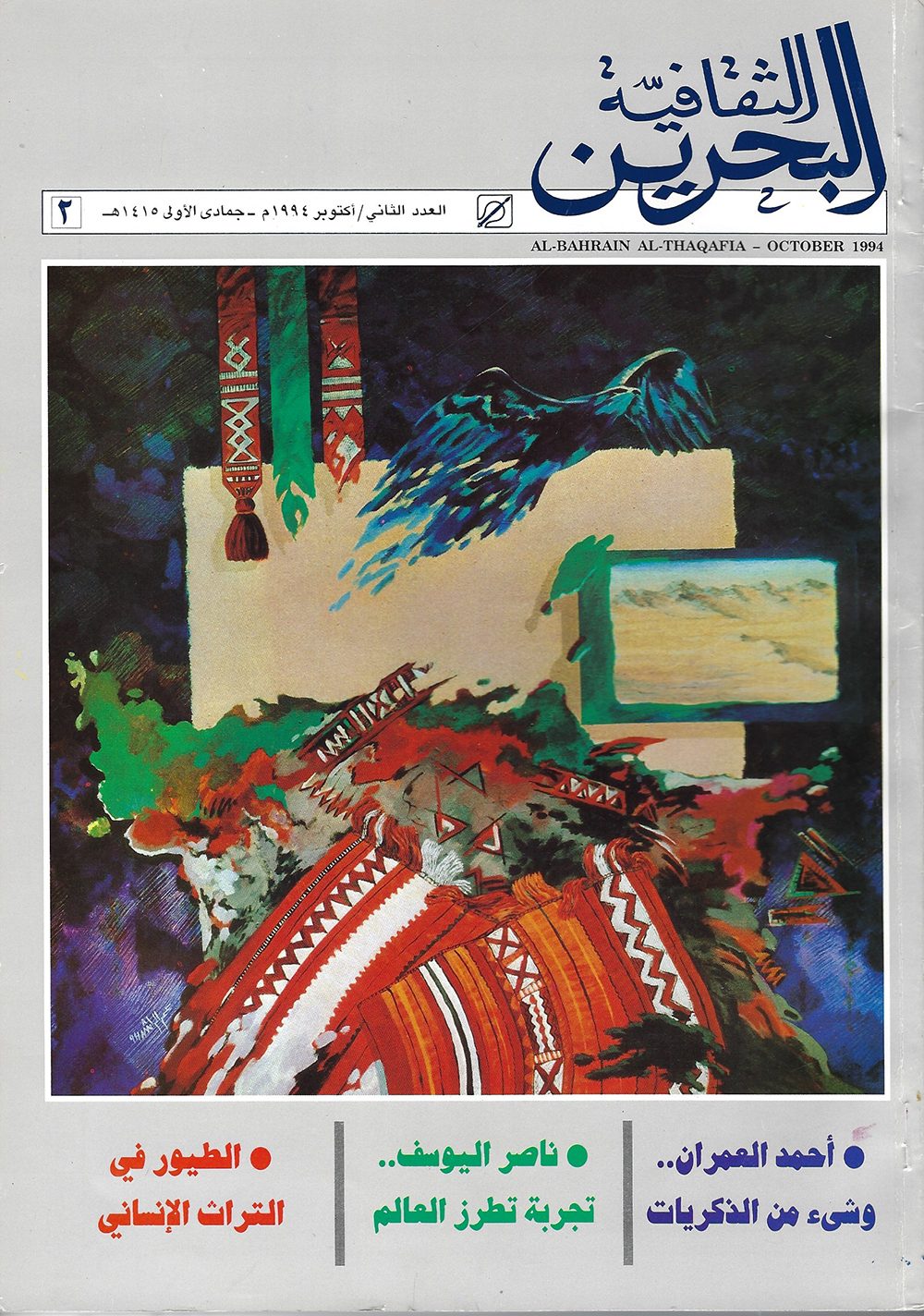
النص الأصلي
البحرين الثقافية
العدد الثاني / اكتوبر ١٩٩٤م
عن تجربة تطرز العالم
دراسة وحوار مع الفنان التشكيلي: ناصر اليوسف
محمد أحمد البنكي / كاتب وصحفى من البحرين
أنور حبيل / تصوير
Translation
Interview with the Bahraini artist Nasser Al-Yousif from the cultural magazine "Al-Bahrain Al-Thaqafiya" (Issue 2, October 1994).
An Experience that Embroiders the World: A Study and Interview with Visual Artist Nasser Al-Yousif
By Mohammed Ahmed Al-Banki - Writer and Journalist from Bahrain
Photography: Anwar Habeel
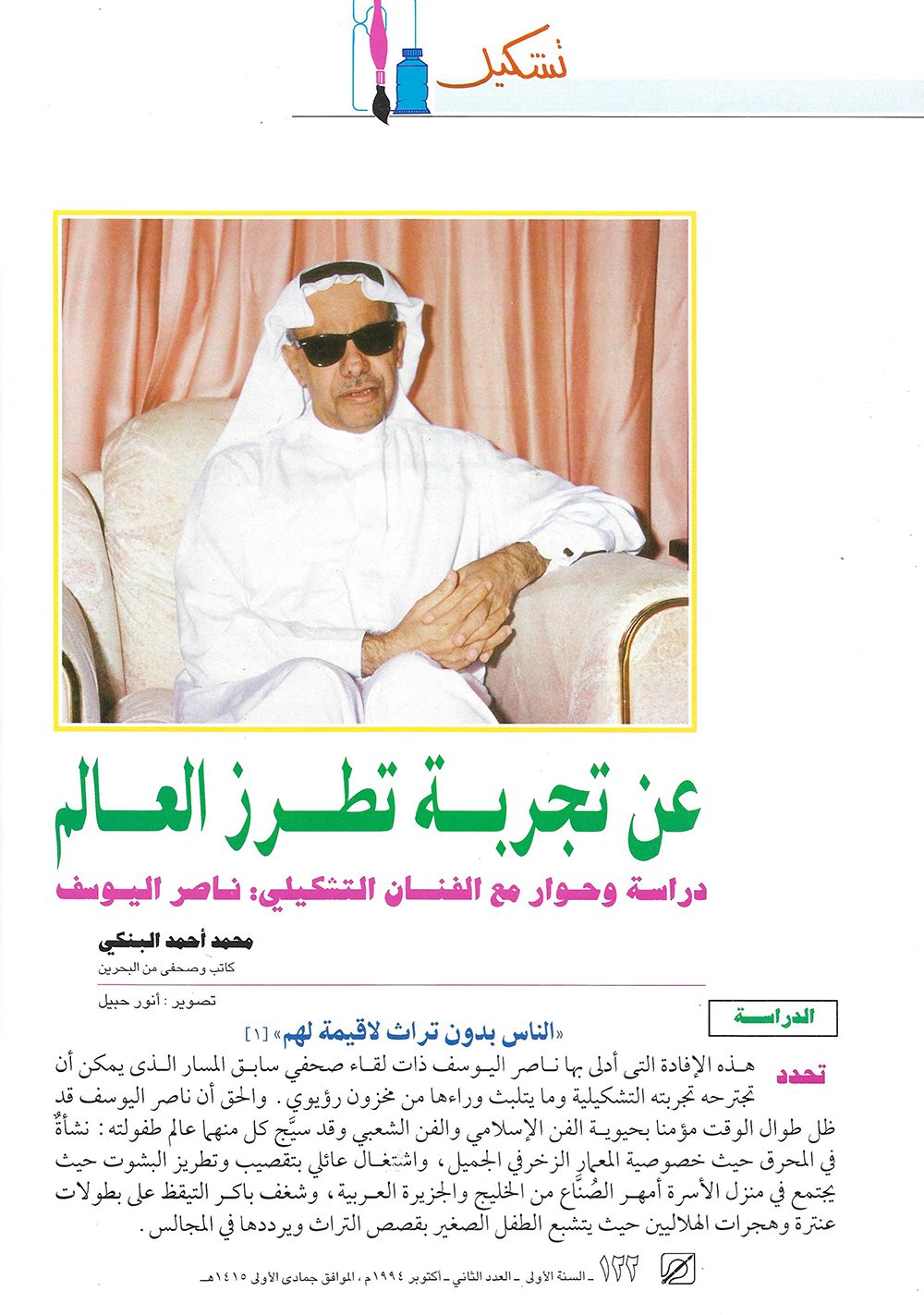
النص الأصلي
البحرين الثقافية
العدد الثاني / اكتوبر ١٩٩٤م
عن تجربة تطرز العالم
دراسة وحوار مع الفنان التشكيلي: ناصر اليوسف
محمد أحمد البنكي / كاتب وصحفى من البحرين
أنور حبيل / تصوير
«الناس بدون تراث لاقيمة لهم» [1]
تحدد
هذه الإفادة التى أدلى بها ناصر اليوسف ذات لقاء صحفي سابق المسار الذى يمكن أن تجترحه تجربته التشكيلية وما يتلبث وراءها من مخزون رؤيوي. والحق أن ناصر اليوسف قد ظل طوال الوقت مؤمنا بحيوية الفن الإسلامي والفن الشعبي وقد سيَّج كل منهما عالم طفولته : نشأةٌ في المحرق حيث خصوصية المعمار الزخرفي الجميل، واشتغال عائلي بتقصيب وتطريز البشوت حيث يجتمع في منزل الأسرة أمهر الصُنّاع من الخليج والجزيرة العربية، وشغف باكر التيقظ على بطولات عنترة وهجرات الهلاليين حيث يتشبع الطفل الصغير بقصص التراث ويرددها في المجالس .
Translation
Introduction
"People without heritage have no value" [1]
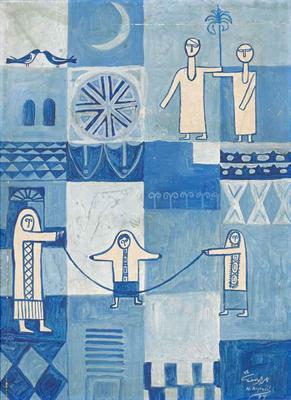
This statement by Nasser Al-Yousif in a previous press interview defines the path his artistic experience would take and the visionary reservoir behind it. Indeed, Nasser Al-Yousif has remained throughout time a believer in the vitality of Islamic art and folk art, both of which surrounded his childhood world: growing up in Muharraq with its distinctive beautiful decorative architecture, his family's work in cutting and embroidering bishts (traditional cloaks) where the most skilled craftsmen from the Gulf and Arabian Peninsula gathered at the family home, and an early awakening passion for the heroics of Antar and the migrations of the Hilalians, where the young child absorbed heritage stories and repeated them in gatherings.
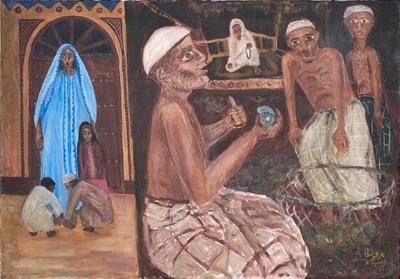
This possession that shaped the perceptions around Nasser remained strongly radiant and active in all his subsequent artistic life stages. Hardly any press interview with him lacks a celebratory reference to these phenomena that surrounded his early aesthetic experiences (and perhaps what carries special significance in this context is the repetition of the word "memories" in the names of Nasser Al-Yousif's paintings: "Diver's Memories (1)", "Diver's Memories (2)", "Diver's Memories (3)", "Childhood Memories", "Memories of the Diver").
All of this left its distant effects on Nasser Al-Yousif's artistic experience on more than one level. His techniques and colors went in directions compatible with the givens of this environment, and the importance of artistic construction through the surface of the image emerged in his sense, and his experience dealt with emptiness and space in the painting in a special and highly significant way. As for his subjects, they mostly relied on a rich childhood visual memory, and his visions built their semantic world through a generative model that harmonizes with a classical system of seeing the world through which forms emerge from a single first form that is the origin to which the laws of things return and the source from which meanings harmonize and align.
Throughout time, Nasser Al-Yousif was aware of the sources of his aesthetic research. The joyful childhood images were reinforced by what memories were captured from scenes of Islamic architecture when Nasser was among the traveling artists traversing villages and touring cities with his artistic companions: Al-Areedh, Al-Sunni, Al-Bosta, Sawar, and Al-Arifi. Such tours gave Al-Yousif rich observations and overwhelming love for the environment and its simple people, as well as a direct ability to express, remarkable fluency when executing the painting, and distinctive skill in giving immediate formations and colors their rare spontaneity. These qualities were the first lessons learned from the vitality of sketches and their quick drawings.
Works discussed on this page
النص الأصلي
هذا الاستحواذ الذى شَكل المدركات من حول ناصر ظل قوي الاشعاع والفعل في كل مراحل حياته الفنية التالية، ولا يكاد لقاء صحفي معه يخلو من شارة احتفائية الى هذه المظاهر التى حفَّت بخبراته الجمالية الاولى (ولعل مما يكتسي خصوصية في المغزى ضمن هذا السياق تكرار لفظة الذكريات فى اسماء لوحات ناصر اليوسف: ذكريات غواص «1»
ذكريات غواص ((٢)، ذكريات غواص ((٣)) ، ذكريات طفولية، ذكريات الغواص) .
ورَّث هذا كله اثاره البعيدة على تجربة ناصر اليوسف التشكيلية على أكثر من مستوى، فقد ذهبت تقنياته وألوانه في مسارات تتلاءم مع معطيات هذه البيئة، وبرزت فى حسه أهمية البناء الفنى من خلال مسطح الصورة، وتعاملت تجربته مع الفراغ والحيّز في اللوحة بنحو خاص وشديد المغزى. أما موضوعاته فقد عوّلت في غالب الأمر على ذاكرة بصرية طفولية ثرية المخزون، وأما رؤاه فقد بنت عالمها الدلالي من خلال نموذج توليدي ينسجم مع نظام كلاسيكي لرؤية العالم تتخلق عبره الأشكال منبثقة من شكل أول واحد هو الأصل الذى ترتد اليه قوانين الأشياء و هو المصدر الذى تتناغم المعاني وتنسجم من حوله .
طوال الوقت كان ناصر اليوسف واعيا بمصادر بحثه الجمالي، وقد تعززت صور الطفولة البهيجة بماكانت الذاكرة تلتقطه من مشاهد المعمار الاسلامي يوم ن كان ناصر في عداد الفنانين الجوالين يذرع القرى ويجوب المدن مع رفقته الفنية : العريض والسني والبوسطة وسوار والعريفي، جولاتٍ كهذه اكسبت اليوسف مشاهدات غنية وحباً جارفاً للبيئة وإنسانها البسيط، كما اكسبته قدرةً مباشرة على التعبير ، واسترسال لافت ساعة تنفيذ اللوحة، ومهارة مميزة فى منح التكوينات والألوان الفورية عفويتها النادرة وكانت هذه الخواص هى أول الدروس المستفادة من حيوية الإسكتش وتخطيطاته السريعة .
لقد ظل تدريب ناصر اليوسف الفني الأصيل حصيلة سليقة فطرية مواتية جاءت الخبرات الفنية والقراءات والزيارات الميدانية للمعارض لتضيف اليها فيما بعد، ولكن عين الراصد للوحات اليوسف لاتكاد تخطىء ، مع ذلك، تحديد المظاهر الواغلة التى تركتها هذه المعاينات والإستعدادات الأولية فى مجمل التجربة، بل أن إدلاءات ناصر اليوسف نفسه
Translation
The Interview
Question 1: About the Human Figure and Space
Al-Banki: I see that the human occupies a central position in your artistic experience. While your early experiences present the human in an environment bustling with decorations, clustered masses, and repeated geometric motifs, your later experiences are more generous regarding the space given around your human figure.
It seems to me that the topography of emptiness in your experience deserves pause and contemplation. Can you tell us about your sense of the transformations your experience gives to emptiness and whether these transformations are made consciously or not?
Al-Yousif: The sixties and seventies represented stages of benefit and knowledge on the general level of my artistic experience. During those years, I had many trips to Cairo and Baghdad, where I visited museums and had opportunities to read and benefit from the living experiences of artists who preceded me in this field. How much I was struck by Egyptian artists' interest in their heritage... From here, I began to wonder and inquire, and it seemed to me then that these artists were starting from their heritage to confirm an artistic identity they wanted for their arts. I really liked this idea at the time.
These interactions, in addition to the childhood environment infused with diving life (where I was raised in the house of Ali bin Saeed - a great captain - and I have foster brothers from this captain's family, may God have mercy on him) and the human sympathy we lived mixed with heritage and plaster decorations on walls and wooden engravings on doors - all of this accumulated in memory and imposed its presence on the experiences I presented in the sixties and seventies. During them, I presented the human surrounded by his decorations and beautiful world, as if I wanted to express the intimacy of mixing and human sympathy.
As for after the seventies, the vision expanded and the experience opened up to issues of social injustice and issues of people's suffering, which made the human in my work during these stages embedded in a gelatinous void, indicating that he began to lose his existence as a human.
النص الأصلي
حول تجربته تشي باحتفائه الواعي بالأسلوب الذي ينميه والمصادر التى يقبس منها في الرؤية والاختيارات .
جماليات اسلامية
يمكننا فيما يختص بالاشارة الى الخلفيات المرجعية التى نهضت عليها تجربة ناصر اليوسف أن نقرر بشيء من الاطمئنان أن قدراً كبيراً من هذه المساحة المرجعية ستستاثر به جماليات الفن الإسلامي بما عرف عنه من تحرر من قواعد الرسم الاكاديمي التى فرضها التطور لفني الأوربي على صعيد المنظور والظل والنور والنسب والتشريح، ومن خروج على إسار الإيهام بالمكان الواقعي إلى رحاب المطلق والتجريد الزمكاني، ومن اهتمام بالروحانية العميقة الكامنة وراء هذا الوجود بدلا من الاهتمام بالشكل الاني لعناصر هذا الوجود، وهو ما يفتح على تكثيف ترميزية التجربة وغنى عالمها بالشفرات والدلالات التى تختزل الأشياء رادة إياها إلى ماهو جوهري بنائياً فحسب .
إن جانباً من الاحالة لا بأس به يومىء إلى دور لمؤثر الشعبي في خلفية ناصر اليوسف الجمالية كذلك، والحق أنه من الاعتساف أن نغالي في الفصل بين مظاهر الفن الشعبي ومظاهر الفن الإسلامي، غاية ما يمكن توصيف الفن الأول به هو أنه تنويع ، يستفيد من خصوصية الثقافة المحلية في تقديم أنماط فرعية من الفن الإسلامي الأشمل، هكذا فإن طابعا محليا من الزخرفة سيتدخل في طبيعة المكونات التى ينتخبها ناصر اليوسف من الفن الإسلامي، وكذا أيضا ستفعل بعض المعتقدات الشعبية المتعلقة بالحسد وشر العيون ورمزية بعض الحيوانات، إضافة إلى ماءات توحى بقدر او اخر من تدخل جماليات بعض
"جناس الأدبية والفنية كالموال وفنون البحرإمداد لوحات اليوسف بثقافتها المرجعية الرافدة .
في كل الأحوال سنجد آثار هذه المؤثرات إضافة إلى بعض سمات الفن البدائي وفن الطفل، والقاعدة المشتركة بينهما وبين الفن الإسلامي والفن الشعبي كبيرة نسبيا على ما هناك من تفارقات، صميمية في لوحة ناصر اليوسف (وهذا لا يعني، طبعا، نفي التشقيقات التى يفتحها ناصر اليوسف على مختلف مدارس الفن الأوربي خصوصا التكعيبية في الستينيات، والتعبيرية فى كل التجربة، والتجريدية منذ منتصف الثمانينيات) .
تكوينات الفنان
التكوين لدى ناصر (خصوصاً في لوحات ما قبل الغزو الاسرائيلي للبنان - ١٩٨٢) يقوم على أساس توزيع الكتل بشكل يحتوى الفراغ في اللوحة، وربما وجدنا لذلك جذوراً في البناء المعرفي الإسلامي الذى يجعل ماهو روحي (الأثير - غير المتعين - الفراغ)
محتوىً فيما هو مادي (الكون _ الجسد - الكتلة)، ستبدو لنا هذه الخصيصة التكوينية لدى ناصر أشد وضوحا فيما لوجرت المقارنة بتكوينات ضياء العزاوي عربيا على سبيل المثال [٢]. أو على صعيد محلي بتكوينات الشيخ راشد بن خليفة آل خليفة والدور الذى يلعبه الفراغ في إبرازها داخل اطار اللوحة .
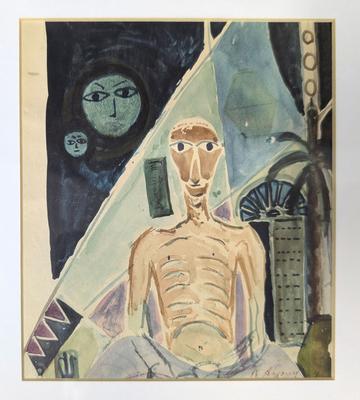
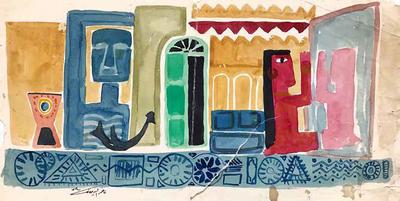
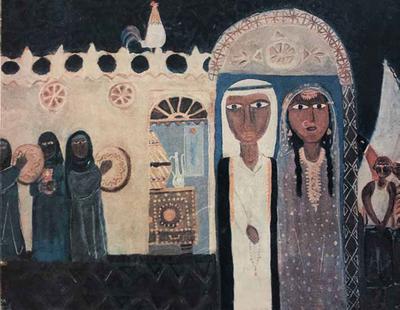
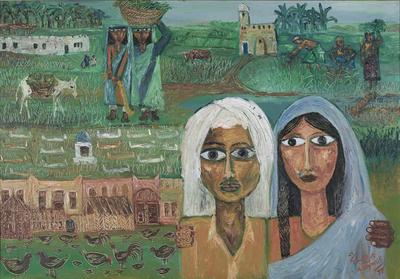
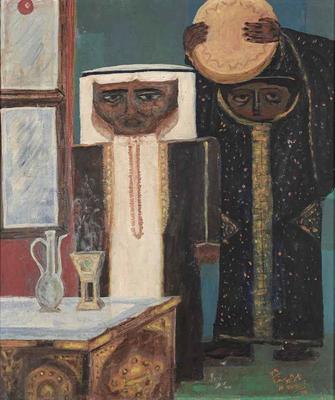
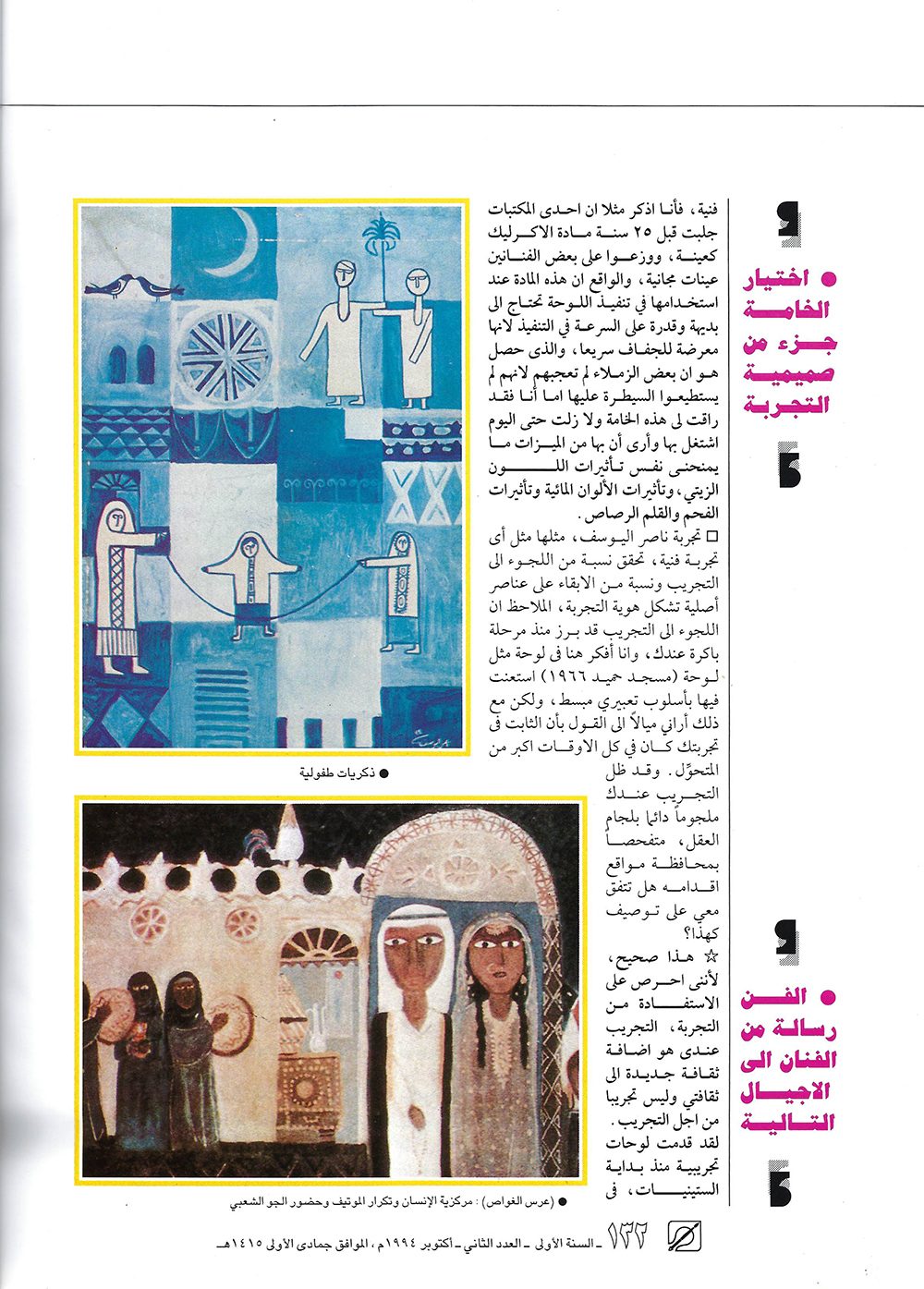
إن دور الفراغ عرضة للتضاؤل على الدوام فى لوحات ناصر اليوسف السبعينية، ولو أننا تأملنا لوحة عرس الغواص (١٠٨x٧٦ سم - زيتية ١٩٦٩) ، أو لوحة ذكريات غواص-٢ ( ١٠X١٤) سم - مائية _ ١٩٦٩)، أو : ذكريات غواص _٣ (١٨x١٢ سم _ مائية _ ١٩٦٩)، أو : المرأة (٢٠x١٤ سم- مائية - ١٩٧٤)، أو الأرض الخضراء ) ١١٢x٧٦سم - زيتية _ ١٩٧٧)، أو : ذكريات طفولية (٥٦x٤١ سم _ اكرليك _ ١٩٧٤)، أو : يامعيريس (٦١x٥١ سم - أكرليك - ١٩٧٩) فسنجد
Translation
Question 2: About the Door Motif
Al-Banki: From surveying a good number of your paintings, I found that one traditional architectural detail appears frequently in your experience, and I mean here: the door.
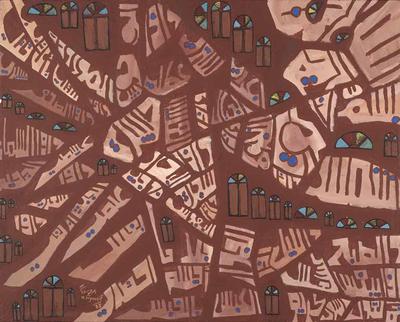
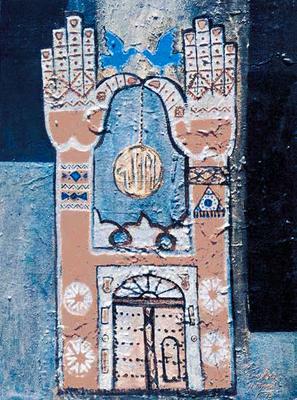
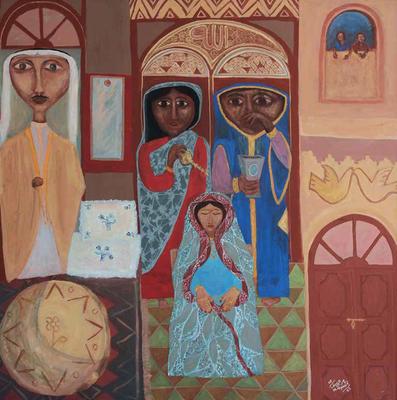
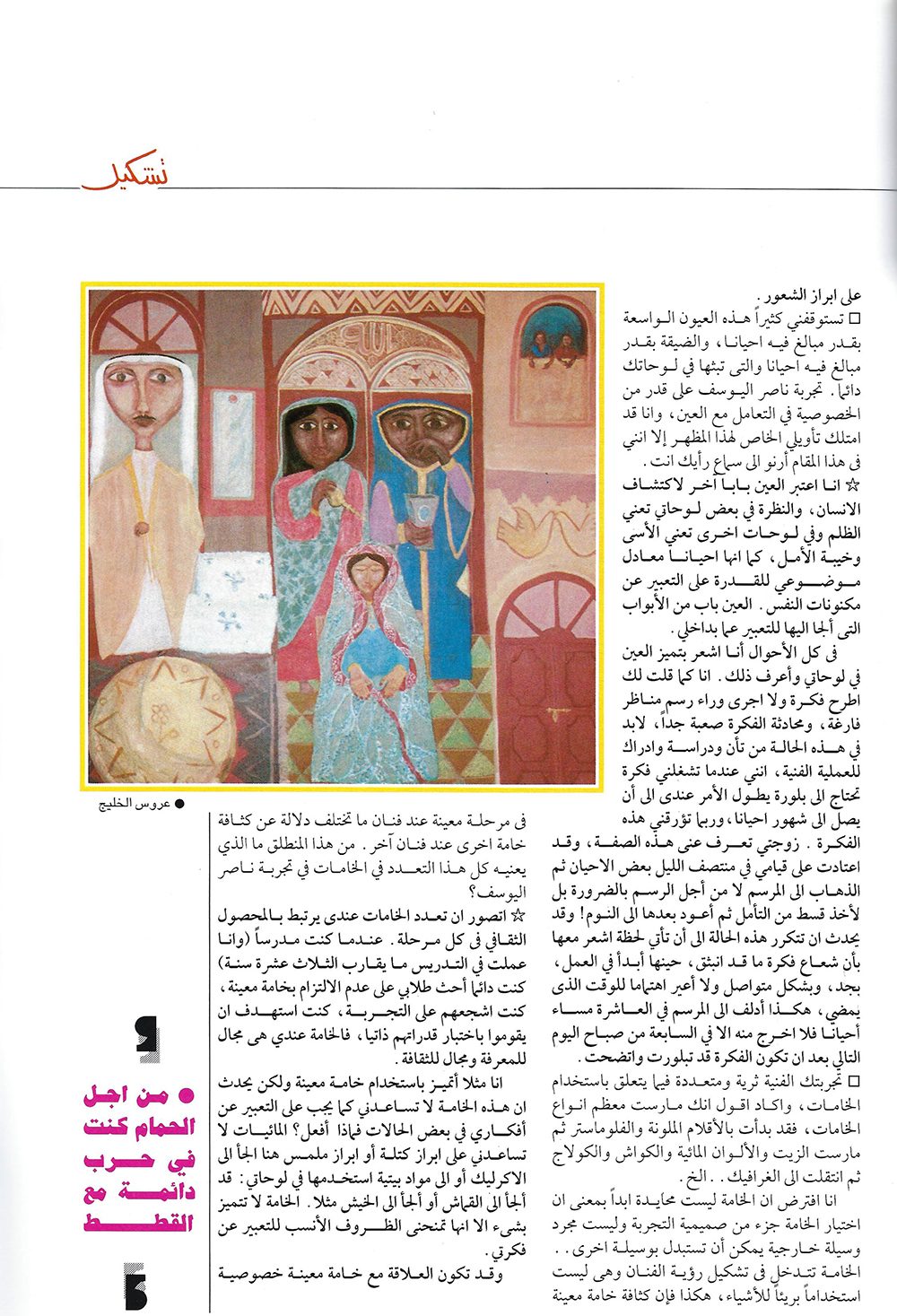
The door repeats a lot in your paintings. In "Diver's Wedding", "Henna Dough", "Diver's Memories", "Bride of the Gulf"... etc. Sometimes there may be no door in the painting but it is replaced by formations that suggest the shape of a door, as in the painting "God Protects the Fruit" in the poetry collection "Thirst of Palms" by poet Ali Abdullah Khalifa, where the hand movements of the woman and man form what resembles a door in the center of the painting. Sometimes the door is emphasized despite its absence by evoking one of its accessories, like evoking the key in "Celebrations" and "Seven Eyes".
The insistence of the door on Nasser Al-Yousif's experience, I imagine, is hardly matched in the circle of local creative experiences in various fields of art, except for the door's insistence on Qasim Haddad's poetic experience, who often uses this word and has a poem titled "The Door".
What's striking here is that you and Qasim belong to one neighborhood in Muharraq, famous for its Islamic architecture and traditional carved doors. Does the employment of the door's significance relate to this surrounding environment... or do we seek the door's dominance in religious significance, as we all memorize the hadith attributed to the Prophet (PBUH): "I am the city of knowledge and Ali is its door," or do we explore other relationships? What is the secret of this strange interest of yours in the door in your artistic experiences?
Al-Yousif: The door is one of four elements that repeat in my experiences: the dove, the cat, the rooster, and the door... Since I was seven years old, my father - may God have mercy on him - noticed my interest in door carvings and my passion for following the curves and protrusions carved on doors through touch. One day, my father took me to some specialists in door making and carving, and there one of them explained to me with great joy how to make these doors and execute their carvings.
With my readings when I grew up, and I am a voracious reader by the way, I understood that everything in this life has a door.
Al-Banki: Is it a philosophy lurking behind your paintings?
Al-Yousif: Yes... and I believe that interest in the door means interest in what's inside. The door represents to me the beginning of things. The door is the key to all knowledge. I believe that the door in my paintings, consciously or unconsciously, represents these meanings, so it often repeats with me. I can also say that the door is the human in a sense - you don't know the human unless you knock on his door.
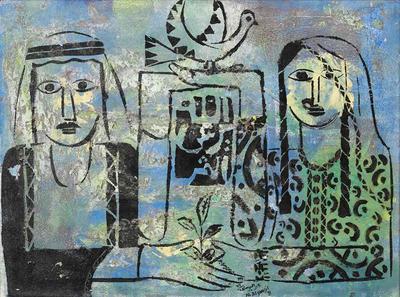
As for the dove, it is for me the gentle, friendly bird (and raising pigeons is a hobby I've practiced since childhood until now). The dove is a childhood friend and a symbol of tranquility, peace, and reassurance. I often feel that the dove represents the original goodness of humans before civilization polluted it. When cats would sneak into pigeon locations to eat the chicks when I was young, I was in constant war with cats and often fell from heights trying to prevent the cat from reaching the pigeon's nest!
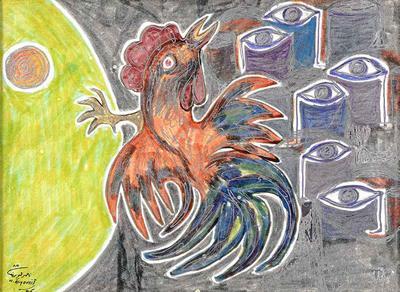
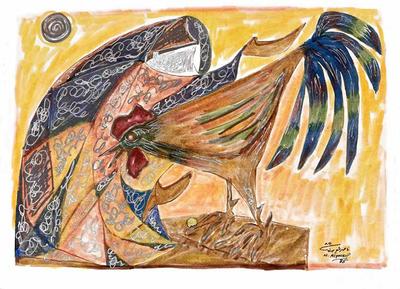
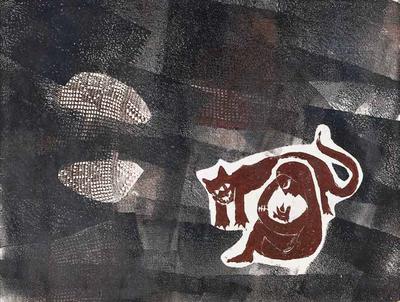
The cat for me represents evil, but its significance sometimes transforms to a good one, so you see the cat in one painting as gentle, while in others it's a blatant-fanged beast. Perhaps I say the same thing about the rooster, as it's an old friend of mine - in our old house, I had a rooster that accompanied me with familiarity and love, but his temperament would change whenever anyone else approached him, as if he felt isolated and searched earnestly for another place. The rooster for me represents the man - he always has exaggeration in feelings of self-esteem, and perhaps with colorful feathers, thus he believes he is the beginning and end of the universe, even though he is a simple creature among creatures.
These elements combined are often my tools for approaching any idea. My paintings depend on ideas - the idea is the basic component I seek, and I believe this puts me into a challenge to test abilities... a challenge to the ability to express, and a challenge to the ability to highlight feeling.
Works discussed on this page
النص الأصلي
أن الفراغ مكافح (بفتح الفاء) على امتداد اللوحة، والصيغ المعمارية مقتربة من الصيغ الإسلامية والشرقية التى تعمد الى شغل الحيز من خلال تحقيق عض التناظرات والتكرارات الهندسية لعناصر زخرفية تشتغل على اساس تأليفي يقوم على استعادة.
الموتيف وتكرار الثيمة البصرية المستقاة من مفردات الحياة التراثية: سلة، صندوق مبيت، دوائر زخرفية، أبواب تقليدية . . الخ، وتنفيذ ذلك من ناحية تقنية عبر هيمنة الخطوط الرأسية (بما تحيل عليه من أبعاد ميثولوجية تدور مدار السماوية والقوة والحياة الخالدة في التصور الاسلامي [٣])، وإسقاط البعد الثالث بما يخدم التجريد الزمكاني وتسطيح المشهد الذى تعرضه اللوحة، وتغييب مقصود قوانين التشريح في رسوم الاشخاص والحيوانات مع وضع الانسان في نقطة استقطاب بصري تتحكم في توزيع بقية العناصر التأليفية .
بدءاً من أوائل الثمانينيات، وربما مع معرض اليوسف المشترك مع ابراهيم بوسعد حول الغزو الاسرائيلي للبنان - ١٩٨٢ ، ستتخطىٰ التجربة بعضا من منطلقاتها السابقة، سيبدأ الفراغ فى غزو بعض من مساحات اللوحة، وسيمارس الفنان اليوسف
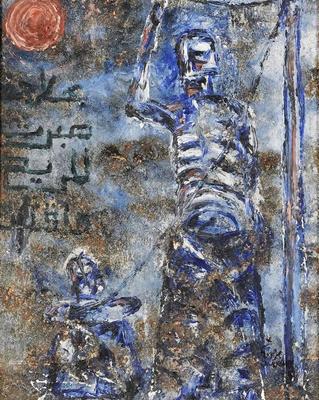
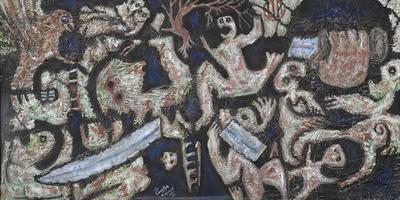
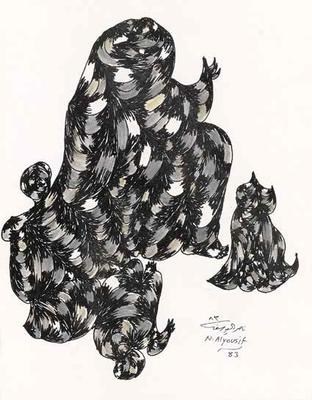
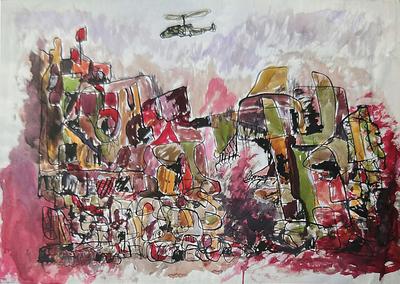
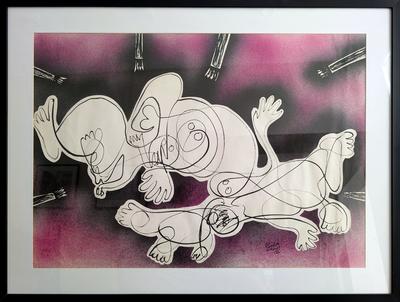
اقتصاداً واختزالا ملحوظين على تطريز العالم من حول الإنسان الذى سيظل محوريا في لوحات هذه المرحلة أيضا، ولكن مع قدر من الاغتراب والوحشة، ومع قدر من تحول الكائنات التى تسكن اللوحة من رجال ونساء وحيوانات مألوفة الى كائنات هلامية ممسوخة وغريبة التكوين، كما في لوحة لبنان يحترق (٦٠x١٢٢ سم _ اكرليك _ ١٩٨٢)، أو في الوحة السقوط (٧٤x٥٨سم - اكرليك ومواد اخرى - ١٩٨٢)، أو لوحة العائلة والقط (١٨x١٤ سم - أحبار ملونة - ١٩٨٣) مثلا ، وقد يتحولون الى أشلاء أو شظايا تتخايل فيما يشبه الأصابع أو العيون وغيرها من التجسيدات الانسانية، كما في : صبرا وشاتيلا ) ٢٩x٤٠سم _ أحبار ملونة _ ١٩٨١) أو النابالم ) ٢٢x٢٩ سم - مائية - ١٩٨٩) على نحو قد يذكر (مع الوعي بمساحة المغايرة) بكائنات بيكاسو المعذبة جراء الحروب وويلات الدمار [٤]. في هذه المرحلة ستشتغل تجربة ناصر بدينامية تفرز عناصر الثبات والتحولات في قوامها الفني، ومع أننا سنعثر على اكثر من شاهد على مستويات تقنية وموضوعاتية ورؤيوية تُبين عن حجم المستجدات التى اغتنت بها التجربة إلا أننا سنلتقط كذلك مجموعة من الملامح
Translation
Question 3: About the Eyes
Al-Banki: I'm often struck by these eyes that are wide to an exaggerated degree sometimes, and narrow to an exaggerated degree at other times, which you always broadcast in your paintings. Nasser Al-Yousif's experience has a degree of specificity in dealing with the eye. I may have my own interpretation of this aspect, but in this context, I aspire to hear your opinion.
Al-Yousif: I consider the eye another door to discovering the human. The gaze in some of my paintings means injustice, and in other paintings means sorrow or hope. It's also sometimes an objective equivalent to the ability to express the soul's being. The eye is one of the doors I resort to for expressing what's inside me.
In any case, I feel the distinction of the eye in my paintings, and I know that. As I told you, I present an idea and don't chase after drawing empty scenes. Conversing with the idea is very difficult - in this case, there must be deliberation, study, and awareness of the artistic process. When an idea occupies me that needs crystallization, it takes me a long time, sometimes reaching months, and this idea may trouble me. My wife knows this trait about me and has gotten used to me getting up in the middle of the night sometimes and going to the studio, not necessarily to paint but to take a period of contemplation, then return to sleep! This state may repeat until a moment comes when I feel that a ray of an idea has emerged. Then I began working seriously and continuously, paying no attention to the passing time. Thus, I enter the studio at ten in the evening sometimes and don't leave until seven the next morning after the idea has crystallized and become clear.
النص الأصلي
التى تؤشر بشدة الى مسلمات التجربة جماليا وما لا تستطيع التفريط فيه .
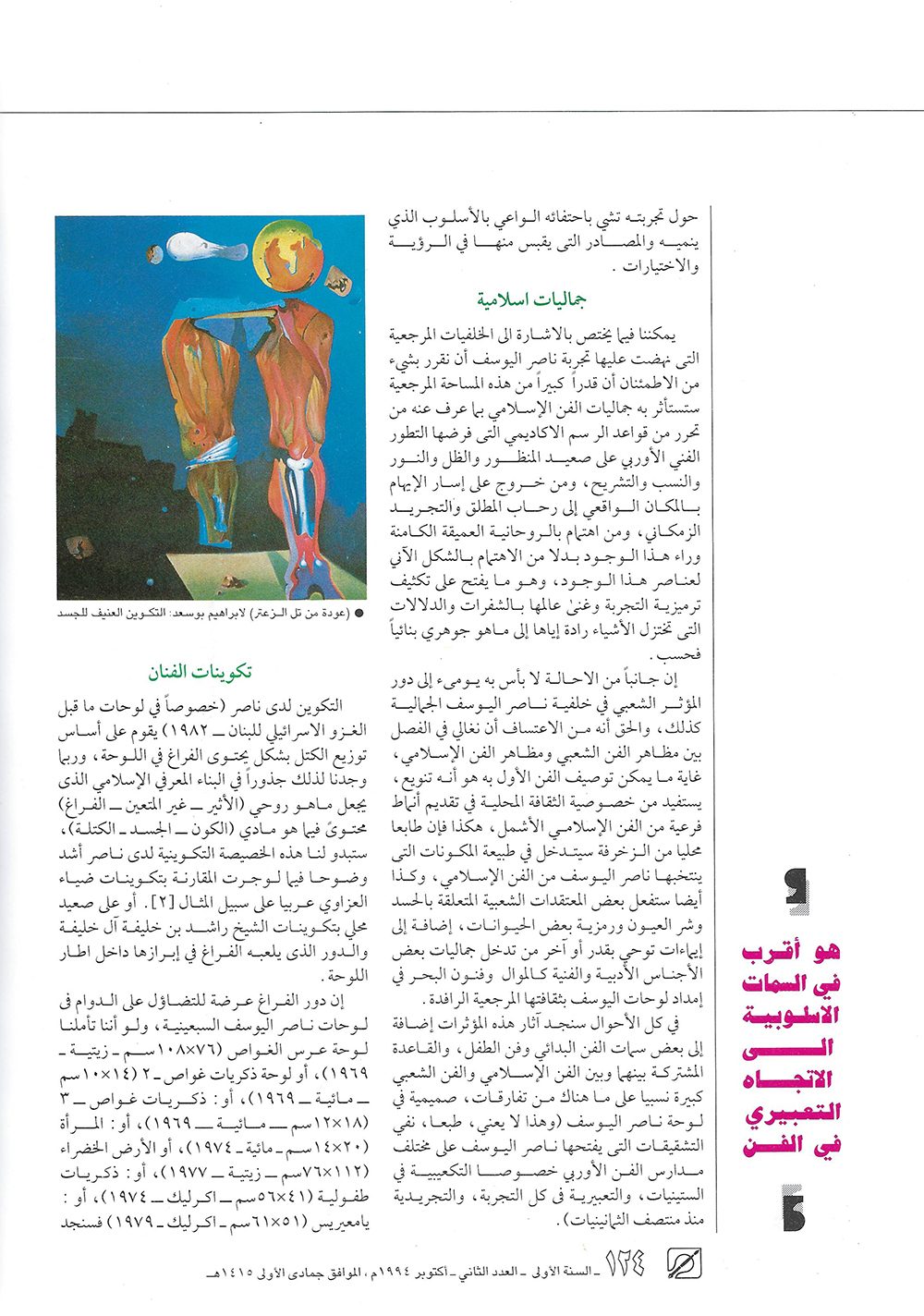
مقارنة عابرة بتكوينات الجسد الإنساني عند ابراهيم بوسعد والتكوينات الموازية عند ناصر اليوسف فى نفس المعرض المشترك المشار إليه آنفاً ، ستسفر عن مظهر من مظاهر الثبات الذى نتحدث عنه، فعلى حين تبدو تكوينات الجسد لدى بوسعد عنيفة، مفسحة للفورة والعنفوان والفتل العضلي كي ترشح من خلال اللوحة (لاحظ لوحة بوسعد المرفقة مثلا)، فإن تكوينات اليوسف ظلت محتفظة للجسد بمسالمته نوعا ما، وبالتعبيرية الرمزية الكامنة في جوانيته اكثر مما هي طافرة من عضلاته وتشريحه الفسيولوجي .
قالب الأمثولة
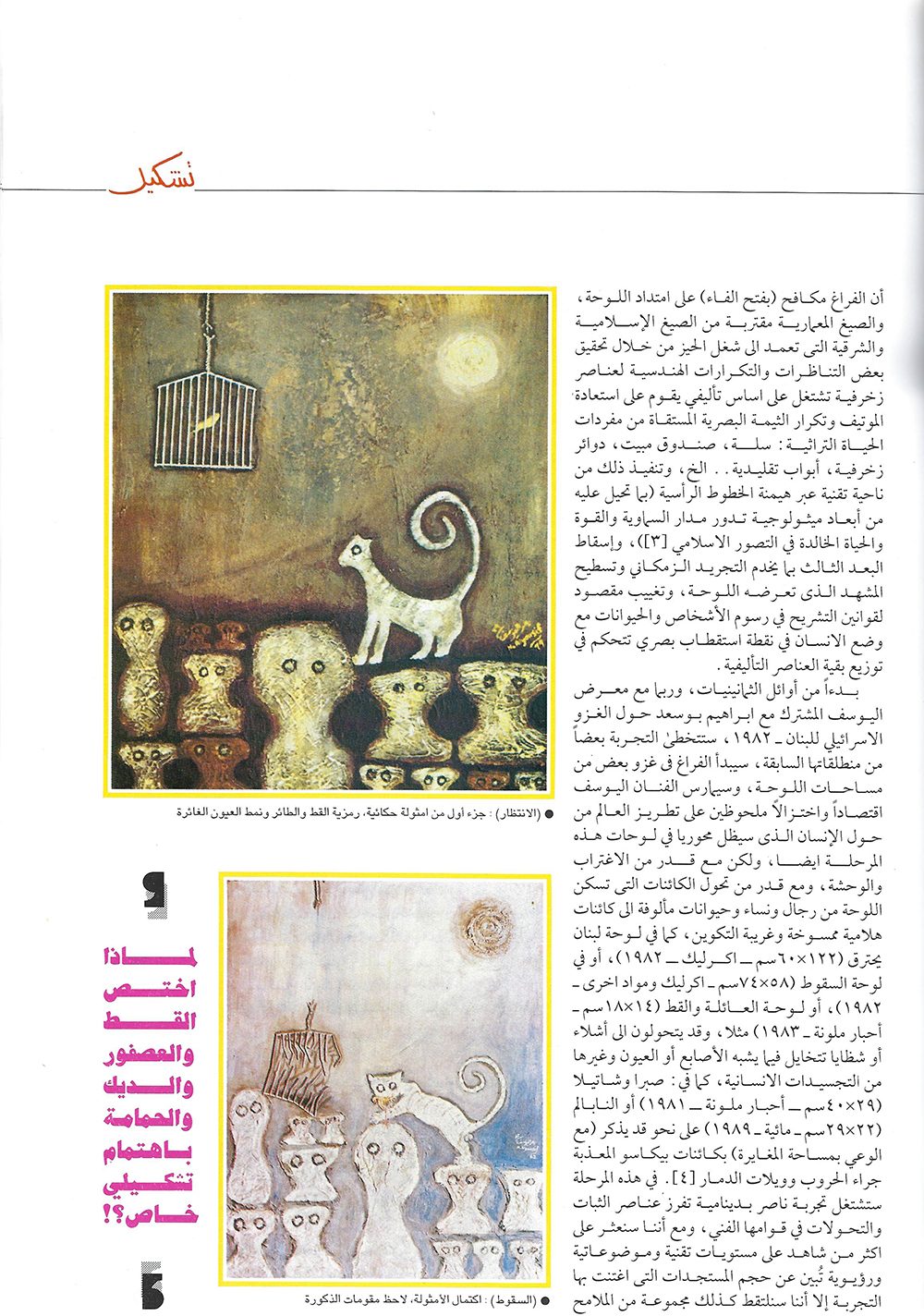
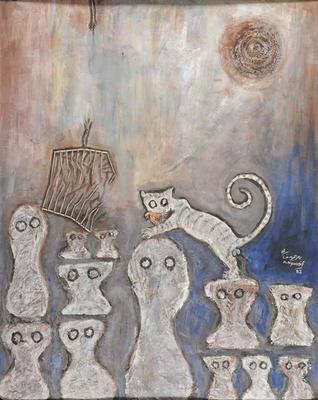
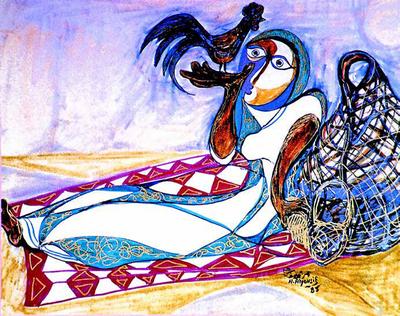
هذه المرحل ستعرف ايضا ازدهار قالب الأمثولة (Allegory) على صعيد الرؤية التي تشكل للوحة، وسيكون في التركيز على الحيوان ما يمثل امتداداً لمراحل سابقة اختص ناصر اليوسف فيها القط والعصفور والديك والحمامة باهتمام تشكيلي خاص، ولكن التجربة ستعرف الان مجازية أوسع على الصعيد الرمزي حيث سيتمحض القط للدلالة على النوازع الشريرة التى تتلبس الرجل احيانا (لاحظ مغزى صرف الإهتمام عن إبراز ذكورية القط فى لوحة «الانتظار» _ أكرليك ومواد اخرى _ ١٩٧٩، والتركيز، بالمقابل، على ملامح ذكورة القط في لوحة «السقوط» _ اكرليك ومواد اخرى - ١٩٨٢ ، مع ان اللوحتين تمثلان تعاقبا متسلسل الحلقات على مستوى حكائي رغم الفارق الزمني في سنوات التنفيذ) ، كما سيتمخض الديك للدلالة على الحالة السوية للرجل التى تتمازج عبرها نوازع الخير والزهو والقابلية للتطويع حتى مع العنجهية الظاهرة (والمرأة في العادة هى التى تمتلك زمام الترويض في عالم اليوسف الفني)، يمكننا التنويه هنا بالإشارات المبذولة في لوحات مثل : الديك المدلل (٢٠x١٥ سم - مائية - ١٩٨٥)، الديك الثائر (٢٨x٢٠ سم _ مائية -١٩٨٥)، واللعبة (٣٧٢٧ سم - مائية - ١٩٨٥) .
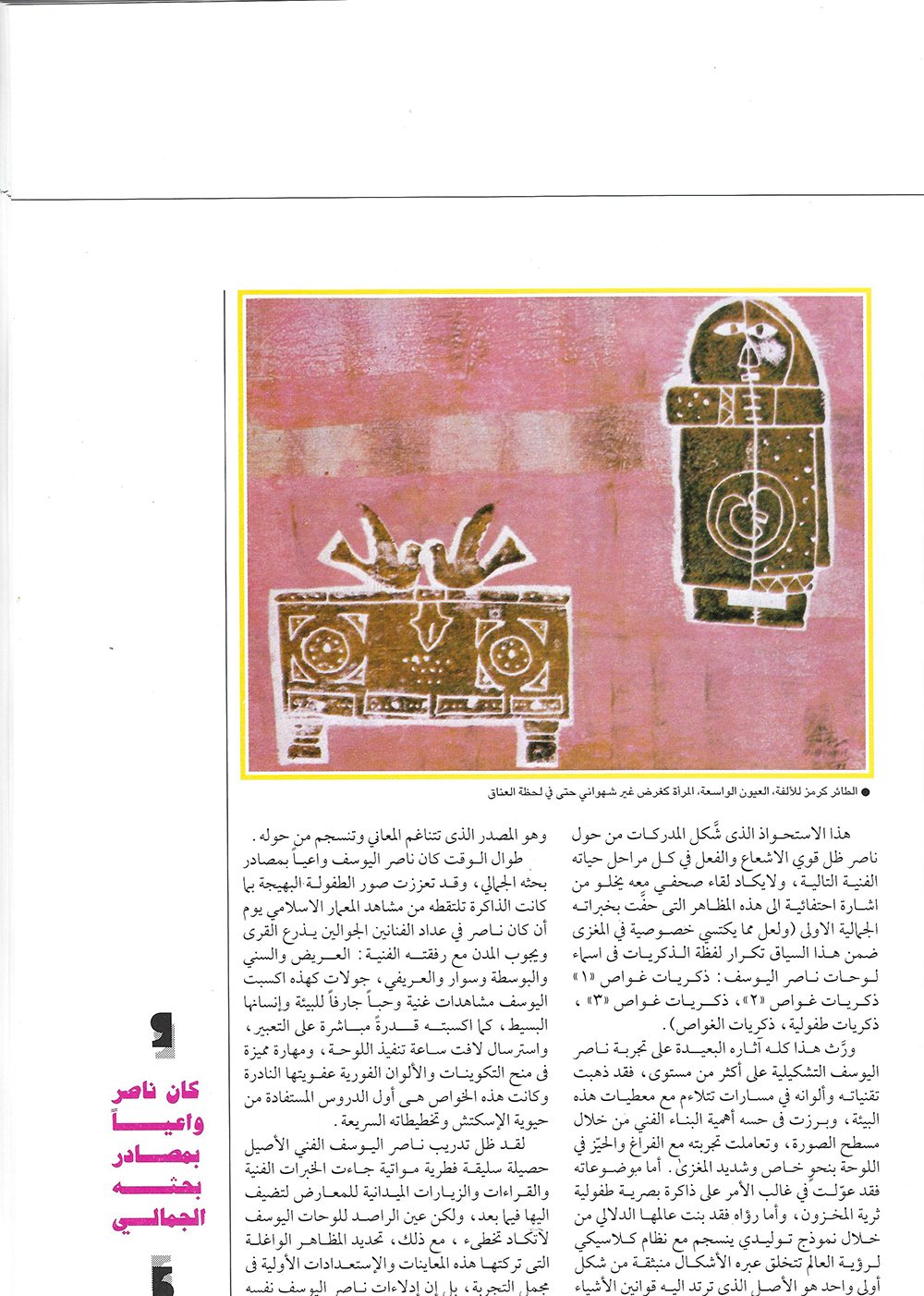
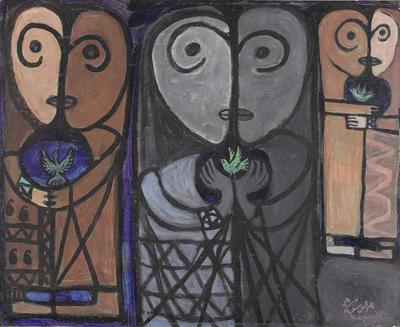
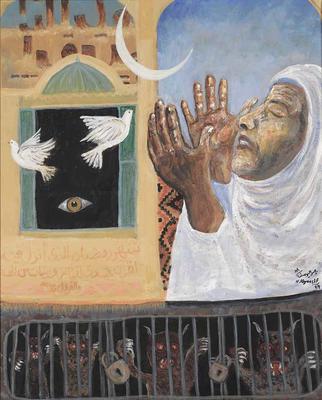
تتخذ الحمامة بدلالتها الرمزية العامة تشابكات دلالية ربما كانت أقرب الى تمثيل المرأة في هذه المرحلة من تجربة ناصر اليوسف، اما العصفور الذى يحضر بكثافة فى لوحات اليوسف (وربما لا تستدعي الذاكرة فنانا عربيا وظف العصفور بهذه الدرجة من التكرارات في اللوحة، كما يفعل ناصر، سوى اللبناني حسين ماضي) فإن استحضاره يتحرك على مساحة من الحقول الدلالية تقترب من الأمل تارة ومن الطفولة المحتاجة الى الرعاية تارة أخرى، ثم من الحرية طوراً الى الألفة والأمن طوراً آخر. ولنا متعة في تأمل عصافير اليوسف عبر لوحات مثل: الله يرعىٰ الثمر ٦سم - طباعة ورق مفرغ وزيت - ٢ ١٩٧٠ المرأة ( ٦١X٥١سم _ اكرليك _ ١٩٧٤)، ذكريات طفولية (٥٦x٤١ سم - اكرليك _ ١٩٧٤)، الحماية ٣سم - حفر لاينو وزيت _ ١٩٧٨)، حماية الطائر الاخضر (٦١x٥١ سم - اكرليك - ١٩٧٩)، كتابات عربية (٧٦x٦١ _ اكرليك _ ١٩٨٣)، امرأتان ٢٨ سم - مائية _ ١٩٨٥)، القط والطائر ) ٣٠x٢٨سم _ مائية وأحبار وكولاج -, (١٩٨٥ الأمل (٣٠x٤٢ سم _ حفر على الزنك - ١٩٨٨)، دعاء في رمضان (٧٦x٦١ سم - اكرليك - ١٩٨٩) .
وبغض النظر عما يمثله الإستخدام الخاص للحيوان في مستوى البنى الدلالية لتجربة ناصر، مما سنعرج عليه، إلا أن كثافة اللجوء الى الحيوان في اللوحة تنسجم مع النظام الكلاسيكي لتصور العالم بما هو عليه من غنى سميولوجي وتشابهات في العلاقات بين الدوال والأشياء وقرابات في النوازع والسلوك واستهداف للتكامل والانسجام والمحافظة على تناغمات الحياة .
في دراسة بعنوان (كيف يرى الفنانون الحيوانات) [٦] يتتبع كينيث كلاري تطور توظيف الحيوان في للوحة التشكيلية ملاحظا الحظوظ المتفاوتة التى حظىٰ بها الحيوان كموضوع على امتداد تواريخ الفنون، وهو يشير في المجمل الى استهلاك هذا الطراز من الموضوعات الفنية في القرون الاخيرة وعزوف الفنانين بدءا من الانطباعية عن الحيوان كموضوع (اذ لم يرسم مانيه ولا مونيه ولاسيزان الحيوانات) لكنه يشير بالمقابل الى تصاعد اهتمام جديد بالحيوان مع المدرسة التعبيرية التى وظفته من منطلق امتلاكه لطابع مشابه للطابع البشري بشكل مرعب، مع علوّه على التعقيد البشري بفعل كونه خاضعا لهدف واحد متسلط على كيانه. ولئن صح أن ناصر اليوسف أقرب في السمات الاسلوبية الى الاتجاه التعبيري في الفن، وهو ما يصادق عليه ناصر اليوسف شخصي ذات مقابلة من المقابلات [V]، فإن هذه المقدمات جميعها كفيلة باستخلاص كم تتفارق التوظيفات الفنية للحيوان بين ناصر اليوسف وبين آخرين في الساحة التشكيلية المحلية تذهب لوحاتهم بعيداً في
Translation
Question 4: About Materials
Al-Banki: Your artistic experience is rich and varied regarding the use of materials. I almost say you've practiced most types of materials - you started with colored pencils and felt-tip pens, then practiced oil and watercolors, gouache and collage, then moved to graphics... etc.
I assume that the material is never neutral, meaning that choosing the material is part of the essence of the experience and not just an external means that can be replaced with another... The material intervenes in shaping the artist's vision and is not an innocent use of things. Thus, the density of a certain material in a certain phase for one artist differs in significance from the density of another material for another artist. From this perspective, what does all this diversity in materials mean in Nasser Al-Yousif's experience?
Al-Yousif: I imagine that the diversity of materials for me is linked to the cultural yield in each phase. When I was a teacher (and I worked in teaching for about thirteen years), I always urged my students not to commit to a specific material. I encouraged them to experiment. I aimed for them to test their abilities themselves, as the material for me is a field for knowledge and a field for culture.
For example, I distinguish myself by using a certain material, but it happens that this material doesn't help me properly express my ideas in some cases, so what do I do? Watercolors don't help me highlight a mass or texture - here I resort to acrylic or to household materials I use in my paintings: I may resort to fabric or burlap, for example. The material is distinguished by providing me with the most suitable conditions to express my idea.
The relationship with a certain material may be an artistic specificity. I remember, for example, that one of the bookstores brought acrylic material as a sample 25 years ago and distributed free samples to some artists. The fact is that this material, when used in executing the painting, needs intuition and ability for speed in execution because it's prone to drying quickly. What happened is that some colleagues didn't like it because they couldn't control it, but I liked this material and still work with it today. I see it has advantages that give me the same effects as oil paint, watercolor effects, and charcoal and pencil effects.
النص الأصلي
توظيف الحيوان (الخيول على الأخص) ولكن على أساس يخضع للمحاكاة في الأغلب أمثال هشام باري وغير واحد من فناني ال بوسطة (مع فوارق لافتة عند عبد الكريم البوسطة لا يتسع المجال للإفاضة حولها فى هذا المقام) .
ينفذ ناصر اليوسف الى هذه الموضوعات والتصاميم عبر معالجات لونية تركّز على الألوان الحارة وتبرز خشونة السطح وملمس اللوحة وتتقصد اظهار اتجاهات حركة الفرشاة على اللوحة احيانا مع الاقتصاد في المزج اللوني أو استخدام القليل منه على «الباليت» واللجوء الى اظهار التدرجات خصوصا في لوحات القوالب الحكائية والأمثولات على نحو يتعاضد مع المغزى الذي تستهدف اللوحة تقريره.
بنية الدلالة
لا تتركنا عوالم ناصر اليوسف نتهجى الدخول اليها طويلا. هناك ما ينبثق، على حين غرة، رخوا وطقسيا ولكنه شديد التعليم، ما يعلم عليه هو شيء ما يتعلق بنا، نرانا فيه، حيز متوازي من أحياز لذاكرة في العادة، أو ربما حنين طفولي يحسن اليوسف أن يهبه اندلاعه كلما تقاصينا عن الدمن والمرابع .
لكم أن تستعرضوا إن شئتم الامثلة : ((ذكريات غواص))، ((ذكريات طفولية)، ((أم البخنق»، ((من ليالى ألف ليلة»، ((حناج عجين»، «يامعيريس!، «عرس الغواص)). اسماء ناصر اليوسف للوحاته خروج من ليل المعنى، خروج مما يمسي خافت الرنين (ومجبولا على الاهتزاز مع ذلك) .
لا واحدية أبعاد هاهنا، كل ما ينبض في امتداد «الكنفس» هو تعالق من النداءات يقصد كل منا بما لا يقصد الآخر، ليس ثمة نداء الا وهو أمة من الأمم، تناسل من سلالات الدلالة إلى مالا نهاية، هكذا يواجهنا مشهد ناصر اليوسف الذهني محتشداً وفائضا ومغرراً بمن لا يُعد للقراءة البصرية عدتها الشارطة .
ما إن يتناهى الينا نداء اليوسف، ونداء تكويناته المضمخة بالينابيع والذكرى، حتى ننفتح، بغتة، على بنية دلالية متزالقة الشفرات، دال يعوم ودلالة تنزلق كما عبر جاك لا كان ذات إلماح الى فتنة اللغة. ليس هناك في هذا العالم، عالم اليوسف، تخوم نهائية لسلطة التأويل، صحيح ان التوليد الدلالي موئله نموذج ثابت يثوي في نفس الفنان شفيفة الإيمان : يتموضع من خلاله الإله في المركز وتدور حوله الأشيا.
والممارسات والخلائق، ويتكرر النموذج في صورته الأرضية بجعل الانسان مركزاً وتشكل الكائنات والجمادات في مدارات سلطانه (ألم يخلق الله آدم على صورته؟ ألم يستخلفه في احراش الأرض؟)، إلا أن هذا النموذج لا يتعدى كونه طرازاً تأسيسيا فحسب، يغتني باستمرار ولا يغلق الدائرة التأويلية، يقترح مديونية معنى [٨] ملأى كثيفة، ولكنه يظل متعاليا وغير مخضع لقراءة وحيدة البعد.
في العالم الذى يشكله اليوسف مناخات دلالية مشبعة بالرموز والشفرات والأمثولات والصور البهيجة، وفيه نستطيع الوقوع على تشابهات وقرابات بين مختلف العناصر والكائنات، فما يريد ناصر تمثيله في اللوحة له دائما ما يتجاوز وجوده الموضوعي المادي ذاهباً الى طاقات الأسطورة والسحر والمتخيل، وعن طريق التعويل على ذاكرة بصرية مكتنزة بالعديد من الأشكال والرؤى والتقابلات والحلول تنبثق اللوحة عند اليوسف مسكونة بالحيوانات والمطرزات والأدوات الشعبية والنقوش والكتابات والتعاويذ والاستعادات . . . والإنسان: حراسات ورموز وأجواء ملفوفة بالسحر وعبق النموذج . اما ما يقبع في المركز فهو ذلك الجرم الذى انضوى فيه العالم الأكبر : كائن يحمل الأمانة ويُلهم الأسماء ويقبض على مقاليد التمكين اسمه : الانسان.
يحضر الإنسان كقاسم مشترك في معظم لوحات ناصر، ولو حاولنا مجرد استعراض اسماء اللوحات التى تسجل حضور الانسان لطال بنا المقام، فمن أول الاسكتشات التسجيلية فى بواكير التجربة مروراً بمرحلة التركيز على الغواص والفلاح، وصولا الى مرحلة الاشلاء والاختزالات المشيرة الى محنة الكائن، وامتداداً الى مرحلة الأمثولة أو الحكاية الرمزية، وانتهاء بالمرحلة الاخيرة (بعد فقد البصر) التى يتشبث انسانها بنزوع غامض الى ممالك الذاكرة والانس بالزمن الهارب. يبقى الانسان قطب عالم ناصر اليوسف ومحرك التجربة ورؤاها واشواقها العليا.
الحرص على استحضار الشكل الانساني في تجربة اليوسف يقترن طوال الوقت بإقامة علاقة تحويرية مع قسمات هذا الكائن، أبعاده، فسيولوجيته، خواصه المنظورية [٩]، الا ان هذا التحوير لا يمس الجوهري فيما هو انساني، يظل هذا الجانب بمنأى' عن التلاعب بمغازيه وإحالاته، بل نستطيع ان نقول ان ناصر اليوسف يضفي بعداً تبجيليا على هذا الجوهر، ينافح فى صفه قبالة كل مناوشة أو محاولة للاستخفاف .
الإنسان قيمة عليا لا تقبل المقايضة أو المزايدة على المواقع عند هذا الفنان .
سيلفتنا في غواص اليوسف (انسان المرحلة من ٦٥ الى ٦٩ من تجربة الفنان) مغالبته لضنك الحياة من حوله، ملامحه ناتئة ويطفر منها العناء، ولكنه يتصيد لحظات الفرح بضراوة. . (وفلاح المرحلة السبعينية امتداد له)، ولئن كانت النهارات اكراها واخضاعا وسخرة فإن العتمة والليل عناصر فانتستيكية درامية، يغرم بتصويرها الفنان، حيث تظل المرأة في لوحة ناصر : أليفة ووادعة ، وودودة وتعويضية (لكنها لا تنزلق الى لعبة الفتنة والغواية ولا تكاد ترتكب التبرج أو الشهوة، ينبغي ان نتذكر) .
ان شخوص ناصر اليوسف نمطية ومنمذجة :
الرجل الذى يغالب الاخطار ويحتاج الى دفقة ودّ حين يثوب الى راحة، والمرأة الأسرارية، السكن والرحمة، المالكة لزمام ادارة اللعبة، والتى تقترف كل الوقائع على شرف اسمها وبوحي الوصول الى مرقاتها العالية. وما التقابلات الثنائية هنا الا تجل من تجليات قانون رؤيوي أشمل يصوغ عوالم ناصر اليوسف وتلعب فيه المراوحة بين الثنائيات لعبة تنظيم الرموز بين الحياة والموت، السر والجهر، الأرض والسماء، النور والظلمة، الخير والشر، ما يمثل أبداً هو حركة دورانية لن نسميها عوداً أبدياً (فنيتشه سيبدو مقحما على السياق هنا بينما يقبس ناصر من استعادة تكرارية تتحاكى مع دورة تجديد الدين وسيرورة تاريخ النجاة بحسب ما يقترح منظور ديني وايماني الصدور)[ ١٠].
تبدأ اللوحة لدى ناصر اليوسف من التراث وتنتهى الى ربط القيمة الأسمى للإنسان بقدرته الزاخرة على التوليد من هذا التراث، هل نستطيع أن نقول أن في هذه الأصالة الاستثنائية مكمن التميز الذى يصدر عنه هذا الفنان؟
Translation
Question 5: About Experimentation
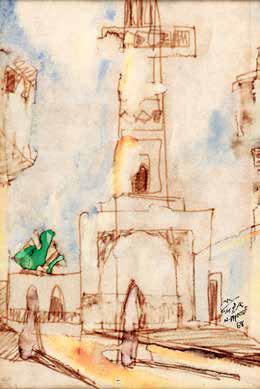
Al-Banki: Nasser Al-Yousif's experience, like any artistic experience, achieves a proportion of resorting to experimentation and a proportion of maintaining original elements that form the experience's identity. What's noticeable is that resorting to experimentation emerged from an early stage with you. I'm thinking here of a painting like "Hamad Mosque 1966," where you used a simplified expressive style. But despite that, I find myself inclined to say that the constant in your experience was always greater than the variable. Experimentation with you has always been bridled by reason, examining and preserving its footholds. Do you agree with such a description?
Al-Yousif: This is correct. I'm keen on benefiting from experience. Experimentation for me is adding new culture to my culture, and not experimentation for the sake of experimentation.
I presented experimental paintings since the beginning of the sixties. In 1961, specifically, I painted "The Potter." This painting was done in a pure cubist manner after I reviewed some experiences of the French artist Léger. I remember that this painting was met with disapproval at the time from artists who mocked these squares and rectangles that they decided couldn't achieve drawing the potter!
Experience is a cultural step, and what's important is benefiting from each experience to its fullest, because experiences for the artist are what lead him to expand perceptions.
Works discussed on this page
النص الأصلي
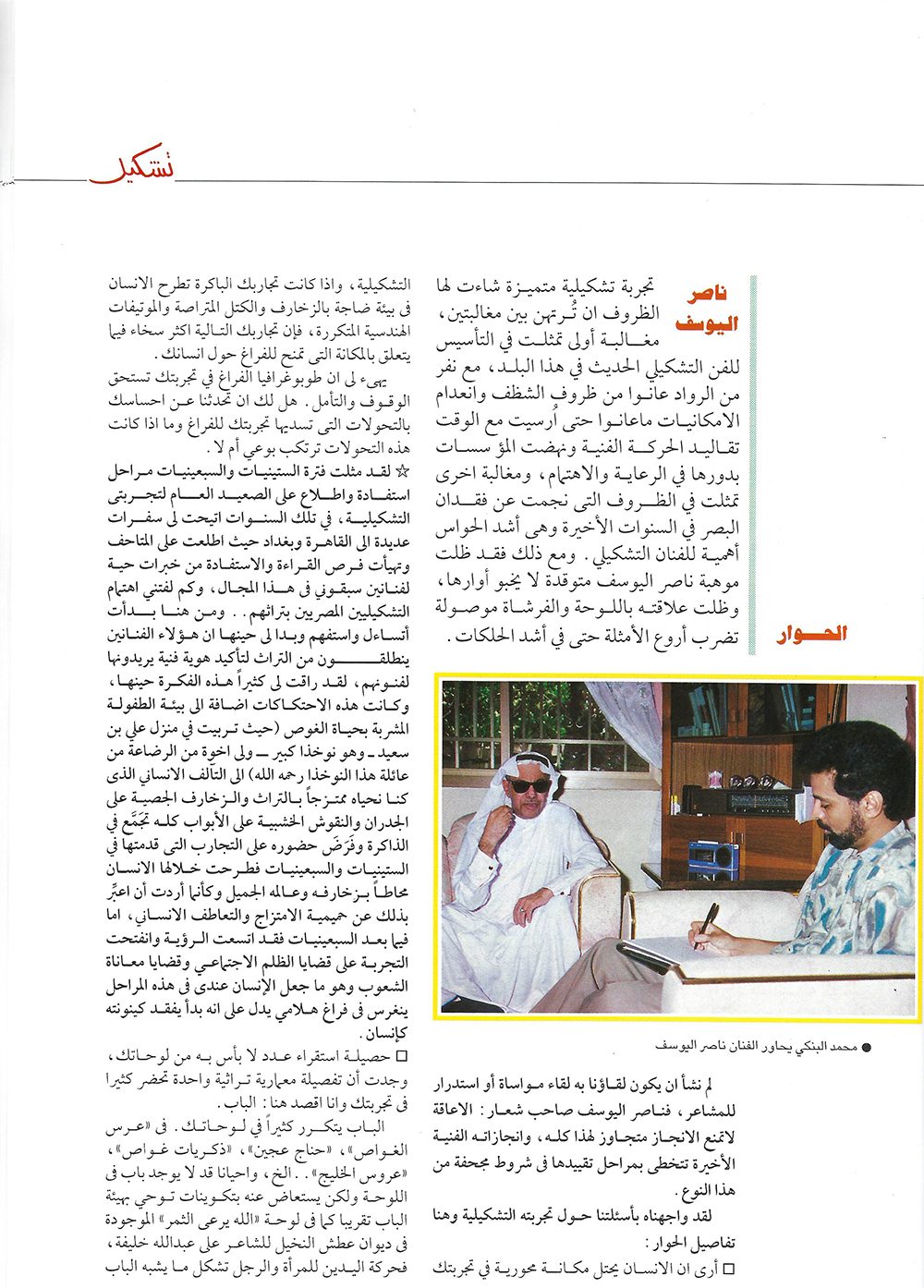
ناصر اليوسف تجربة تشكيلية متميزة شاءت لها الظروف ان ترتهن بين مغالبتين، مغالبة أولى تمثلت في التأسيس للفن التشكيلي الحديث في هذا البلد، مع نفر من الرواد عانوا من ظروف الشظف وانعدام الامكانيات ماعانوا حتى أرسيت مع الوقت تقاليد الحركة الفنية ونهضت المؤسسات بدورها في الرعاية والاهتمام، ومغالبة اخرى تمثلت في الظروف التى نجمت عن فقدان البصر في السنوات الأخيرة وهى أشد الحواس أهمية للفنان التشكيلي . ومع ذلك فقد ظلت موهبة ناصر اليوسف متوقدة لا يخبو أوارها، وظلت علاقته باللوحة والفرشاة موصولة تضرب أروع الأمثلة حتى في أشد الحلكات .
لم نشأ ان يكون لقاؤنا به لقاء مواساة أو استدرار للمشاعر، فناصر اليوسف صاحب شعار: الاعاقة لا تمنع الانجاز متجاوز لهذا كله، وانجازاته الفنية الأخيرة تتخطى بمراحل تقييدها فى شروط مجحفة من هذا النوع .
لقد واجهناه بأسئلتنا حول تجربته التشكيلية وهنا تفاصيل الحوار :
• أرى ان الانسان يحتل مكانة محورية في تجربتك التشكيلية، واذا كانت تجاربك الباكرة تطرح الانسان فى بيئة ضاجة بالزخارف والكتل المتراصة والموتيفات الهندسية المتكررة، فإن تجاربك التالية اكثر سخاء فيما يتعلق بالمكانة التى تمنح للفراغ حول انسانك .
يهىء لى ان طوبوغرافيا الفراغ في تجربتك تستحق الوقوف والتأمل. هل لك ان تحدثنا عن احساسك بالتحولات التى تسديها تجربتك للفراغ وما اذا كانت هذه التحولات ترتكب بوعي أم لا .
* لقد مثلت فترة الستينيات والسبعينيات مراحل ستفادة واطلاع على الصعيد العام لتجربتى لتشكيلية، في تلك السنوات اتيحت لى سفرات عديدة الى القاهرة وبغداد حيث اطلعت على المتاحف وتهيأت فرص القراءة والاستفادة من خبرات حية فنانين سبقوني فى هذا المجال، وكم لفتني اهتمام لتشكيليين المصريين بتراثهم. . ومن هنا بدأت أتساءل واستفهم وبدا لى حينها ان هؤلاء الفنانين ينطلقون من التراث لتأكيد هوية فنية يريدونها لفنونهم، لقد راقت لى كثيراً هذه الفكرة حينها ، وكانت هذه الاحتكاكات اضافة الى بيئة الطفولة المشربة بحياة الغوص (حيث تربيت في منزل علي بن سعيد - وهو نوخذا كبير — ولى اخوة من الرضاعة من عائلة هذا النوخذا رحمه الله) الى التالف الانساني الذى كنا نحياه ممتزجاً بالتراث والزخارف الجصية على الجدران والنقوش الخشبية على الأبواب كله تجَمَّع في الذاكرة وفَرَضَ حضوره على التجارب التى قدمتها في الستينيات والسبعينيات فطرحت خلالها الانسان محاطاً بزخارفه وعالمه الجميل وكأنما أردت أن اعبّر بذلك عن حميمية الامتزاج والتعاطف الانساني، اما فيما بعد السبعينيات فقد اتسعت الرؤية وانفتحت التجربة على قضايا الظلم الاجتماعي وقضايا معاناة الشعوب وهو ما جعل الإنسان عندى في هذه المراحل ينغرس فى فراغ هلامي يدل على انه بدأ يفقد كينونته كإنسان .
• حصيلة استقراء عدد لا بأس به من لوحاتك، وجدت أن تفصيلة معمارية تراثية واحدة تحضر كثيرا فى تجربتك وانا اقصد هنا: الباب .
الباب يتكرر كثيراً في لوحاتك . فى (عرس الغواص»، (حناج عجين))، (ذكريات غواص))، «عروس الخليج». . الخ، واحيانا قد لا يوجد باب فى اللوحة ولكن يستعاض عنه بتكوينات توحي بهيئة الباب تقريبا كما فى لوحة «الله يرعى الثمر) الموجودة فى ديوان عطش النخيل للشاعر على عبد الله خليفة، فحركة اليدين للمرأة والرجل تشكل ما يشبه الباب
Translation
Question 6: Open Space for Final Thoughts
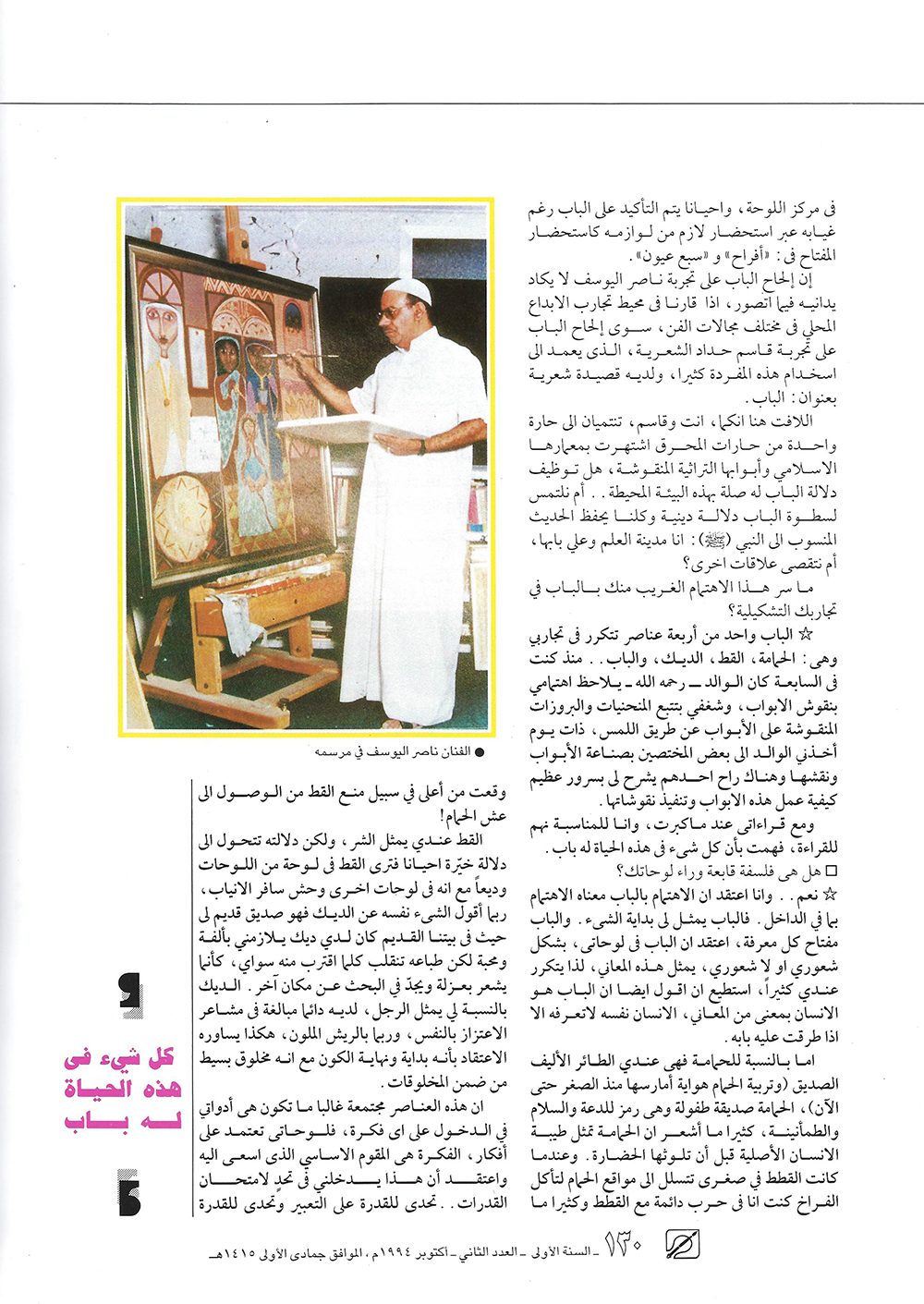
Al-Banki: I'd like at the end of this meeting to leave a free space for you to say what you wish, or answer questions I haven't asked at all. It's a space where I leave you the freedom of what you want to convey to readers and those connected with your experience through it.
Al-Yousif: I'd like to address what has become of the local art movement that we gave so much of our lives and time to, and find that, unfortunately, today it's on the path of decline. Algae with teeth have grown in our local arena that have been able to gnaw at everything, and this is what grieves the soul.
Even in the existing art associations, there are elements whose concern is material profit and not artistic culture. Although I know that time has its historical cycle and that what's correct in the end is only what's correct, I hope these artists wake up from what they've become and direct their artistic works to future generations, as we have responsibilities toward educating and raising awareness among the youth.
Art is a message from the artist to the following generations, and I hope everyone realizes the honor of this message.
Works discussed on this page
النص الأصلي
فى مركز اللوحة، واحيانا يتم التأكيد على الباب رغم غيابه عبر استحضار لازم من لوازمه كاستحضار المفتاح فى: «أفراح» و «سبع عيون».
إن إلحاح الباب على تجربة ناصر اليوسف لا يكاد يدانيه فيما اتصور، اذا قارنا فى محيط تجارب الابداع المحلي فى مختلف مجالات الفن، سوى إلحاح الباب على تجربة قاسم حداد الشعرية، الذى يعمد الى استخدام هذه المفردة كثيرا، ولديه قصيدة شعرية بعنوان: الباب .
اللافت هنا انكما، انت وقاسم، تنتميان الى حارة واحدة من حارات المحرق اشتهرت بمعمارها الإسلامي وأبوابها التراثية المنقوشة ، هل توظيف دلالة الباب له صلة بهذه البيئة المحيطة . . أم نلتمس سطوة الباب دلالة دينية وكلنا يحفظ الحديث
المنسوب الى النبي ( ص) : انا مدينة العلم وعلي بابها، أم نتقصى علاقات اخرى؟
ما سر هذا الاهتمام الغريب منك بالباب في تجاربك التشكيلية؟
* الباب واحد من أربعة عناصر تتكرر فى تجاربي وهى: الحمامة، القط، الديك، والباب . . منذ كنت فى السابعة كان الوالد - رحمه الله - يلاحظ اهتمامي بنقوش الابواب، وشغفي بتتبع المنحنيات والبروزات المنقوشة على الأبواب عن طريق اللمس، ذات يوم أخذني الوالد الى بعض المختصين بصناعة الأبواب ونقشها وهناك راح احدهم يشرح لى بسرور عظيم كيفية عمل هذه الابواب وتنفيذ نقوشاتها .
ومع قراءاتى عند ماكبرت، وانا للمناسبة نهم للقراءة، فهمت بان كل شىء فى هذه الحياة له باب .
• هل هى فلسفة قابعة وراء لوحاتك؟
* نعم . . وانا اعتقد ان الاهتمام بالباب معناه الاهتمام بما في الداخل . فالباب يمثل لى بداية الشىء . والباب مفتاح كل معرفة، اعتقد ان الباب فى لوحاتى، بشكل شعوري او لا شعوري، يمثل هذه المعاني، لذا يتكرر عندي كثيرا، استطيع ان اقول ايضا ان الباب هو الانسان بمعنى من المعاني، الانسان نفسه لا تعرفه الا اذا طرقت عليه بابه .
ما بالنسبة للحمامة فهى عندي الطائر الاليف الصديق (وتربية الحمام هواية أمارسها منذ الصغر حتى الآن)، الحمامة صديقة طفولة وهى رمز للدعة والسلام والطمأنينة، كثيرا ما أشعر ان الحمامة تمثل طيبة الانسان الأصلية قبل أن تلوثها الحضارة. وعندما كانت القطط في صغرى تتسلل الى مواقع الحمام لتأكل الفراخ كنت انا فى حرب دائمة مع القطط وكثيرا ما وقعت من أعلى في سبيل منع القط من الوصول الى عش الحمام!
القط عندي يمثل الشر، ولكن دلالته تتحول الى دلالة خيّرة احيانا فترى القط فى لوحة من اللوحات وديعا مع انه فى لوجات اخرى وحش سافر الانياب، ربما أقول الشىء نفسه عن الديك فهو صديق قديم لى حيث فى بيتنا القديم كان لدي ديك يلازمني بألفة ومحبة لكن طباعه تنقلب كلما اقترب منه سواي، كأنما يشعر بعزلة ويجدّ في البحث عن مكان آخر . الديك بالنسبة لي يمثل الرجل، لديه دائما مبالغة فى مشاعر الاعتزاز بالنفس، وربما بالريش الملون، هكذا يساوره الاعتقاد بأنه بداية ونهاية الكون مع انه مخلوق بسيط من ضمن المخلوقات .
ان هذه العناصر مجتمعة غالبا ما تكون هى أدواتي في الدخول على اى فكرة، فلوحاتى تعتمد على أفكار، الفكرة هى المقوم الاساسي الذى اسعى اليه واعتقد أن هذا يدخلني فى تحدٍ لامتحان القدرات . . تحدى للقدرة على التعبير وتحدى للقدرة.
Translation
Analytical Section: Islamic Aesthetics and Artistic Influences
Islamic Aesthetics
Regarding the referential backgrounds upon which Nasser Al-Yousif's experience is built, we can state with some confidence that a large portion of this referential space is dominated by the aesthetics of Islamic art, known for its liberation from the academic drawing rules imposed by European artistic development in terms of perspective, shadow and light, proportions, and anatomy. It breaks free from the constraints of creating illusions of realistic space to embrace the absolute and spatiotemporal abstraction, and focuses on the deep spirituality underlying existence rather than the immediate form of elements in this existence. This opens up an intensification of the experience's symbolism and enriches its world with codes and significations that reduce things to what is essentially structural only.
A considerable portion of the reference also points to the role of folk influence in Nasser Al-Yousif's aesthetic background. In truth, it would be excessive to overemphasize the separation between manifestations of folk art and Islamic art. The most we can describe the first art with is that it's a variation that benefits from the specificity of local culture in presenting subsidiary patterns of the more comprehensive Islamic art. Thus, a local character of decoration will intervene in the nature of components that Nasser Al-Yousif selects from Islamic art, as will some folk beliefs related to the evil eye and the harm of eyes and the symbolism of certain animals, in addition to suggestions of some intervention from the aesthetics of certain literary and artistic genres like the mawwal and sea arts in supplying Al-Yousif's paintings with their tributary referential culture.
In all cases, we will find the effects of these influences, in addition to some features of primitive art and child art - and the common ground between them and Islamic art and folk art is relatively large despite the differences - essential in Nasser Al-Yousif's painting (this doesn't mean, of course, negating the openings that Nasser Al-Yousif creates to various European art schools, especially Cubism in the sixties, Expressionism throughout the experience, and Abstractionism since the mid-eighties).
النص الأصلي
على ابراز الشعور
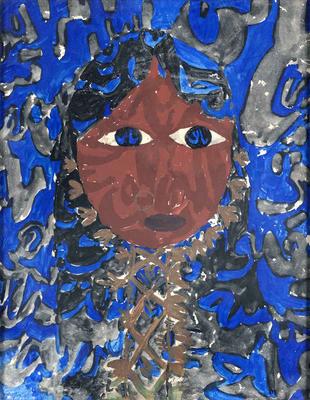
تستوقفني كثيراً هذه العيون الواسعة بقدر مبالغ فيه أحيانا، والضيقة بقدر مبالغ فيه احيانا والتى تبثها في لوحاتك دائما . تجربة ناصر اليوسف على قدر من الخصوصية في التعامل مع العين، وانا قد امتلك تأويلي الخاص لهذا المظهر إلا انني فى هذا المقام أرنو الى سماع رأيك انت .
* انا اعتبر العين بابا آخر لاكتشاف الانسان، والنظرة في بعض لوحاتي تعني ظلم وفي لوحات اخرى تعني الاسى رخيبة الأمل، كما انها احيانا معادل موضوعي للقدرة على التعبير عن لكنونات النفس . العين باب من الأبواب لتى ألجا اليها للتعبير عما بداخلي .
فى كل الأحوال أنا اشعر بتميز العين في لوحاتي وأعرف ذلك. انا كما قلت لك اطرح فكرة ولا اجرى وراء رسم مناظر فارغة، ومحادثة الفكرة صعبة جدا، لابد في هذه الحالة من تأن ودراسة وادراك للعملية الفنية، انني عندما تشغلني فكرة تحتاج الى بلورة يطول الأمر عندى الى أن يصل الى شهور احيانا، وربما تؤرقني هذه الفكرة . زوجتي تعرف عنى هذه الصفة، وقد اعتادت على قيامي في منتصف الليل بعض الاحيان ثم الذهاب الى المرسم لا من أجل الرسم بالضرورة بل لأخذ قسط من التأمل ثم أعود بعدها الى النوم! وقد يحدث ان تتكرر هذه الحالة الى أن تأتي لحظة اشعر معها بأن شعاع فكرة ما قد انبثق، حينها أبدأ في العمل، بجد، وبشكل متواصل ولا أعير اهتماما للوقت الذى يمضي، هكذا أدلف الى المرسم في العاشرة مساء حيانا فلا اخرج منه الا في السابعة من صباح اليوم التالي بعد ان تكون الفكرة قد تبلورت واتضحت .
• تجربتك الفنية ثرية ومتعددة فيما يتعلق باستخدام الخامات، واكاد اقول انك مارست معظم انواع الخامات، فقد بدأت بالأقلام الملونة والفلوماستر ثم مارست الزيت والألوان المائية والكواش والكولاج ثم انتقلت الى الغرافيك . . الخ .
انا افترض ان الخامة ليست محايدة ابداً بمعنى ان اختيار الخامة جزء من صميمية التجربة وليست مجرد وسيلة خارجية يمكن أن تستبدل بوسيلة اخرى . .
الخامة تتدخل فى تشكيل رؤية الفنان وهى ليست ستخداماً بريئاً للأشياء، هكذا فإن كثافة خامة معينة فى مرحلة معينة عند فنان ما تختلف دلالة عن كثافة خامة اخرى عند فنان آخر. من هذا المنطلق ما الذي يعنيه كل هذا التعدد في الخامات في تجربة ناصر اليوسف؟
اتصور ان تعدد الخامات عندى يرتبط بالمحصول لثقافي فى كل مرحلة. عندما كنت مدرساً (وانا عملت في التدريس ما يقارب الثلاث عشرة سنة) كنت دائما أحث طلابي على عدم الالتزام بخامة معينة، كنت اشجعهم على التجربة، كنت استهدف ان يقوموا باختبار قدراتهم ذاتيا، فالخامة عندي هي مجال للمعرفة ومجال للثقافة.
انا مثلا أتميز باستخدام خامة معينة ولكن يحدث إن هذه الخامة لا تساعدني كما يجب على التعبير عن أفكاري في بعض الحالات فماذا أفعل؟ المائيات لا تساعدني على ابراز كتلة أو ابراز ملمس هنا الجأ الى الاكريليك أو الى مواد بيتية استخدمها في لوحاتي: قد ألجأ الى القماش أو ألجأ الى الخيش مثلا. الخامة لا تتميز بشيء الا أنها تمنحني الظروف الأنسب للتعبير عن فكرتي .
Translation
The Artist's Compositions
Composition in Nasser's work (especially in paintings before the Israeli invasion of Lebanon - 1982) is based on distributing masses in a way that contains the void in the painting. We might find roots for this in the Islamic epistemological structure that makes what is spiritual (the ethereal - the undefined - the void) contained within what is material (the universe - the body - the mass). This compositional characteristic in Nasser's work will appear clearer to us if we compare it with Dia Al-Azzawi's compositions on the Arab level, for example [2], or locally with Sheikh Rashid bin Khalifa Al Khalifa's compositions and the role that void plays in highlighting them within the painting's frame.
The role of void is subject to constant diminishment in Nasser Al-Yousif's paintings of the seventies. If we contemplate paintings like "Diver's Wedding" (108x76 cm - oil - 1969), or "Diver's Memories-2" (10x14 cm - watercolor - 1969), or "Diver's Memories-3" (18x12 cm - watercolor - 1969), or "The Woman" (20x14 cm - watercolor - 1974), or "The Green Land" (112x76 cm - oil - 1977), or "Childhood Memories" (56x41 cm - acrylic - 1974), or "Ya Muairis" (61x51 cm - acrylic - 1979), we will find that void is combated throughout the painting, and the architectural formulas are close to Islamic and Eastern formulas that deliberately fill space through achieving certain symmetries and geometric repetitions of decorative elements working on a compositional basis that relies on retrieving the motif and repeating the visual theme drawn from traditional life vocabulary: basket, chest, decorative circles, traditional doors... etc., and executing this technically through the dominance of vertical lines (with their reference to mythological dimensions revolving around the celestial, power, and eternal life in Islamic conception [3]), dropping the third dimension to serve spatiotemporal abstraction and flattening the scene presented by the painting, and deliberately absenting the laws of anatomy in drawings of people and animals while placing the human at a point of visual polarization that controls the distribution of other compositional elements.
Transformation and the Allegory Template
Beginning in the early eighties, perhaps with Al-Yousif's joint exhibition with Ibrahim Bousaad about the Israeli invasion of Lebanon - 1982, the experience would transcend some of its previous premises. Void would begin invading some of the painting's spaces, and artist Al-Yousif would practice noticeable economy and reduction in embroidering the world around the human, who would remain central in this phase's paintings as well, but with a degree of alienation and desolation, and with a degree of transformation of the beings inhabiting the painting - men, women, and familiar animals - into gelatinous, deformed creatures of strange composition, as in "Lebanon Burns" (60x122 cm - acrylic - 1982), or in "The Fall" (74x58 cm - acrylic and other materials - 1982), or "The Family and the Cat" (18x14 cm - colored inks - 1983), for example. They may transform into fragments or shards that resemble fingers or eyes and other human embodiments, as in "Sabra and Shatila" (29x40 cm - colored inks - 1981) or "Napalm" (22x29 cm - watercolor - 1989) in a way that may recall (while being aware of the area of difference) Picasso's creatures tormented by wars and the horrors of destruction [4].
This phase would also witness the flourishing of the allegory template on the level of vision, shaping the painting. The focus on animals would represent an extension of previous phases where Nasser Al-Yousif gave special artistic attention to cats, birds, roosters, and doves. But the experience would now know broader metaphor on the symbolic level, where the cat would be dedicated to signifying the evil impulses that sometimes possess men (note the significance of diverting attention from highlighting the cat's masculinity in "Waiting" - acrylic and other materials - 1979, and focusing, by contrast, on features of the cat's masculinity in "The Fall" - acrylic and other materials - 1982, even though the two paintings represent a sequential succession on a narrative level despite the temporal difference in execution years). The rooster would be dedicated to signifying the normal state of man, where impulses of good, pride, and susceptibility to taming intermingle even with apparent arrogance (and the woman usually holds the reins of taming in Al-Yousif's artistic world). We can note here the references made in paintings like "The Pampered Rooster" (20x15 cm - watercolor - 1985), "The Revolutionary Rooster" (28x20 cm - watercolor - 1985), and "The Game" (37x27 cm - watercolor - 1985).
النص الأصلي
وقد تكون العلاقة مع خامة معينة خصوصية فنية، فأنا اذكر مثلا ان احدى المكتبات جلبت قبل ٢٥ سنة مادة الاكرليك لعينة، ووزعوا على بعض الفنانين عينات مجانية، والواقع ان هذه المادة عند ستخدامها في تنفيذ اللوحة تحتاج الى بديهة وقدرة على السرعة في التنفيذ لانها معرضة للجفاف سريعا، والذى حصل هو ان بعض الزملاء لم تعجبهم لانهم لم ستطيعوا السيطرة عليها اما أنا فقد راقت لى هذه الخامة ولا زلت حتى اليوم شتغل بها وأرى أن بها من الميزات ما منحنى نفس تأثيرات اللون الزيتي، وتأثيرات الألوان المائية وتأثيرات الفحم والقلم الرصاص .
• تجربة ناصر اليوسف، مثلها مثل أى تجربة فنية، تحقق نسبة من اللجوء الى التجريب ونسبة من الابقاء على عناصر اصلية تشكل هوية التجربة، الملاحظ ان للجوء الى التجريب قد برز منذ مرحلة باكرة عندك، وانا أفكر هنا فى لوحة مثل لوحة (مسجد حميد ١٩٦٦) أستعنت فيها بأسلوب تعبيري مبسط، ولكن مع ذلك أراني ميالا الى القول بأن الثابت فى نجربتك كان في كل الاوقات اكبر من المتحوِّل. وقد ظل التجريب عندك بلجوما دائما بلجامٍ لعقل، متفحصا محافظة مواقع قدامه هل تتفق معي على توصيف كهذا ؟
* هذا صحيح، اننى احرص على لاستفادة من لتجربة، التجريب عندى هو اضافة ثقافة جديدة الى ثقافتي وليس تجريبا من اجل التجريب .
قد قدمت لوحات تجريبية منذ بداية لستينيات، فى
Translation
The Structure of Significance
Nasser Al-Yousif's worlds don't leave us long to spell out entering them. There's something that emerges, suddenly, soft and ritualistic but highly instructive. What it marks is something related to us - we see ourselves in it, a parallel space of memory spaces usually, or perhaps a childhood nostalgia that Al-Yousif knows how to grant its eruption whenever we distance ourselves from ruins and homelands.
You may review the examples if you wish: "Diver's Memories", "Childhood Memories", "Mother of Khanaq", "From the Nights of a Thousand and One Nights", "Henna Dough", "Ya Muairis", "Diver's Wedding". Nasser Al-Yousif's names for his paintings are an exit from the night of meaning, an exit from what becomes faint in resonance (yet made to vibrate nonetheless).
There's no unidimensionality here. Everything that pulses in the extension of the canvas is an interrelation of calls, each addressing us with what doesn't address the other. There's no call except that it's a nation of nations, a reproduction of significance lineages to infinity. Thus Nasser Al-Yousif's mental scene confronts us crowded, overflowing, and enticing to those who don't prepare for visual reading with its conditional equipment.
The Human as Central Figure
The human appears as a common denominator in most of Nasser's paintings. If we tried just to review the names of paintings that record human presence, it would take too long. From the first documentary sketches in the early experience, through the phase of focusing on the diver and farmer, reaching the phase of fragments and reductions indicating the creature's ordeal, extending to the allegory or symbolic story phase, and ending with the last phase (after losing sight) where his human clings to a mysterious tendency toward kingdoms of memory and intimacy with fleeting time - the human remains the pole of Nasser Al-Yousif's world and the mover of the experience and its highest aspirations.
The insistence on evoking the human form in Al-Yousif's experience is always coupled with establishing a transformative relationship with this being's features, dimensions, physiology, and perspective properties [9]. However, this transformation doesn't touch what's essential in humanity. This aspect remains beyond manipulation of its significances and references. Rather, we can say that Nasser Al-Yousif adds a reverential dimension to this essence, defending it against every skirmish or attempt at belittlement.
The human is a supreme value that accepts no bargaining or bidding on positions for this artist.
Works discussed on this page
النص الأصلي
١٩٦١م تحديداً رسمت لوحة صانع لفخار، هذه اللوحة رسمت بطريقة نكعيبية خالصة بعد ان اطلعت على بعض تجارب الفنان الفرنسي ليجيه. اتذكر ان هذه اللوحة قد قوبلت بالاستهجان وقتها من الفنانين الذين راحوا يسخرون من مذه المربعات المستطيلات التى تقرر عندهم ان رسم صانع الفخار لا يمكن ان تحقق عبرها!
التجربة خطوة ثقافية والمهم هو الاستفادة من كل تجربة الى اقصاها، لأن التجارب بالنسبة للفنان هى التى تقوده الى توسيع المدارك.
• أود في ختام هذا اللقاء ان اترك مساحة حرة لك تقول فيها ما شئت، أو تجيب على اسئلة لم اسألك إياها اصلا . هى قسحة اترك لك حرية ما تريد توصيله للقراء وللمتواصلين مع تجربتك عبرها.
* أود ان اتطرق الى ما آل اليه حال لحركة التشكيلية المحلية التى بذلنا لها لكثير من حياتنا وأوقاتنا ونجد انها لأسف سائرة اليوم في طريق لاضمحلال. لقد نبتت فى ساحتنا المحلية طحالب لها اسنان استطاعت بها أن تقضم كل شىء وهذا ما يحز في النفس .
حتى الجمعيات الفنية الموجودة وُجدت فيها عناصر همها الربح المادي وليس الثقافة الفنية. ومع انني اعرف ان للزمن دورته التاريخية وان ما يصح في لنهاية هو الصحيح فقط لكننى اتمنى ان فيق هؤلاء الفنانون مما صاروا فيه وان يوجهوا أعمالهم الفنية للأجيال القادمة، فأمامنا مسؤوليات تجاه تثقيف النشء وتوعيتهم .
الفن رسالة من الفنان الى الاجيال التالية واتمنى ان يعي الجميع شرف هذه الرسالة.
الهوامش
[١] ناصر اليوسف، حوار صحفي اجراه لعه عبدالله خليفة بجريدة أخبار الخليج ، ١٦ يناير ١٩٨٤ .
[٢] يكتب شاكر لعيبي في مجلة مواقف - بيروت - ع ٦٧ - ربيع ١٩٩٢ ، مما نتفق معه فيه: ((يستطيع البصر، اللحظة، أن يتعرف بيسر الى أعمال ضياء العزاوى (ولد في بغداد سنة ١٩٣٩) وينسبها اليه . ... أنها خاضعة الى نوع من تأليف (Composition) لا تحيد عنه الا قليلا يتركز بإقامة عنصر أو عنصرين رئيسين، كتلة أو كتلتين لا تشغلان اللوحة كلها وتتركان حيزاً وظيفيا للفراغ الذى يقوم بتصعيد الأثر الدرامي للكتلة الطافية فى اللون، أى على خلفية هى لون واحد فى الغالب) .
[٣] حول فلسفة الخطوط في الفن الاسلامي يمكن الرجوع الى: صخر فرزات؛ مدخل الى الجمالية فى العمارة الاسلامية، مجلة فنون عربية، المملكة المتحدة - ع ١٩٨٢ _ ٥ - ص ٠٨٩- ٨٤
[٤] ستأخذ تصاميم ناصر في هذه المرحلة في التأشير الى بيئة اكثر دنيوية، ويتخذ المعمار ذو الأبواب المفتوحة مغزىً جديدا مملوءا زوع عيبي وحنينى، والحق اننا آثرنا أن نضيء معالجة الابواب في تجربة اليوسف عبر سؤال وجهناه ألى الفنان في المقابلة المرفقة مع هذه الدراسة . على اننا نلمح في كلف ناصر بمعالجة البيوت كموضوع فني لا يستحق أفراد دراسة مستقلة له مستقبلاً . فقد وجدت البيوت الشعبية فى لوحات تمثل مراحل مختلفة من تجربة اليوسف الفنية، وثبت الفنان عند أحساس واحد في مرحلة من مراحل العودة من العلاج في المانيا قصر موضوعاته خلاله على رسم البيوت التى تمثل العمارة المحلية في الستينيات وشارك بهذه اللوحات فى معرض ثلاثي مشترك (مع عبدالله يوسف وعبدالكريم البوسطة) في نطاق احتفال نادى العروبة بيوبيله الذهبى، والمقارنة في هذا السياق لها جدواها فيما لو توخت اضاءة هذه المرحلة الموضوعية من حياة الفنان بمرحلة مشابهة لدى فنان اخر كالمصرية جاذبية سري التى ظلت ترسم البيوت فقط في كل لوحاتها طوال الفترة من ١٩٦٨ الى ١٩٧٣ .
[٥] الامثولة : طريقة فى العرض حيث يرمز شخص أو حدث أو فكرة مجردة لنفسه ولشىء اخر معا، ونحن نجده فى القصة حيث الشخصيات وأفعالها تفهم على أساس مختلف عن ظهورها السطحي فهناك معان موسعة تمتلك تصورات خلقية أو روحية أكبر دلالة من الحكاية نفسها تجعل الشخصيات رموزاً لاشياء اخرى. (التعريف منقول بتصرف عن : أبراهيم فتحى: معجم المصطلحات الادبية . المؤسسة العربية للناشرين المتحدين - تونس - ط- ١-١٩٨٦ - ص٣١١_٣١٠).
[٦] ترجمة : نجيب المانع. مجلة فنون عربية، المملكة المتحدة ، ع ١٩٨٢ _ ٥ - س٤٦ - ٥٣ .
[٧] وان كنا نميل الى التحفظ على الفرز والتصنيف الميكانيكي للفنان العربي على أساس الاتجاهات الفنية الأوروبية لتداخل
المؤثرات وصعوبة الحديث عن مدرسيات مكتملة وواضحة المعالم في تجارب التشكيل العربى الراهن .
[٨] مديونية المعنى مفهوم حديث بلوره لباحث الفرنسي مرسيل غوشيه واستثمره عربيا محمد أركون وهو يدور مدار التعبير عن حالات من الخضوع الانساني الاختياري لما يشبع الرغبة في التوصل الى معنى مليء، أن الطاعة هاهنا تصدر طبقا لضرورة داخلية ذاتية، وليس من منطلق الانسحاق تحت وطأة إكراه خارجي، من هنا فإن المشروعية التى يكتسبها ما يقدم مديونية معنى لا تحتاج الى اللجوء للقوة من أجل أن يتقبلها الناس .
[٩] لاحظ تجلياً من تجليات هذا التحوير في طريقة رسم اليوسف للوجوه البشرية التى تبدو مستفيدة الى حد بعيد من نماذج الاقنعة الافريقية ومبالغاتها في أبراز بعض الملامح خصوصا الحضور الطاغي للعيون الواسعة الفاغرة واحيانا العيون الغائرة شديدة الجذب .
[١٠] يمكننا ربط ولع اليوسف بالتركيبات الثنائية في اسماء اللوحات واستخدام المتضايفات وعطف المفردة على الاخرى واستخدام الألفاظ المثناة بهذه النظرة ذات التصور الازدواجي للعالم، لاحظ مثلا تسميات اللوحات التالية : الديك والشمس
(١٩٧٠)، المرأة والنخلة (١٩٨١)، العائلة والقط (١٩٨٣)، القط والطائر (١٩٨٥)، امرأتان (١٩٨٥)، الشقيقتان (١٩٨٨).
Translation
Conclusion
Nasser Al-Yousif's painting begins from heritage and ends by linking the humans' highest value to their abundant ability to generate from this heritage. Can we say that in this exceptional authenticity lies the source of distinction from which this artist proceeds?
Nasser Al-Yousif is a distinguished artistic experience that circumstances willed to be mortgaged between two struggles: a first struggle represented in establishing modern visual art in this country, with a group of pioneers who suffered from conditions of hardship and lack of resources until, over time, the traditions of the artistic movement were established and institutions rose to their role in care and attention; and another struggle represented in the circumstances resulting from loss of sight in recent years - the most important sense for the visual artist. Despite this, Nasser Al-Yousif's talent remained burning, its fire never extinguished, and his relationship with the painting and brush remained connected, setting the most wonderful examples even in the darkest times.
We didn't want our meeting with him to be a meeting of consolation or elicitation of feelings. Nasser Al-Yousif, owner of the slogan "Disability doesn't prevent achievement," transcends all this, and his recent artistic achievements far exceed restricting them to such unfair conditions.
Footnotes
[1] Nasser Al-Yousif, press interview conducted by Ali Abdullah Khalifa in Akhbar Al-Khaleej newspaper, January 16, 1984.
[2] Shaker Laibi writes in Mawaqif magazine - Beirut - Issue 67 - Spring 1992, which we agree with: "The eye can, at this moment, easily recognize the works of Dia Al-Azzawi (born in Baghdad 1939) and attribute them to him... They are subject to a type of composition that deviates little, centered on establishing one or two main elements, a mass or two masses that don't occupy the entire painting and leave a functional space for the void that escalates the dramatic effect of the mass floating in color, that is, on a background that is mostly one color."
[3] On the philosophy of lines in Islamic art, see: Sakhr Farzat; Introduction to Aesthetics in Islamic Architecture, Arab Arts Magazine, United Kingdom - Issue 5 - 1982 - pp. 80-89.
[4] Nasser's designs in this phase will begin indicating a more worldly environment, and architecture with open doors takes on a new meaning filled with playful and nostalgic tendencies. In truth, we chose to illuminate the treatment of doors in Al-Yousif's experience through a question we directed to the artist in the attached interview with this study. However, we glimpse in Nasser's fascination with treating houses as an artistic subject something that deserves an independent study in the future. Folk houses have been found in paintings representing different stages of Al-Yousif's artistic experience, and the artist settled on one feeling in a phase of returning from treatment in Germany, limiting his subjects during it to drawing houses representing local architecture in the sixties. He participated in these paintings in a joint triple exhibition (with Abdullah Youssef and Abdul Karim Al-Bosta) as part of Al-Arouba Club's golden jubilee celebration. Comparison in this context has its merit if it seeks to illuminate this objective phase of the artist's life with a similar phase of another artist, like the Egyptian Gazbia Sirry, who continued drawing only houses in all her paintings throughout the period from 1968 to 1973.
[5] Allegory: A method of presentation where a person, event, or abstract idea symbolizes both itself and something else. We find it in stories where characters and their actions are understood on a basis different from their surface appearance - there are expanded meanings possessing moral or spiritual conceptions more significant than the story itself, making the characters symbols of other things. (Definition adapted from: Ibrahim Fathi: Dictionary of Literary Terms. Arab United Publishers Institution - Tunisia - 1st Edition - 1986 - pp. 310-311).
[6] Translation: Najib Al-Mani. Arab Arts Magazine, United Kingdom, Issue 5 - 1982 - pp. 46-53.
[7] Although we tend to have reservations about the mechanical sorting and classification of Arab artists based on European artistic trends, due to the overlap of influences and the difficulty of talking about complete and clearly defined schools in current Arab visual arts experiences.
[8] "Debt of meaning" is a modern concept crystallized by French researcher Marcel Gauchet and invested in Arabic by Mohammed Arkoun. It revolves around expressing states of voluntary human submission to what satisfies the desire to reach a full meaning. Obedience here stems from an internal, subjective necessity, not from the standpoint of being crushed under external coercion. Hence, the legitimacy acquired by what offers a debt of meaning doesn't need to resort to force for people to accept it.
[9] Note a manifestation of this transformation in Al-Yousif's way of drawing human faces, which appear to benefit greatly from African mask models and their exaggerations in highlighting certain features, especially the overwhelming presence of wide, gaping eyes and sometimes deeply attractive sunken eyes.
[10] We can link Al-Yousif's fascination with binary compositions in painting names and the use of correlatives, coordinating one word with another, and using dual terms with this dualistic conceptual view of the world. Note, for example, the names of the following paintings: The Rooster and the Sun (1970), The Woman and the Palm Tree (1981), The Family and the Cat (1983), The Cat and the Bird (1985), Two Women (1985), The Two Sisters (1988).